
About
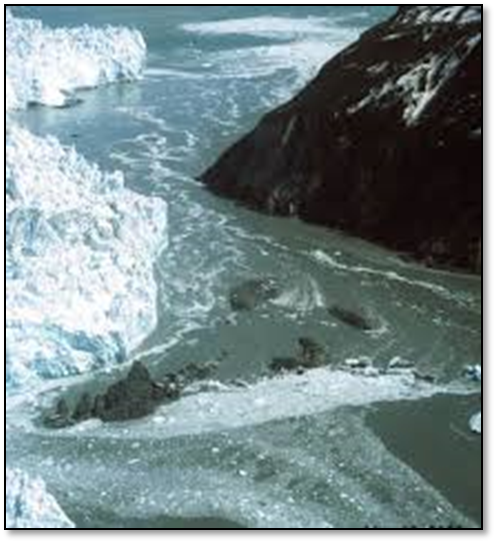
- GLOF is a sudden release of water from a glacial lake, causing a rapid and destructive downstream flood.
- It commonly occurs in high-altitude mountainous regions where glaciers are retreating.
How does GLOF occur?
- Glacier retreat can lead to glacial lake formation and expansion, increasing pressure on unstable natural dams and potentially causing sudden dam breach and downstream flooding.
- Glacial lakes may be dammed by moraine deposits, ice, or bedrock.
- Failure of the natural dam releases a huge volume of stored water suddenly.
Major Triggers
- Rapid glacier melting due to rising temperatures.
- Avalanches or landslides falling into the lake and generating displacement waves.
- Earthquakes destabilising natural dams.
- Sudden increase in water pressure or seepage through the dam.
Why are GLOFs dangerous?
- Produce very high-volume, high-velocity flood waves.
- Can destroy bridges, roads, hydropower projects and settlements.
- Carry large quantities of sediment, boulders and debris.
- Damage can occur far downstream, beyond the glacial lake itself.
GLOF in India
- Particularly important in the Himalayan region, including Sikkim, Himachal Pradesh, Uttarakhand, Ladakh, Arunachal Pradesh and Jammu & Kashmir.
- The South Lhonak Lake GLOF in Sikkim (2023) caused extensive damage after a sudden lake outburst and downstream flooding.
Conclusion
- GLOFs are high-altitude hazards intensified by glacier retreat and glacial lake expansion, requiring continuous monitoring, early-warning systems and risk-sensitive Himalayan development.
| This concept has been elaborately discussed in the following article: Nepal Flash Flood: Glacial Lake Outburst Flood (GLOF) |