
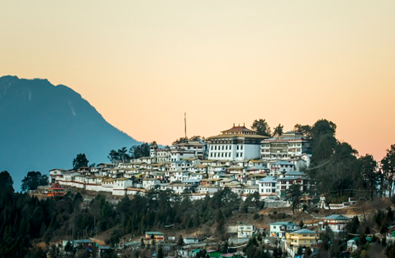
About Tawang Monastery
- Tawang Monastery, also known as Galden Namgey Lhatse, is one of the largest Buddhist monasteries in India and the second-largest in the world after the Potala Palace in Lhasa, Tibet.
- It is located in Tawang district of Arunachal Pradesh, in the Eastern Himalayas.
- It was founded in 1681 by Merak Lama Lodre Gyatso, following the wishes of the 5th Dalai Lama, Ngawang Lobsang Gyatso.
- It belongs to the Gelugpa (Yellow Hat) school of Mahayana Buddhism, a major tradition of Tibetan Buddhism.
- Situated at an altitude of approximately 3,000 metres, it is an important centre of Buddhist learning, religious practice and cultural heritage.
Key Features of Tawang Monastery
- Religious Significance: It is a major spiritual centre for the Monpa community and followers of Tibetan Buddhism in the region.
- Architectural Structure: The monastery is a large complex featuring a main prayer hall, residential buildings and other religious structures.
- Buddha Statue: The main prayer hall houses a large gilded statue of Lord Buddha.
- Library: Its collection includes important Buddhist scriptures, particularly the Kangyur and Tengyur, which preserve teachings and commentaries associated with Tibetan Buddhism.
- Traditional Printing: The monastery has facilities for printing religious texts using traditional methods.
- Cultural Activities: Monastic prayers, religious ceremonies and festivals help preserve the region’s Buddhist traditions.
About the Gelugpa School
- The Gelugpa school, also known as the Yellow Hat school, is one of the major schools of Tibetan Buddhism.
- It is associated with the teachings and reforms of Je Tsongkhapa, a Tibetan Buddhist scholar and teacher.
- The school places emphasis on monastic discipline, philosophical study and Buddhist scholarship.
- The Dalai Lama belongs to the Gelugpa tradition.
Historical and Geographical Significance
- Strategic Location: Tawang lies in northwestern Arunachal Pradesh, near India’s international borders with China and Bhutan.
- Cultural Heritage: The monastery reflects the historical and cultural links between the Himalayan region and Tibetan Buddhism.
- Monpa Community: The monastery serves as an important religious and cultural institution for the Monpa people.
- Regional Importance: Tawang’s location and cultural heritage make it significant in discussions concerning India’s Northeast and Himalayan border regions.
Conclusion
Tawang Monastery is an important centre of Mahayana Buddhism, Tibetan Buddhist scholarship and Monpa cultural heritage. Its historical, religious and geographical significance makes it relevant to UPSC Prelims, particularly under Art and Culture and the geography of Northeast India.
| This concept has been mentioned in the following article: Tawang to Host 14th International Tourism Mart |