
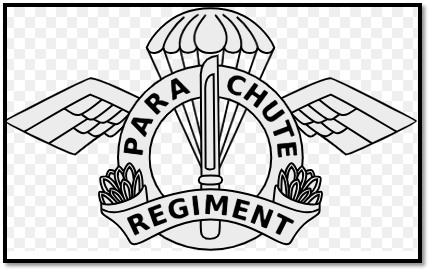
About the Parachute Regiment (Special Forces)
- The Parachute Regiment is an elite regiment of the Indian Army, comprising airborne infantry and Special Forces battalions.
- Its Special Forces units are commonly known as Para (SF).
- Para (SF) personnel are specially trained to undertake specialised military missions in challenging operational environments.
- Their broad roles include special reconnaissance, direct action, counter-terrorism and unconventional warfare.
- The regiment has a distinguished history of participation in India’s military operations and overseas deployments.
Historical Background
- The regiment traces its origins to the development of airborne forces in British India during the Second World War.
- The 50th Indian Parachute Brigade was formed in October 1941.
- On 15 April 1952, three Indian parachute battalions were consolidated to form the Parachute Regiment.
- Following the 1965 Indo-Pakistani War, the Indian Army further developed dedicated commando capabilities.
- The 9th Battalion, Parachute Regiment (Commando) was raised in July 1966 and became the Indian Army’s first dedicated Special Forces unit.
- The Special Forces component subsequently expanded with the development of additional Para (SF) battalions.
Para (SF) and Airborne Forces
The Parachute Regiment includes two broad categories of battalions:
- Para (SF):
- Special Forces units trained for specialised missions.
- Their tasks may include special reconnaissance, direct action and unconventional operations.
- They operate in small teams and undertake missions requiring specialised training and capabilities.
- Para (Airborne):
- Airborne infantry units trained for parachute insertion and air assault operations.
- They can be deployed to seize or secure strategically important locations and support wider military operations.
Important distinction: Para (SF) and Para (Airborne) are related components of the Parachute Regiment, but their specialised roles are not identical.
Roles and Responsibilities
- Special Reconnaissance: Gathering information about adversary forces, terrain and operational environments.
- Direct Action: Conducting specialised offensive missions against designated targets.
- Counter-Terrorism: Supporting military operations against terrorist threats.
- Unconventional Warfare: Undertaking specialised operations in support of broader military objectives.
- Airborne Operations: Para airborne units can use parachute insertion and air assault capabilities to establish a presence in strategically important areas.
- Strategic Support: Supporting wider military operations through specialised capabilities and rapid deployment.
Major Operations and Operational Experience
The Parachute Regiment has served in several domestic and international operational theatres.
- Bangladesh Liberation War, 1971: Parachute forces participated in military operations during the war.
- Operation Cactus, 1988: Indian military forces intervened in the Maldives following an attempted coup.
- Operation Pawan, 1987–1990: Indian forces were deployed in Sri Lanka as part of the Indian Peace Keeping Force.
- Operation Khukri, 2000: Indian Army personnel participated in the United Nations mission in Sierra Leone.
- Counter-Insurgency Operations: Regiment personnel have also served in operational areas across Jammu and Kashmir and India’s northeastern states.
Conclusion
The Parachute Regiment is an important component of the Indian Army, combining airborne capabilities with specialised military expertise. Its Para (SF) units are trained for demanding special operations, while its airborne infantry units provide additional operational flexibility. For UPSC Prelims, the key areas are the regiment’s history, the distinction between Para (SF) and airborne battalions, its operational experience and the President’s Colours.
| This concept has been mentioned in the following article: India-Indonesia Joint Special Forces Exercise GARUDA SHAKTI |