
About the Influenza Virus
- Definition: It isan RNA virus belonging to the family Orthomyxoviridae, causing acute respiratory illness in humans and animals.
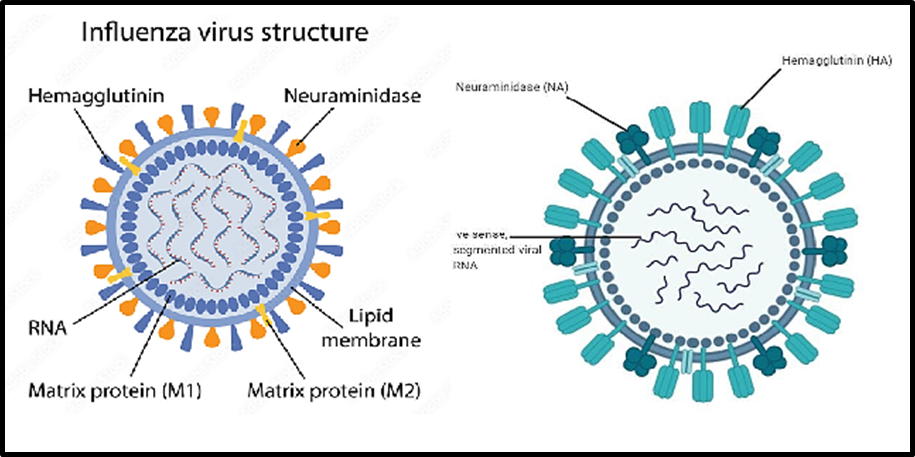
- Structure of the Virus: Enveloped virus with a segmented genome; surface studded with two key glycoproteins — Hemagglutinin (HA) and Neuraminidase (NA).
- Natural Reservoir: Wild aquatic birds serve as the primary natural reservoir for Influenza A.
Classification of Influenza Types
- Influenza A (IAV): Infects humans, birds, pigs and other animals; subtypes defined by HA and NA combinations (e.g., H1N1, H3N2, H5N1); the only type known to cause pandemics.
- Influenza B (IBV): Circulates mainly in humans; causes milder seasonal epidemics but no pandemics.
- Influenza C: Causes mild respiratory illness; does not cause epidemics.
- Influenza D: Affects cattle and pigs; does not infect humans.
Antigenic Variation
Antigenic variation refers to changes in the surface proteins of influenza viruses, which can help them evade existing immunity and spread more easily.
The two ways in which the influenza virus changes itself:
- Antigenic Drift: Small and gradual changes in the virus’s surface proteins which causes seasonal flu and is why the flu vaccine may need yearly updates.
- Antigenic Shift: Sudden and major change in Influenza A which creates a new subtype against which people have little immunity and can cause a pandemic, e.g. H1N1 pandemic (2009).
Zoonotic Strains Incidents
- H1N1 (Swine Flu): Causes acute respiratory distress; responsible for periodic local surges in India.
- H3N2 (Hong Kong Flu): A seasonal Influenza A subtype causing prolonged fever, body ache and cough.
- H5N1 (Avian Influenza/Bird Flu): Highly pathogenic in poultry with high mortality; occasional spillover to humans through close contact.
Diagnosis, Treatment & Prevention
- Diagnostics: Real-time RT-PCR used for confirmation, similar to protocols for other respiratory viruses.
- Treatment: Antiviral neuraminidase inhibitors — oseltamivir (Tamiflu) and zanamivir — are most effective when given within 48 hours of symptom onset.
- Vaccination: Annual seasonal influenza vaccination remains the most effective preventive measure.
Conclusion
The Influenza virus, an RNA virus of the Orthomyxoviridae family, drives recurring seasonal outbreaks through antigenic drift and occasional pandemics through antigenic shift. Zoonotic strains such as H1N1, H3N2 and H5N1 remain under continuous public health surveillance in India, with early antiviral treatment and annual vaccination forming the primary response strategy.
| This concept has been elaborately discussed in the following article — H1N1 Cases Rise Across India |