
About VRRR?
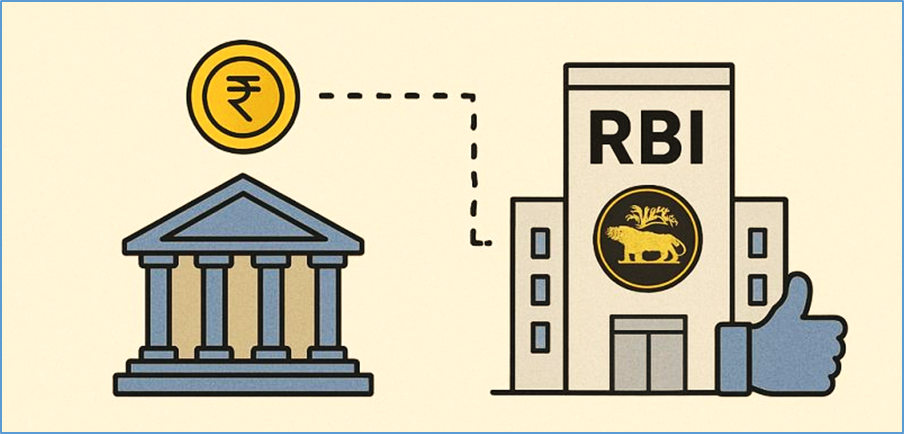
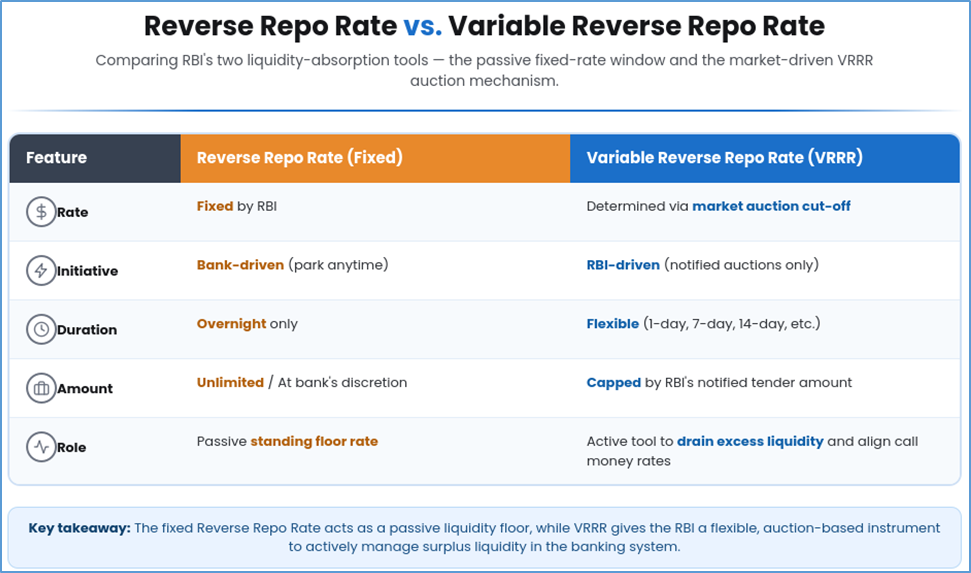
- Variable Rate Reverse Repo (VRRR) is a liquidity absorption tool used by the RBI.
- Under VRRR, banks temporarily park their surplus funds with the RBI for a specified period and earn interest at a rate determined through an auction.
How Does VRRR Work?
- RBI announces the amount and duration (tenor) of the auction.
- Banks submit bids specifying the amount and interest rate.
- RBI accepts eligible bids based on the auction outcome.
- Banks place their funds with RBI for the specified period.
- At maturity, the funds are returned to banks along with the applicable interest.
VRRR can be conducted for different tenors, such as 7 days or 14 days, depending on liquidity conditions.
Why Does RBI Use VRRR?
The main objectives are to:
- Absorb surplus liquidity from banks.
- Keep overnight and short-term interest rates aligned with the monetary policy framework.
- Prevent excess liquidity from pushing market rates excessively downward.
- Improve the transmission of monetary policy to the broader financial system.
Impact of VRRR
- Money Market:
Absorption of liquidity can put upward pressure on short-term money-market rates. - Banking System:
Banks earn interest on surplus funds parked with RBI, but those funds are temporarily unavailable for fresh lending or investment. - Monetary Policy:
It helps RBI fine-tune liquidity without changing the policy repo rate. - Inflation:
By reducing excess liquidity, VRRR can help contain demand-side liquidity pressures, although its direct impact on inflation depends on broader economic conditions.
Conclusion
VRRR is an important instrument of the RBI’s liquidity management framework. It allows the RBI to fine-tune surplus liquidity and short-term interest rates while keeping the broader monetary policy stance unchanged.
| This concept has also been discussed in the following article: RBI Absorbs ₹71,971 Crore Liquidity through VRRR |