
After Reading This Article You Can Solve This UPSC Mains Model Question:
The protests in Pakistan-occupied Kashmir (PoK) underscore the link between governance, political representation and regional stability. Analyse in the context of India’s neighbourhood policy.15 marks (GS 2, International Relations)
Context
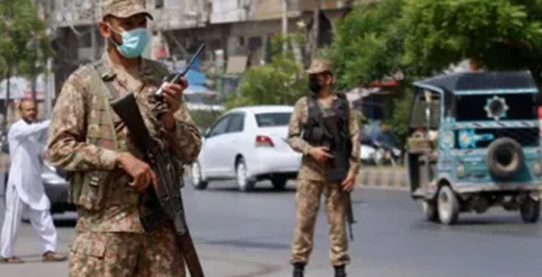
Mass protests have erupted across Pakistan-occupied Kashmir (PoK) against alleged electoral manipulation, lack of political representation and poor governance. The protests, led by the Jammu Kashmir Joint Awami Action Committee (JKJAAC), have been met with a severe security crackdown by Pakistani authorities.
Introduction
Initially triggered by rising inflation and economic hardships, the movement in PoK has evolved into a broader demand for democratic representation, accountability and political autonomy. The unrest highlights longstanding governance deficits and carries significant implications for regional stability and India-Pakistan relations.
Why Are the Protests Taking Place?
1. Reservation of Seats for Refugees: Of the 45 elected seats in the PoK Assembly, 12 are reserved for refugees from the erstwhile Jammu & Kashmir residing outside PoK, who vote from outside the region. Protesters argue that this reduces the political representation of local residents and enables Islamabad to exert greater influence over the region’s democratic process.
2. Allegations of Electoral Manipulation: The ongoing three-phase elections have been criticised for lacking transparency, fairness and credibility. The Jammu Kashmir Joint Awami Action Committee (JKJAAC) alleges electoral irregularities and demands electoral reforms, claiming that the current process does not genuinely reflect the will of the local population.
3. Governance Deficit: Residents accuse Islamabad-backed governments of poor governance, inadequate development, weak public services and limited political accountability. Years of perceived neglect and centralised decision-making have deepened public dissatisfaction and strengthened demands for greater local autonomy and responsive governance.
4. Economic Distress: The protest movement initially emerged in response to inflation, unemployment and the rising prices of essential commodities, which severely affected people’s livelihoods after the COVID-19 pandemic. Over time, these economic grievances evolved into a broader movement demanding political rights and structural governance reforms.
5. Excessive Use of Force: Pakistani security forces have reportedly responded to demonstrations with live ammunition, sniper fire and large-scale crackdowns, leading to numerous deaths and injuries. The use of disproportionate force has intensified public anger, transformed the protests into a wider civil rights movement and attracted international attention over alleged human rights violations.
Key Associated Issues
1. Democratic Deficit: Limited political representation and the perceived dominance of Islamabad in PoK’s affairs have weakened the legitimacy of democratic institutions. The reservation of seats for non-resident refugees has further fuelled demands for greater local representation and political autonomy.
2. Human Rights Concerns: Allegations of excessive use of force, including live ammunition and communication restrictions, raise serious concerns over the protection of civil liberties and the right to peaceful protest. The crackdown has also drawn criticism from international human rights organisations.
3. Governance Failure: Persistent economic neglect, inadequate public services and weak institutional accountability have eroded public confidence in the administration. The protests reflect broader dissatisfaction with governance rather than merely opposition to the ongoing elections.
4. Electoral Credibility: Allegations of electoral irregularities and lack of transparency have undermined public faith in the electoral process. Credible and representative elections are essential for ensuring democratic legitimacy and political stability.
5. Regional Stability: The protests are taking place in a strategically sensitive region along the Line of Control (LoC), increasing security concerns for both India and Pakistan. Prolonged instability could escalate cross-border tensions and adversely affect regional peace and security.
India’s Diplomatic and Strategic Response
- Condemned the Crackdown: India strongly condemned the use of excessive force against civilians and expressed concern over the reported deaths and injuries during the protests.
- Criticised Pakistan’s Actions: The Ministry of External Affairs (MEA) criticised Pakistan’s handling of the unrest, accusing its establishment of suppressing democratic aspirations and violating the rights of PoK residents.
- Reiterated India’s Position: India reaffirmed that Pakistan-occupied Kashmir (PoK) is an integral part of India and stated that Pakistan has no legal or moral authority over the territory.
International Human Rights Response
Amnesty International
- Amnesty International urged Pakistani authorities to exercise restraint, respect the right to peaceful assembly and avoid the excessive use of force against protesters.
- It also called for the restoration of internet and communication services, unhindered access for independent media and observers, and a transparent investigation into alleged human rights violations.
Overseas Kashmiri Diaspora
- Sections of the Mirpuri Kashmiri diaspora, particularly in the United Kingdom, launched campaigns highlighting the crackdown and urging Pakistan to respect democratic rights and civil liberties.
- The growing international attention has increased pressure on Pakistan to ensure accountability, transparency and adherence to international human rights standards.
Strategic Significance for India
1. Security of the Line of Control (LoC)
- The protests are concentrated in Rawalakot, Muzaffarabad and Kotli, areas located close to the Line of Control (LoC), making the unrest strategically significant for India’s border security. Any prolonged instability in these regions could alter the security dynamics along the LoC and require heightened vigilance by Indian security forces.
2. Implications for Cross-Border Security
- Pakistan-occupied Kashmir has historically served as a base for cross-border infiltration, terrorist launch pads and militant training camps targeting India. Political instability and administrative breakdown could either weaken Pakistan’s control or prompt increased military deployment, both of which have implications for India’s internal and border security.
3. Counter-Terrorism Dimension
- Several protest-affected areas, including Muzaffarabad, Kotli and Rawalakot, were among the locations that India claimed to have targeted during Operation Sindoor (2025) against terror infrastructure. The current unrest highlights the strategic importance of these regions in India’s counter-terrorism and national security calculus.
4. India–Pakistan Relations
- The developments have added another point of contention in the already strained India–Pakistan relationship. India’s criticism of Pakistan’s handling of the protests reinforces its long-standing position on Pakistan’s governance of PoK and may further complicate bilateral engagement.
5. Diplomatic and Legal Significance
- India has consistently maintained that Pakistan-occupied Kashmir is an integral part of India and has used the unrest to highlight issues of governance, democratic deficit and human rights in the region. The protests provide India with an opportunity to strengthen its diplomatic narrative on Pakistan’s administration of PoK in international forums.
6. Regional Stability
- Continued unrest in PoK has the potential to increase tensions in a strategically sensitive region bordering India, Pakistan and China. Sustained instability could have wider implications for regional peace, border management and South Asian security
Way Forward
1. Continue Principled Diplomatic Engagement
- India should consistently highlight issues of human rights, democratic governance and civil liberties in Pakistan-occupied Kashmir (PoK) through bilateral engagements and appropriate international forums, while adhering to international law and its long-standing diplomatic position.
2. Strengthen Border and Internal Security
- Given the strategic location of the unrest near the Line of Control (LoC), India should enhance border surveillance, intelligence sharing and counter-infiltration measures to prevent any spillover of instability or cross-border terrorism.
3. Reinforce India’s Legal and Diplomatic Position
- India should continue to reaffirm that Pakistan-occupied Kashmir is an integral part of India and expose governance deficits, democratic shortcomings and human rights violations in PoK through credible diplomatic channels.
4. Promote Development in Jammu & Kashmir
- Sustained investment in infrastructure, connectivity, education, healthcare and employment in Jammu & Kashmir can strengthen public confidence and demonstrate the benefits of democratic governance and inclusive development.
5. Counter Misinformation through Strategic Communication
- India should proactively disseminate factual information on developments in PoK through official channels and public diplomacy to counter misinformation and strengthen its international narrative.
6. Build International Support
- India should engage with democratic partners, multilateral institutions and human rights organisations to encourage respect for fundamental freedoms and transparent governance in PoK without internationalising the bilateral dispute.
7. Pursue Peace with Vigilance
- While remaining committed to peace and regional stability, India should maintain a robust security posture along the LoC and continue to combat cross-border terrorism through a calibrated combination of diplomacy, deterrence and preparedness.
Conclusion
The PoK protests highlight the need for democratic governance, political representation and respect for human rights. For India, they reinforce the importance of border security, regional stability and its consistent position that PoK is an integral part of India.