
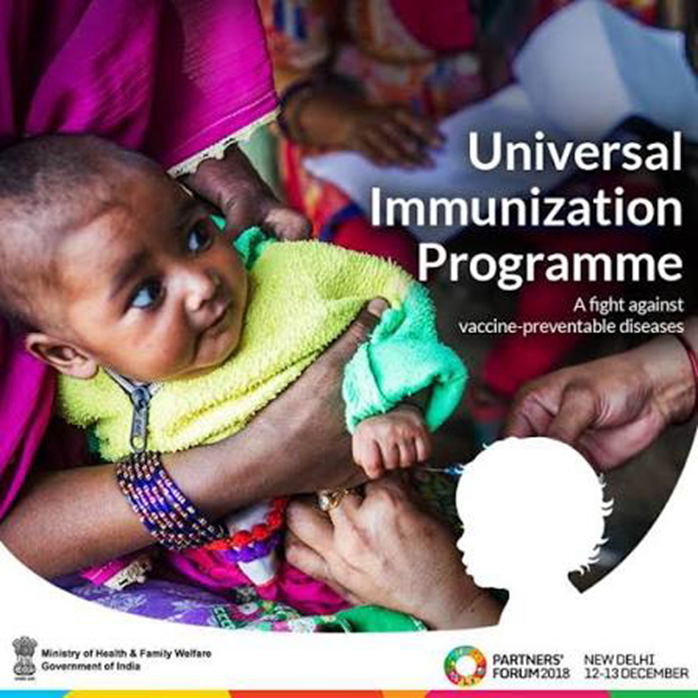
As India debates adding the Typhoid Conjugate Vaccine (TCV) to the Universal Immunisation Programme (UIP), experts argue that Hepatitis A vaccination may warrant even higher priority, given changing epidemiological patterns and rising outbreaks.
Universal Immunisation Program:-
- 1985: Introduced as the Universal Immunisation Program (UIP).
- 1992: Integrated into the Child Survival and Safe Motherhood Program.
- 1997: Became part of the National Reproductive and Child Health Programme.
- 2005: Remained a crucial component of the National Rural Health Mission.
Vaccines provided under Universal Immunization Program
Under UIP, immunization is provided free of cost against 12 vaccine-preventable diseases.
- Nationally (9 diseases): Diphtheria, Pertussis, Tetanus, Polio, Measles, Rubella, severe Childhood Tuberculosis, Hepatitis B, and Meningitis/Pneumonia (caused by H. Influenzae type B).
- Sub-nationally (3 diseases): Rotavirus diarrhoea, Pneumococcal Pneumonia, and Japanese Encephalitis.
Mission Indradhanush
- Launch: Announced in December 2014 to accelerate and re-energize the UIP.
- Objective: To ensure full immunization coverage for all children under two years of age and all pregnant women.
- Focus: Initially targeted 201 high-priority districts with the highest numbers of partially vaccinated or unvaccinated children.
- Impact: Increased the rate of full immunization coverage from 1% per year to 6.7% per year (prior to August 2017).
Intensified Mission Indradhanush
- Launch: Introduced on October 8, 2017.
- Objective: To further enhance the immunization drive by targeting every child under two and all pregnant women who were missed by the routine immunization program.
India’s golden innings in Vaccination
- Coverage: Achieved 76% full immunization for children, according to the National Family Health Survey (NFHS), showing steady progress over 20 years.
- Technology Integration:
- eVIN (Electronic Vaccine Intelligence Network): Digitizes vaccine stock management, logistics, and temperature monitoring.
- NCCMIS (National Cold Chain Management Information System): Monitors the inventory, availability, and performance of cold chain equipment.
What is PCV, or the Pneumococcal Conjugate Vaccine?
- Definition: A conjugate vaccine that protects against multiple strains of pneumococci bacteria, a primary cause of pneumonia.
- Significance: Pneumonia and diarrhoea are leading causes of infant mortality in India. Pneumonia is linked to 20% of under-5 child deaths, with pneumococcal bacteria responsible for half of those fatalities.
Hepatitis: Overview
- Definition: An inflammation of the liver that can be self-limiting or progress to chronic disease, cirrhosis, or liver cancer.
- Causes: Primarily caused by hepatitis viruses; also by toxins (e.g., alcohol) and autoimmune diseases.
- Symptoms: Can be asymptomatic or include jaundice, dark urine, fatigue, nausea, and abdominal pain.
The 5 Types of Hepatitis Virus
Hepatitis A (HAV):
- An acute infection spread via the faecal-oral route (contaminated food/water).
- Preventable by vaccine.
Hepatitis B (HBV):
- Transmitted via infected blood, body fluids, or from mother to child.
- Preventable by vaccine.
Hepatitis C (HCV):
- Transmitted primarily via infected blood (e.g., contaminated injections, transfusions).
- No vaccine is available.
Hepatitis D (HDV):
- Only infects individuals already infected with HBV; dual infection is more severe.
- Prevented by the Hepatitis B vaccine.
Hepatitis E (HEV):
- Transmitted by consuming contaminated food or water.
- Vaccines exist but are not widely available.