
Context
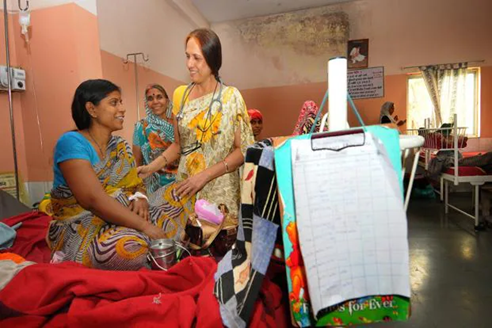
- Recently, the Ministry of Health and Family Welfare released the official report of the National Family Health Survey-6 (NFHS-6), which reveals that institutional deliveries in India have successfully increased to 90.6% from the 88.6% recorded during the NFHS-5 period.
1. Janani Suraksha Yojana (JSY)
Launched under the National Health Mission, this flagship safe motherhood intervention focuses heavily on lowering maternal and neonatal mortality rates by incentivizing institutional deliveries among underprivileged pregnant women.
- Financial Modality: It operates as a 100% Centrally Sponsored Scheme that integrates demand-side cash assistance with systematic post-delivery clinical care.
- Targeted Categorization: The scheme divides Indian states into two explicit groups to optimize resource allocation:
- Low Performing States (LPS): Covers states with low institutional delivery rates, namely Uttar Pradesh, Uttarakhand, Bihar, Jharkhand, Madhya Pradesh, Chhattisgarh, Assam, Rajasthan, Odisha, and Jammu and Kashmir. In these states, all pregnant women delivering in government or accredited private health facilities are eligible for cash assistance irrespective of age or number of children.
- High Performing States (HPS): Encompasses all remaining states and Union Territories. Financial benefits are specifically restricted to women from Below Poverty Line (BPL) households, Scheduled Castes (SC), and Scheduled Tribes (ST).
- ASHA Integration: The initiative utilizes the Accredited Social Health Activist (ASHA) network as an effective community link, provisioning performance-linked cash incentives to workers who mobilize expectant mothers for timely antenatal checkups and institutional delivery.
2. Janani Shishu Suraksha Karyakram (JSSK)
Introduced to complement existing cash-transfer models, JSSK targets the elimination of out-of-pocket expenditure for pregnant women and sick infants accessing public health institutions.
- Entitlements for Pregnant Women: It provides a legal entitlement to completely free and cashless deliveries, including surgical Caesarean sections.
- Comprehensive Coverage Component: The scheme guarantees free access to essential drugs, diagnostics, blood transfusions, and dietary provisions during the hospital stay.
- Transport Safety Net: It delivers fully institutionalized, zero-cost transport facilities from home to the health center, between medical facilities in case of high-risk complications, and back home after discharge.
- Infant Extension: All identical benefits—including free treatment, diagnostics, and transport—are statutorily extended to sick newborns and infants accessing public facilities up to one year after birth.
3. Pradhan Mantri Matru Vandana Yojana (PMMVY)
Administered by the Ministry of Women and Child Development, PMMVY functions as a Direct Benefit Transfer (DBT) maternity benefit scheme.
- Primary Objective: The scheme compensates for wage loss encountered during advanced pregnancy and lactation periods, enabling women to take adequate rest before and after childbirth while promoting optimal health seeking behavior.
- Targeted Assistance: It offers conditional cash incentives directly to the bank or post office accounts of pregnant and lactating mothers.
- Inclusion Scope: Beneficiaries receive a total structured cash incentive of ₹5,000 for the first living child, disbursed in installments tied to pregnancy registration, antenatal checkups, and child immunization. Crucially, to check female foeticide and improve the sex ratio at birth, the scheme extended an enhanced financial assistance of ₹6,000 for the birth of a second child, provided the newborn is a girl.
- Exclusion Criteria: Women employed with the Central Government, State Governments, or Public Sector Undertakings (PSUs), or those in receipt of similar benefits under any existing law, are strictly excluded from its purview.
4. Pradhan Mantri Surakshit Matritva Abhiyan (PMSMA)
A highly focused reproductive health campaign designed to bring diagnostic precision to the antenatal care ecosystem.
- Fixed-Day Strategy: The program guarantees a dedicated, assured, and comprehensive package of free antenatal care (ANC) services on the 9th day of every single month.
- Universal Applicability: Every pregnant woman across India, entering her second or third trimester, is eligible to receive standard clinical evaluation regardless of socio-economic status.
- High-Risk Pregnancy Identification: Medical officers utilize a systematic color-coded sticker protocol on maternal health tracking cards to visually distinguish high-risk complications immediately, ensuring streamlined referral pathways to specialist obstetricians.
5. LaQshya Initiative (Labour Room Quality Improvement Initiative)
An institutional quality-upgrade framework focused entirely on intrapartum and immediate postpartum care.
- Operational Mandate: The program explicitly aims to reduce preventable maternal and newborn mortality, morbidity, and stillbirths by upgrading the quality of care in Labour Rooms (LR) and Maternity Operation Theatres (OT).
- Target Facilities: Implementation is focused on high-burden public medical institutions, including Government Medical College Hospitals, District Hospitals, and designated First Referral Units (FRUs).
- Key Interventions: It mandates the adherence to standard clinical protocols, establishes respectful maternity care practices, prevents institutional abuse, and introduces an independent national certification framework based on strict quality indicators.
Comparative Matrix of Key Institutional Delivery Interventions
| Scheme Feature | Janani Suraksha Yojana (JSY) | Janani Shishu Suraksha Karyakram (JSSK) | Pradhan Mantri Matru Vandana Yojana (PMMVY) |
| Nodal Ministry | Ministry of Health and Family Welfare | Ministry of Health and Family Welfare | Ministry of Women and Child Development |
| Primary Mechanism | Demand-side cash transfer to promote institutional delivery. | Entitlement-led elimination of out-of-pocket expenses. | Conditional Direct Benefit Transfer for wage compensation. |
| Target Population | Low Performing States: All women. High Performing States: BPL/SC/ST women. | Every pregnant woman and sick infant using public health facilities. | Pregnant and lactating mothers, excluding government/PSU employees. |
| Cash Component | Varies by region (Rural/Urban) and performance tier of the state. | No direct cash; provides complete elimination of medical expenses. | ₹5,000 for the first child; ₹6,000 for a second child if it is a female. |
| Key Enabler | Deeply relies on community-level ASHA workers for mobilization. | Relies on robust supply chains, free diagnostics, and ambulance networks. | Managed via dedicated portal tracking with linked bank accounts. |
Q. Consider the following statements regarding the institutional delivery and maternal health schemes in India:
1. Under the Janani Suraksha Yojana (JSY), all pregnant women delivering in government health facilities across all states are entitled to unconditional cash assistance irrespective of their socio-economic status.
2. The Janani Shishu Suraksha Karyakram (JSSK) provides completely cashless delivery entitlements to pregnant women, but the free transport and diagnostic facilities do not extend to infants post-delivery.
3. The Pradhan Mantri Matru Vandana Yojana (PMMVY) provides an enhanced cash incentive specifically for the birth of a second child, provided the second newborn is a girl.
Which of the statements given above is/are correct?
A) 1 and 2 only
B) 3 only
C) 1 and 3 only
D) 1, 2 and 3
Solution
Correct Answer: B) 3 only
• STATEMENT 1 IS INCORRECT: The Janani Suraksha Yojana (JSY) differentiates its cash assistance eligibility criteria based on geographic health performance. In Low Performing States (LPS), all pregnant women delivering in government institutions are covered. However, in High Performing States (HPS), the cash entitlement is strictly restricted to pregnant women belonging to Below Poverty Line (BPL), Scheduled Caste (SC), and Scheduled Tribe (ST) categories. Hence, universal unconditional cash assistance across all states is not provisioned under the scheme guidelines.
• STATEMENT 2 IS INCORRECT: The Janani Shishu Suraksha Karyakram (JSSK) explicitly covers both the mother and the newborn child. The entitlement explicitly guarantees entirely free treatment, diagnostics, blood components, drugs, and institutional transport facilities to all sick neonates and infants accessing public healthcare infrastructure up to one full year after their birth.
• STATEMENT 3 IS CORRECT: The guidelines of the Pradhan Mantri Matru Vandana Yojana (PMMVY) mandate a structural maternity benefit incentive of ₹5,000 for the first living child. To actively discourage female foeticide and address the adverse child sex ratio across communities, the scheme provides an enhanced direct cash benefit of ₹6,000 to the mother during her second pregnancy, strictly on the condition that the second child born is female.