
Context
Recently, the Supreme Court of India directed the Central Government to diversify agricultural practices and encourage farmers to cultivate pulses to move away from the current cereal-centric crop cycle. This judicial intervention aligns with the government’s Second Advance Estimates for 2025–26, which project a robust increase in domestic pulse production, and the active implementation of the “Mission for Aatmanirbharta in Pulses” launched to eliminate import dependence by 2030.
Technical Overview of Pulses
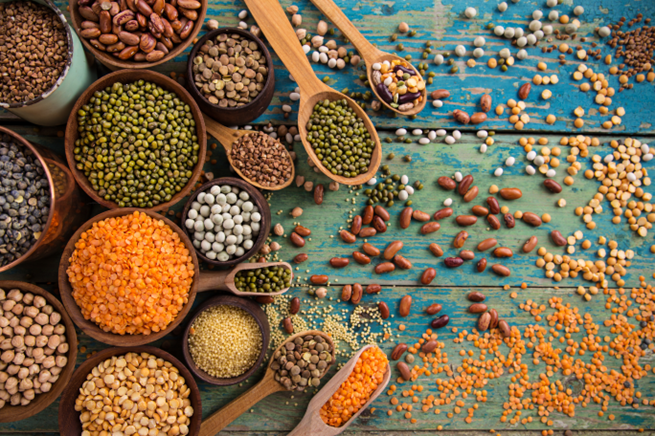
Pulses are the edible seeds of leguminous plants harvested solely for the dry grain. They belong to the Leguminosae (Fabaceae) family.
1. Climatic and Soil Requirements
- Temperature: They thrive in temperatures ranging between 20°C and 27°C.
- Rainfall: Pulses are primarily rain-fed crops requiring moderate rainfall of 25 cm to 60 cm.
- Soil Type: Sandy-loamy soils are most suitable, though they can grow in varied terrains except for heavy alkaline or saline soils.
- Cropping Seasons:
- Kharif: Arhar (Tur), Urad (Blackgram), Moong (Greengram).
- Rabi: Gram (Chickpea), Lentil (Masur), Peas.
- Summer: Moong and Urad are also grown as short-duration summer crops.
2. Ecological and Nutritional Importance
- Nitrogen Fixation: Most pulses (except Arhar/Pigeon pea to a lesser extent) have nodules in their roots containing Rhizobium bacteria, which fix atmospheric nitrogen, thereby improving soil fertility and reducing the need for chemical fertilizers.
- Water Efficiency: They are highly water-efficient compared to cereals like rice and wheat.
- Protein Source: Pulses contribute nearly 20% to 25% of the total protein intake in Indian diets, making them vital for combating protein-energy malnutrition.
3. India’s Position in the Pulse Sector
- Global Rank: India is the world’s largest producer (25%), consumer (27%), and importer (14%) of pulses.
- Production Statistics: As per the 2025–26 Second Advance Estimates, total production is showing a steady increase, with Gram accounting for nearly 50% of the total pulses share.
- Import Trends: While imports have significantly declined (by approximately 45% in FY26), India still procures pulses like Yellow Peas and Lentils from countries such as Canada, Myanmar, and Australia to bridge the demand-supply gap.
- Top Producing States (2025-26):
- Madhya Pradesh (Largest producer).
- Rajasthan.
- Maharashtra.
- Uttar Pradesh.
4. Key Government Initiatives
Mission for Aatmanirbharta in Pulses (2025–2031)
- Outlay: ₹11,440 crore.
- Goal: Reach 350 lakh tonnes of production and 310 lakh hectares of cultivation area by 2030–31.
- Key Feature: Assured 100% procurement of Tur, Urad, and Masoor at MSP for four years to provide price stability.
SATHI Portal
The Seed Authentication, Traceability & Holistic Inventory (SATHI) portal ensures the quality of seeds by tracking the entire lifecycle from production to certification, helping farmers access high-yielding and climate-resilient varieties.
PM-AASHA
The Pradhan Mantri Annadata Aay SanraksHan Abhiyan integrates the Price Support Scheme (PSS) and Price Deficiency Payment Scheme (PDPS) to ensure farmers receive the Minimum Support Price.
Q. With reference to the cultivation of pulses in India, consider the following statements:
1. Unlike cereals, all pulses have the unique ability to fix atmospheric nitrogen through root nodules.
2. The "Mission for Aatmanirbharta in Pulses" aims to achieve 100% self-sufficiency by 2030 through assured procurement of all pulse varieties.
3. India's pulses import value has seen a significant decline in the 2025-26 fiscal year compared to the previous year.

Which of the statements given above is/are correct?
A) 1 and 2 only
B) 3 only
C) 1 and 3 only
D) 1, 2, and 3

Answer: B

Solution:
STATEMENT 1 INCORRECT: While most pulses fix nitrogen, some varieties like Arhar (Pigeon Pea) have a very low capacity for nitrogen fixation compared to others, and some leguminous plants do not fix nitrogen at all.
STATEMENT 2 INCORRECT: The Mission provides assured 100% procurement specifically for Tur, Urad, and Masoor, not every single variety of pulses.
STATEMENT 3 CORRECT: Recent trade data for 2025-26 indicates a decline in pulses import volume and value by nearly 35% to 45% due to robust domestic production and carry-forward stocks.