
Context
Recently, the Central Armed Police Force (General Administration) Bill, 2026 was passed in the Lok Sabha via a voice vote. The Bill seeks to restructure the administrative and promotional hierarchy within the CAPFs.
Key Features of the CAPF Bill
1. Reservation of Senior Posts for IPS Officers
The most critical and controversial provision of the Bill involves the “deputation” of Indian Police Service (IPS) officers into senior CAPF ranks:
- Inspector-General (IG): 50% of total posts to be filled by IPS officers.
- Additional Director-General (ADG): At least 67% of posts to be filled by IPS officers.
- Special DG & Director-General (DG): 100% of these top-tier ranks are reserved for IPS officers on deputation.
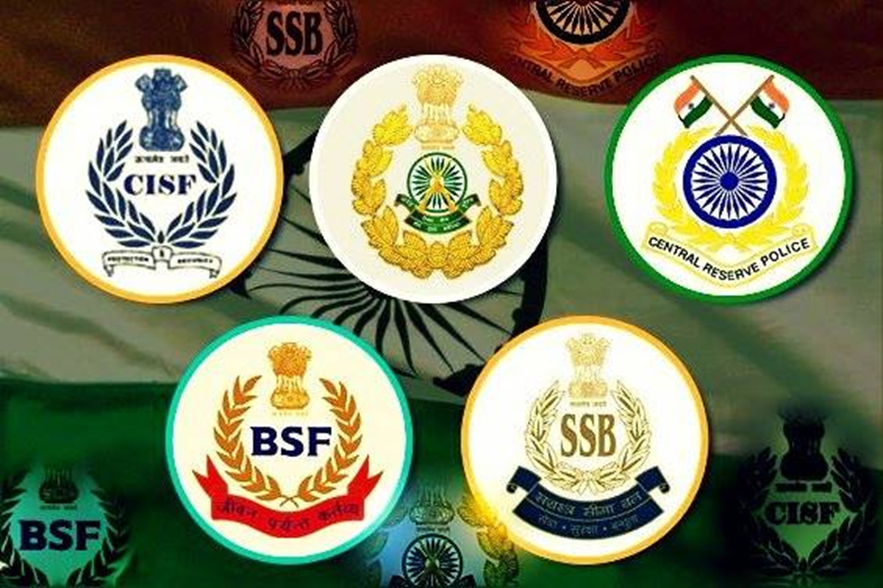
2. Scope of Application: The Act covers the five major CAPFs—CRPF, BSF, CISF, ITBP, and SSB—and authorizes the Central Government to include additional forces through notification.
3. Rule-Making Power: It grants the Central Government authority to formulate rules regarding recruitment, deputation, and service conditions, with such rules having overriding effect over existing laws and judicial decisions.
4. Nodal Administrative Authority: The Bill grants the Ministry of Home Affairs (MHA) expanded powers to move officers between different CAPFs for administrative exigencies, though the distinct identity of each force (e.g., the border-guarding role of the BSF vs. the internal security role of the CRPF) is to be maintained.
Important Supreme Court Judgements
In May 2025, the Supreme Court issued a specific directive to address career stagnation:
- Phasing Out Deputation: The Court ordered the government to “progressively reduce” IPS deputation in CAPFs up to the rank of IG over a period of two years.
- Cadre Review: It mandated a comprehensive cadre review within six months to ensure more promotion avenues for homegrown cadre officers.
| About CAPF The Central Armed Police Forces (CAPF) are seven security units under India’s Ministry of Home Affairs (MHA), responsible for internal security, border patrol, and counter-insurgency, with over 10 lakh personnel. Key forces include CRPF, BSF, CISF, ITBP, SSB, NSG, and Assam Rifles. |
| Force | Full Form | Primary Border / Role |
| BSF | Border Security Force | Pakistan and Bangladesh borders. |
| ITBP | Indo-Tibetan Border Police | China (Line of Actual Control – LAC). |
| SSB | Sashastra Seema Bal | Nepal and Bhutan borders. |
| Assam Rifles | — | Myanmar border (Sentinels of the North-East). |
| CRPF | Central Reserve Police Force | Internal Security (Naxalism, Riot control, Elections). |
| CISF | Central Industrial Security Force | Industrial Security (Airports, Metro, Space & Nuclear installs). |
| NSG | National Security Guard | Counter-terrorism and Anti-hijacking (The “Black Cats”). |
Which of the following statements is/are correct regarding CAPFs in India?

1. CAPFs operate under the Ministry of Defence.
2. CAPFs include both border guarding and internal security forces.
3. Assam Rifles guards the Indo-Myanmar border.

Select the correct answer:
(a) 2 and 3 only
(b) 1 only
(c) 1 and 2 only
(d) 1, 2 and 3

Answer: A

Explanation:
•  Statement 1 is Incorrect: All Central Armed Police Forces (CAPFs) actually fall under the Ministry of Home Affairs (MHA), not the Ministry of Defence. The Ministry of Defence only manages the Army, Navy, and Air Force.
•  Statement 2 is Correct: These forces have a double role. Some, like the BSF, guard our borders, while others, like the CRPF, handle internal security issues like riots or elections.
•  Statement 3 is Correct: The Assam Rifles is specifically tasked with guarding the border between India and Myanmar.