
Context
- Recently, the Ministry of Environment, Forest and Climate Change (MoEFCC) notified the Plastic Waste Management (Amendment) Rules, 2026.
- These rules are in the news because they mandate, for the first time, a minimum percentage of recycled plastic content in all new packaging and introduce a centralized digital tracking system using QR codes.
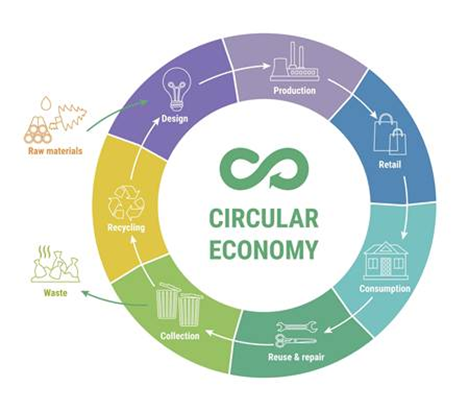
- The amendment aims to accelerate India’s transition toward a Circular Economy by making “Extended Producer Responsibility” (EPR) targets more stringent and enforceable through independent environmental audits starting from the 2026-27 financial year.
Key Highlights of the 2026 Amendment Rules
1. Mandatory Recycled Content Targets
- Graded Requirements: The rules specify that all plastic packaging must contain a minimum percentage of recycled plastic. For Rigid Plastic Packaging, the target has been raised to 60% for the 2026-27 period.
- Flexible and Multi-layered Plastics: These categories also have specific, albeit lower, mandatory recycled content goals to encourage the recycling industry while maintaining material integrity.
- Exceptions: The rules provide limited exemptions where recycled plastic is legally prohibited, such as in certain highly sensitive medical or food-contact applications as per FSSAI standards.
2. Enhanced “Reuse” Mandates
- Rigid Plastic Focus: Large brand owners are now required to meet specific reuse targets, particularly for rigid containers (e.g., beverage bottles, bulk chemical containers).
- Target Levels: For specific large-format packaging, the reuse percentage is mandated to reach as high as 85%, significantly reducing the demand for virgin plastic.
3. New Definitions & Accountability
- Sellers: A new category of “Sellers” has been defined to include any entity dealing in plastic raw materials like resins, pellets, or intermediate materials. They must now register and report annually to ensure the source of plastic is tracked.
- Microplastics: Defined as any solid plastic particle insoluble in water with dimensions between 1 micron and 1,000 microns.
- End-of-Life Disposal: The rules now provide a clear legal definition for disposal methods like waste-to-energy, co-processing in cement kilns, and road construction.
4. Digital Traceability and QR Codes
- Mandatory Labeling: Every piece of plastic packaging must now carry a traceable QR code or barcode.
- Purpose: This allows regulators and consumers to verify the origin of the plastic, the percentage of recycled content, and the EPR registration status of the producer.
5. Registered Environmental Auditors
- Independent Verification: The 2026 rules introduce Registered Environmental Auditors who are tasked with certifying the EPR claims made by companies.
Anti-Fraud Mechanism: This step is designed to eliminate “paper-only” compliance and ensures that the reported recycling and reuse figures are physically verified.
6. Strategic Implementation Framework
- Polluter Pays Principle: Environmental compensation is strictly levied for non-compliance, with fines ranging from ₹10,000 to ₹15 lakhs depending on the scale of the violation.
- Four-Stream Segregation: While linked to the Solid Waste Management Rules 2026, the plastic rules rely on the mandatory segregation of waste into Wet, Dry (Plastic/Paper/Metal), Sanitary, and Special Care streams at the source.
Q. With reference to the Plastic Waste Management (Amendment) Rules, 2026, consider the following statements:

1. The rules mandate a minimum of 60% recycled plastic content in rigid plastic packaging for the financial year 2026-27.

2. For the first time, "Sellers" of plastic raw materials like resins and pellets are brought under the regulatory and reporting framework.

3. Registered Environmental Auditors have been introduced to verify the Extended Producer Responsibility (EPR) claims of brand owners.

Which of the statements given above is/are correct?
A) 1 and 2 only
B) 2 and 3 only
C) 1 and 3 only
D) 1, 2, and 3

Answer: D

Solution:
•	STATEMENT 1 IS CORRECT: The 2026 amendment sets a high bar for circularity by requiring 60% recycled content in rigid plastics to reduce reliance on virgin materials.

•	STATEMENT 2 IS CORRECT: By defining and regulating "Sellers" of resins and pellets, the government aims to ensure full traceability of plastic from the raw material stage to the final waste stage.

•	STATEMENT 3 IS CORRECT: The introduction of third-party Registered Environmental Auditors is a key feature of the 2026 rules to ensure the authenticity of recycling and reuse data submitted by companies.