
Context
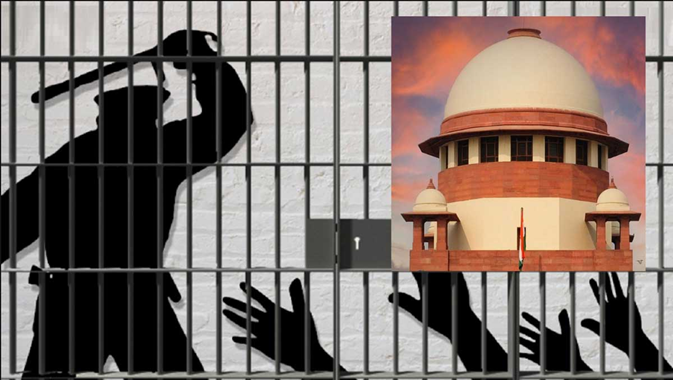
- Recently, a trial court in Madurai, Tamil Nadu, awarded the death penalty to nine policemen found guilty of the custodial torture and murder of a trader, P. Jayaraj, and his son, J. Benicks.
- The incident, which occurred in June 2020 at the Sattankulam police station, involved brutal physical assault during the COVID-19 lockdown. The judge categorized the act as a “social evil” and a “case of the fence eating the crop,” emphasizing that law enforcement officers who are meant to protect the public had instead committed a heinous crime.
- This verdict has reignited the national debate on police accountability and the urgent need for anti-torture legislation in India.
1. Defining Custodial Violence
Custodial violence refers to the infliction of physical or mental suffering on individuals while they are in custody of the police or judicial authorities. It includes:
- Physical Torture: Beating, third-degree methods, and sexual assault.
- Psychological Torture: Threats, humiliation, and sleep deprivation.
- Custodial Death: Fatalities occurring in police lockups or prisons.
2. Constitutional Safeguards
The Indian Constitution provides several protections to prevent the abuse of power by the state:
- Article 20(3): Provides the right against self-incrimination, ensuring no person is compelled to be a witness against themselves.
- Article 21: Guarantees the Right to Life and Personal Liberty, which the Supreme Court has interpreted to include the right to be free from torture and cruel treatment.
- Article 22: Provides protection against arrest and detention, including the right to be informed of the grounds of arrest and the right to consult a legal practitioner.
3. Legal Provisions
- Indian Penal Code (IPC) / Bharatiya Nyaya Sanhita (BNS): Sections 330 and 331 of the IPC (now relevant sections in BNS) penalize the use of hurt or grievous hurt to extort confessions.
- Code of Criminal Procedure (CrPC) / Bharatiya Nagarik Suraksha Sanhita (BNSS): Section 176(1A) of the CrPC mandates a judicial inquiry (by a Magistrate) in cases of death, disappearance, or rape in custody.
- Indian Evidence Act: Section 25 states that a confession made to a police officer cannot be proved against an accused.
4. Landmark Judicial Guidelines: D.K. Basu vs. State of West Bengal (1997)
The Supreme Court laid down 11 mandatory requirements for arrest and detention to prevent custodial torture:
- Identification: Police personnel must wear clear, visible name tags with designations.
- Arrest Memo: A memo must be prepared at the time of arrest, attested by at least one witness (family member or local respectable person).
- Right to Inform: The arrestee has the right to have a friend or relative informed of the arrest as soon as possible.
- Medical Examination: The arrestee should be examined at the time of arrest and every 48 hours during detention by a trained doctor.
- Legal Access: The arrestee may be permitted to meet their lawyer during interrogation (though not throughout).
5. International Standards
- United Nations Convention Against Torture (UNCAT): India signed this convention in 1997 but has not yet ratified it. Ratification would require India to enact a specific standalone law criminalizing torture.
Q. With reference to the safeguards against custodial violence in India, consider the following statements:

1. Under the Bharatiya Nagarik Suraksha Sanhita (BNSS), a judicial inquiry is mandatory in every case of death in police custody.

2. India is a signatory to the United Nations Convention Against Torture (UNCAT) and has ratified it to implement its provisions into domestic law.

3. The D.K. Basu guidelines mandate that an arrestee must be medically examined by a doctor every 24 hours during their detention.

How many of the statements given above are correct?
(a) Only one
(b) Only two
(c) All three
(d) None

Solution: Answer: (a)

• STATEMENT 1 IS CORRECT: Section 176(1A) of the CrPC (carried forward in BNSS) mandates a judicial inquiry by a Metropolitan Magistrate or a Judicial Magistrate in cases of death, rape, or disappearance in custody.

• STATEMENT 2 IS INCORRECT: While India signed the UNCAT in 1997, it has not ratified it yet.

• STATEMENT 3 IS INCORRECT: The D.K. Basu guidelines state that the arrestee should be medically examined every 48 hours during their detention, not 24 hours.