
After Reading This Article You Can Solve This UPSC Mains Model Question:
Examine the role of the ‘Life-Cycle’ approach in government schemes like Nari Shakti Vandan Adhiniyam in ensuring the long-term dignity and agency of women in India. 15 Marks (GS-1 Society)
Context
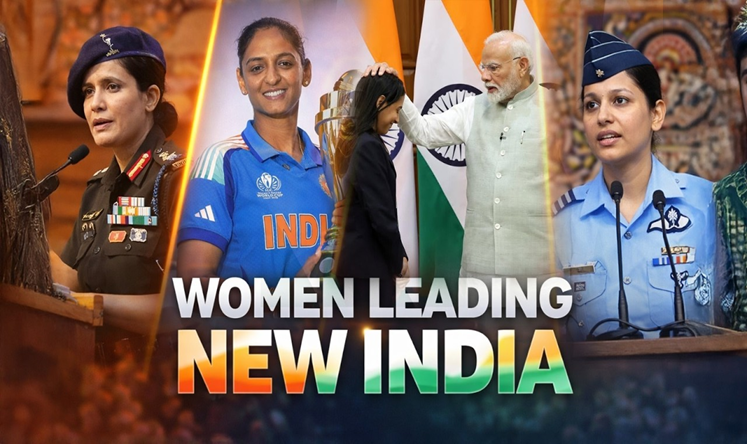
The paradigm shift from “Development for Women” to “Women-led Development” marks a cornerstone of India’s strategy for Viksit Bharat @2047. Nari Shakti (Women Power) is no longer viewed as a welfare objective but as a critical driver of the nation’s socio-economic and political transformation.
Key Pillars of Women Empowerment in India
1. Political Empowerment: The Legislative Milestone
The Nari Shakti Vandan Adhiniyam (106th Constitutional Amendment Act, 2023) is the flagship reform intended to restructure the political landscape.
- Key Provisions:
- Reserves 33% of seats for women in the Lok Sabha, State Legislative Assemblies, and the Delhi Assembly.
- Applies to seats reserved for SCs and STs within these bodies.
- Implementation is contingent upon the post-2026 Delimitation exercise and the completion of the next Census.
- Significance:
- Breaking the “Proxy” Governance: Aims to replicate the success of the 73rd/74th Amendments (where over 1.4 million women serve in local bodies) at the national and state levels.
- Policy Inclusivity: Ensures gender-sensitive legislation in areas like finance, defense, and labor.
2. Economic Empowerment: From Job Seekers to Job Creators
The focus has shifted toward building “Technical Sovereignty” and financial independence for women.
- Lakhpati Didi Initiative: Targets the creation of 3 crore Lakhpati Didis (rural women earning ₹1 lakh+ annually) by leveraging the network of nearly 10 crore Self-Help Group (SHG) members.
- Financial Inclusion: Under PM Mudra Yojana, approximately 70% of loans have been sanctioned to women entrepreneurs.
- Stand-Up India reserves 80% of its beneficiaries for women, specifically focusing on greenfield enterprises.
- STEM Participation: India currently boasts a 43% female enrollment rate in higher education STEM courses, one of the highest globally, signaling a shift in the traditional workforce.
3. Social and Life-Cycle Interventions
True reform requires removing structural “bottlenecks” that limit a woman’s time and agency.
- Dignity and Safety:Swachh Bharat Mission: Construction of over 11 crore toilets addressed sanitation-related health risks and safety concerns.
- Jal Jeevan Mission: Providing tap water to rural households reduces the “time poverty” of women who traditionally spent hours fetching water.
- Asset Ownership: PM Awas Yojana (PMAY) prioritizes women as owners or co-owners of houses, significantly enhancing their bargaining power within the household.
- Mission Shakti 2.0: A unified umbrella scheme for the safety (Sambal) and empowerment (Samarthya) of women through a life-cycle approach.
Emerging Opportunities for Nari Shakti
1. Frontier Tech & Digital Economy
- “AI by HER” Initiative: Direct funding (up to ₹2.5 Cr) for women-led AI startups targeting healthcare and agriculture.
- Drone Sakhis (Namo Drone Didi): Evolution from pilots to Agri-Tech service providers, managing drone fleets for precision farming.
- Semiconductor Mission: Increasing integration into high-end VLSI design and assembly-test-mark-pack (ATMP) roles.
2. Green Energy & Circular Economy
- Decentralized Renewable Energy (DRE): Transition from consumers to owners of solar mini-grids and solar-powered industrial units.
- Oorja Sakhis: A technical cadre managing solar infrastructure and EV charging stations in Tier-2 and Tier-3 cities.
- Waste-to-Wealth: SHG partnerships with global brands for sustainable fashion and ethical plastic recycling.
3. Financial & Strategic Inflection Points
- WEP Next & Mudra 2.0: Enhanced credit limits and specialized techno-entrepreneurship incubation for the North-East and hilly regions.
- SHE-Mart & GeM: Direct access for women-led SHGs to compete in large-scale government public procurement.
- Blue Economy: New leadership roles in maritime logistics and sustainable aquaculture.
4. Space & Defense
- Space-Tech: Expansion into Satellite Data Analytics and private space-tech startups following Chandrayaan-3’s success.
- Combat & Command: Entry into all Armed Forces branches, specifically in Cyber Security and Electronic Warfare leadership.
Challenges to Nari Shakti and Women-led Development
1. Political and Governance Hurdles
- The “Proxy” Phenomenon: Despite 44% representation in local bodies, “Sarpanch Patis” often hijack decision-making, reducing empowerment to tokenism.
- Legislative Lag: Implementation of the Nari Shakti Vandan Adhiniyam (2023) awaits the post-2026 census and delimitation, delaying national representation until 2029 or 2034.
- The “Stained Glass Ceiling” in Judiciary: Structural barriers in the collegium system and late-stage appointments lead to critically low female representation in the Supreme Court and High Courts.
2. Economic and Labor Market Barriers
- The “Sticky Floor” Effect: Nearly 94% of women work in the informal sector (agriculture/textiles), trapped in low-paying roles with zero social security.
- The Motherhood Penalty: A “leaky pipeline” at mid-management persists due to lack of flexible infrastructure, forcing high-potential women to exit the workforce.
- Credit Rationing: Women-led startups receive only 4% of total venture funding, hindered by a lack of collateral and systemic investor bias.
3. Socio-Cultural and Structural Constraints
- Systemic Time Poverty: Women perform 84% of unpaid care work, creating a “double burden” that limits skill acquisition and leadership opportunities.
- The “Missing” Asset Base: Disproportionately low ownership of land and assets weakens women’s economic bargaining power within households.
- Digital Harassment: Deepfakes and tech-facilitated abuse create a new frontline of violence, silencing women in digital public spaces.
4. Emerging Challenges
- AI and Design Bias: With only 22% of AI professionals being women, algorithmic designs often lack gender-sensitive safety and privacy perspectives.
- Climate-Induced “Triple Burden”: Climate-led male migration forces rural women to manage farm labor, domestic care, and resource scarcity without legal land titles.
Way Forward
- Transforming Political Representation: Move beyond tokenism by institutionalizing governance training for women and creating digital whistleblowing channels to eliminate “Sarpanch Pati” (proxy) interference.
- Judicial and Institutional Diversity: Reform the collegium system to ensure a mandatory minimum threshold for female representation in the High Courts and Supreme Court.
- Scaling Economic Independence: Utilize the LokOS app and Digital Aajeevika Register to monitor income growth, ensuring 3 crore rural women achieve “Lakhpati Didi” status.
- Market and Career Equity: Bridge the “Motherhood Penalty” through performance normalization policies and provide SHGs direct market access via SHE-Mart and GeM integration.
- Digital and Technological Sovereignty: Increase female participation in AI and STEM to 50% to ensure gender-neutral algorithms while strengthening the Digital India Act against deepfakes and tech-abuse.
- Climate and Asset Resilience: Transition women to “Agri-Managers” through climate-smart hiring centers and incentivize joint property titling to secure credit collateral for rural women.
Conclusion
Nari Shakti is the bridge between a developing and a developed India. The next decade will be defined not just by how many women are in the workforce, but by how many are in positions of command and decision-making.