
Context
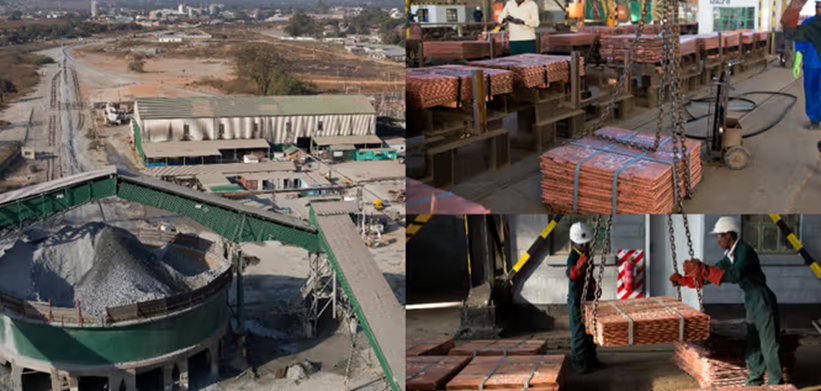
India’s diplomatic and economic efforts to secure a supply chain for critical minerals have hit a roadblock. Talks with Zambia have stalled due to a lack of specific assurances regarding long-term mining rights.
1. Key Minerals in Focus
- Cobalt:Significance: A vital component for lithium-ion batteries used in Electric Vehicles (EVs) and mobile phones.
- Global Context: Zambia is one of the world’s largest producers of cobalt (often as a byproduct of copper mining).
- Copper:Significance: Essential for power generation, electronics, renewable energy infrastructure, and construction.
- Strategic Need: As India pushes for “Green Energy” and infrastructure growth, copper demand is surging.
2. Current Status of the Agreement
- Land Allocation: India was previously allocated 9,000 square kilometers in Zambia for mineral exploration.
- Exploration Progress: A team of Indian geologists has already visited the site and collected mineral samples for analysis.
- Timeline: The exploration phase was intended to span three years.
- Private Sector Involvement: New Delhi intends to invite private Indian companies to participate in extraction once the exploration phase is successful and mining rights are legally secured.
3. The Stumbling Block: Mining Rights
- Issue: The primary reason for the “stall” in talks is the lack of clear assurances from the Zambian government (Lusaka) regarding Mining Rights.
- Legal Security: Without guaranteed rights to extract the minerals they find, India is hesitant to commit further investment or involve private players, as exploration is capital-intensive and risky.
4. Key Important Minerals
| Mineral | Key Uses | Major Global Producers |
| Cobalt | EV batteries (Li-ion cathode), mobile phones, aerospace alloys | DRC (~70%), Zambia, Russia |
| Lithium | EV batteries, grid storage, ceramics | Australia, Chile, Argentina (“Lithium Triangle”) |
| Copper | Power generation, electronics, construction, EVs | Chile, Peru, DRC, Zambia |
| Graphite | EV battery anodes, lubricants, nuclear reactors | China (~95% of processing) |
| Rare Earth Elements | Wind turbines, EV motors, defence electronics, magnets | China (~90% of processing) |
| Nickel | Stainless steel, EV batteries (NMC cathode), plating | Indonesia, Philippines, Russia |
| Platinum Group (PGE) | Catalytic converters, hydrogen fuel cells, jewellery | South Africa, Russia, Zimbabwe |
| Silicon | Solar PV cells, semiconductors, electronics | China, Russia, Brazil |
| Titanium | Aerospace, defence, medical implants, white pigment | China, Russia, Japan |
| Tungsten | Hard metal tools, armour-piercing ammunition, filaments | China (~80% of global supply) |
5. About Zambia
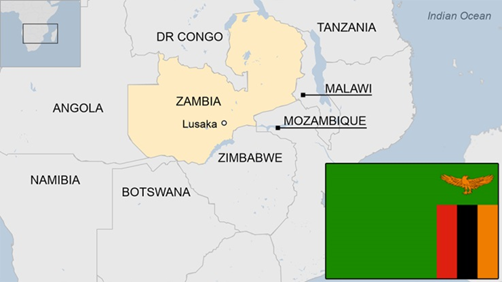
- Location: Southern Africa, bordered by eight nations (Angola, DRC, Tanzania, Malawi, Mozambique, Zimbabwe, Botswana, Namibia).
- Capital: Lusaka.
Context
India’s diplomatic and economic efforts to secure a supply chain for critical minerals have hit a roadblock. Talks with Zambia have stalled due to a lack of specific assurances regarding long-term mining rights.
1. Key Minerals in Focus
- Cobalt:Significance: A vital component for lithium-ion batteries used in Electric Vehicles (EVs) and mobile phones.
- Global Context: Zambia is one of the world’s largest producers of cobalt (often as a byproduct of copper mining).
- Copper:Significance: Essential for power generation, electronics, renewable energy infrastructure, and construction.
- Strategic Need: As India pushes for “Green Energy” and infrastructure growth, copper demand is surging.
2. Current Status of the Agreement
- Land Allocation: India was previously allocated 9,000 square kilometers in Zambia for mineral exploration.
- Exploration Progress: A team of Indian geologists has already visited the site and collected mineral samples for analysis.
- Timeline: The exploration phase was intended to span three years.
- Private Sector Involvement: New Delhi intends to invite private Indian companies to participate in extraction once the exploration phase is successful and mining rights are legally secured.
3. The Stumbling Block: Mining Rights
- Issue: The primary reason for the “stall” in talks is the lack of clear assurances from the Zambian government (Lusaka) regarding Mining Rights.
- Legal Security: Without guaranteed rights to extract the minerals they find, India is hesitant to commit further investment or involve private players, as exploration is capital-intensive and risky.
4. Key Important Minerals
| Mineral | Key Uses | Major Global Producers |
| Cobalt | EV batteries (Li-ion cathode), mobile phones, aerospace alloys | DRC (~70%), Zambia, Russia |
| Lithium | EV batteries, grid storage, ceramics | Australia, Chile, Argentina (“Lithium Triangle”) |
| Copper | Power generation, electronics, construction, EVs | Chile, Peru, DRC, Zambia |
| Graphite | EV battery anodes, lubricants, nuclear reactors | China (~95% of processing) |
| Rare Earth Elements | Wind turbines, EV motors, defence electronics, magnets | China (~90% of processing) |
| Nickel | Stainless steel, EV batteries (NMC cathode), plating | Indonesia, Philippines, Russia |
| Platinum Group (PGE) | Catalytic converters, hydrogen fuel cells, jewellery | South Africa, Russia, Zimbabwe |
| Silicon | Solar PV cells, semiconductors, electronics | China, Russia, Brazil |
| Titanium | Aerospace, defence, medical implants, white pigment | China, Russia, Japan |
| Tungsten | Hard metal tools, armour-piercing ammunition, filaments | China (~80% of global supply) |
5. About Zambia
- Location: Southern Africa, bordered by eight nations (Angola, DRC, Tanzania, Malawi, Mozambique, Zimbabwe, Botswana, Namibia).
- Capital: Lusaka.
- Part of the Copperbelt region — one of world’s richest copper/cobalt zones (shared with DRC)
- Global significance: 2nd largest cobalt producer globally (after DRC)
- Major copper exporter — key to India’s energy transition supply chain
- Member of African Union.
- Key Landmarks: Victoria Falls (border with Zimbabwe), Lake Kariba, and the Zambezi River.
Consider the following statements:
1.	Zambia shares its Copperbelt region with the Democratic Republic of the Congo.
2.	Zambia is a landlocked country bordered by only five countries.

Which of the statements given above is/are correct?
(a) 1 only
(b) 2 only
(c) Both 1 and 2
(d) Neither 1 nor 2

Answer: A
Explanation:
Statement 1: Correct
The Central African Copperbelt is a major geological and mineral region that spans the border between northern Zambia and the southern Democratic Republic of the Congo (DRC). It is one of the world's most significant sources of copper and cobalt, which explains the high strategic interest from countries like India.
Statement 2: Incorrect
While Zambia is indeed a landlocked country, it is bordered by eight countries, not five. Its neighbors include:
1.	Democratic Republic of the Congo (North/Northwest)
2.	Tanzania (Northeast)
3.	Malawi (East)
4.	Mozambique (Southeast)
5.	Zimbabwe (South)
6.	Botswana (South - meeting at a single point/quadripoint)
7.	Namibia (Southwest)
8.	Angola (West)