
Context
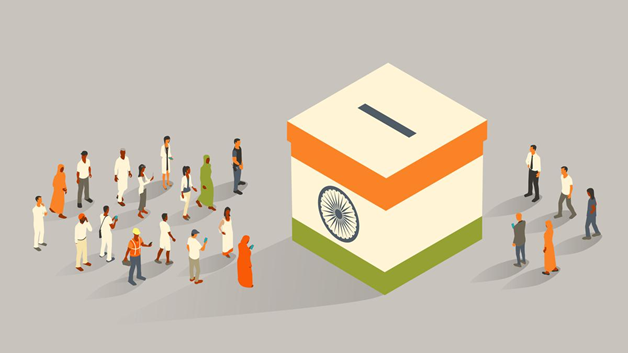
Recently, the Union Government convened a special session of Parliament to introduce a landmark suite of legislations: the Constitution (131st Amendment) Bill, 2026, the Delimitation Bill, 2026, and the Union Territories Laws (Amendment) Bill, 2026. This move follows the mandate of the Nari Shakti Vandan Adhiniyam (106th Amendment), which tied the implementation of 33% women’s reservation to the completion of a fresh delimitation exercise. In light of the delayed 2021 Census, these bills propose to utilize the 2011 Census data to increase the Lok Sabha strength to 850 seats, aiming to resolve the long-standing freeze on parliamentary seats while ensuring electoral parity across the nation.
1. Definition and Objective
- Definition: Delimitation is the act of redrawing boundaries of Lok Sabha and State Assembly seats to reflect changes in population.
- Primary Objective: To provide equal representation to equal segments of the population, ensuring “One Vote, One Value.”
2. Constitutional Framework
- Article 81: Specifies the composition of the Lok Sabha. It mandates that the ratio between the number of seats allotted to each State and the population of the State is, so far as practicable, the same for all States.
- Article 82: The Parliament enacts a Delimitation Act after every Census. Once the Act is in force, the President appoints a Delimitation Commission.
- Article 170: Similar to Article 82, but applies to the readjustment of constituencies for State Legislative Assemblies.
- Article 327: Empowers Parliament to make provisions with respect to all matters relating to elections, including delimitation.
- Article 329(a): Bars the judiciary from interfering in the delimitation of constituencies.
3. The Delimitation Commission (The Boundary Commission)
- Nature: A high-power body whose orders have the force of law.
- Composition:
- Chairman: A serving or retired Judge of the Supreme Court.
- Ex-officio: The Chief Election Commissioner (or an EC nominated by them) and the State Election Commissioner of the concerned State.
- Associate Members: 10 members (5 Lok Sabha MPs and 5 State MLAs) are appointed for each state. Note: They have no right to vote or sign the final report.
- Finality of Orders: Orders are laid before the Lok Sabha/Assembly. However, these houses cannot make any modifications to the orders.
4. The History of the “Freeze”
- 1952, 1963, 1973, 2002: The years Delimitation Commissions were constituted.
- 42nd Amendment (1976): Froze the allocation of seats based on the 1971 Census until the 2001 Census to ensure states’ family planning efforts didn’t reduce their political clout.
- 84th Amendment (2001): Extended the freeze on the number of seats until the first census after 2026 (originally intended to be the 2031 census). However, it allowed the redrawing of internal boundaries within states based on the 1991 (later 2001) census.
- 87th Amendment (2003): Provided for delimitation on the basis of the 2001 Census without changing the total number of seats.
5. Current 2026 Proposal & The Federal Crisis
- The 850-Seat Plan: The 2026 Bills propose increasing seats to 850 to ensure that no state loses its current number of seats, even as northern states gain more due to higher population growth.
- The Population Paradox: Southern states (Kerala, Tamil Nadu, etc.) argue that delimitation based purely on population penalizes them for succeeding in national population control goals.
- New Criteria: Experts and the NITI Aayog have suggested that the new Commission may consider “additional markers” alongside population, such as economic contribution or social indicators, to maintain federal balance.
Q. With reference to the Delimitation Commission, consider the following statements:
1. The Constitution mandates that the Delimitation Commission must use the data from the most recent Census completed before the date of the Commission's appointment.
2. The President of India determines the final boundaries of constituencies after reviewing the recommendations of the Delimitation Commission.
3. The 106th Constitutional Amendment Act makes the implementation of women's reservation contingent upon the delimitation exercise conducted after the first census taken after the Act's commencement.

How many of the above statements are correct?
(a) Only one
(b) Only two
(c) All three
(d) None

Answer: (b) Only two

Solution:
STATEMENT 1 IS CORRECT: Articles 82 and 170 specify that readjustment happens "upon the completion of each census." The 2026 Bill is a specific amendment to utilize the 2011 data because the 2021 census was delayed.
STATEMENT 2 IS INCORRECT: The President appoints the Commission, but the Commission itself determines the boundaries. Its orders are final and cannot be modified by the President, the Parliament, or the Judiciary.
STATEMENT 3 IS CORRECT: This is the "Sunset Clause/Trigger Clause" of the Nari Shakti Vandan Adhiniyam, linking reservation to the delimitation process.