
After Reading This Article You Can Solve This UPSC Mains Model Question:
India–Vietnam relations have emerged as a key pillar of India’s Indo-Pacific strategy. Discuss the strategic, economic, and geopolitical significance of the India–Vietnam partnership in the evolving regional order. (15 Marks, GS- 2 International Relations)
Context
The state visit of Vietnamese President Tô Lâm to India marked the elevation of bilateral ties to an Enhanced Comprehensive Strategic Partnership, reflecting deepening cooperation in defence, economy, technology, and Indo-Pacific security.
India–Vietnam Relations: Key Dimensions
1. Historical Background
- Civilizational Links: Ancient ties through the Champa civilization and the spread of Buddhism.
- Anti-Colonial Brotherhood: Personal friendship between Mahatma Gandhi/Jawaharlal Nehru and Ho Chi Minh forged during struggles against French and British imperialism.
- ICSC Role: India served as the Chairman of the International Commission for Supervision and Control (ICSC) after the 1954 Geneva Accords to facilitate peace in Indochina.
- Integration of Vietnam as a “pillar” of India’s Look East Policy (1991), later Act East Policy to balance regional power dynamics.
- Comprehensive Strategic Partnership (2016): Upgraded during PM Modi’s visit, placing India in Vietnam’s top-tier diplomatic bracket (alongside Russia and China).
- Moved from “capacity building” (training) to “capability enhancement” (supply of INS Kirpan, high-speed guard boats, and BrahMos negotiations).
Strategic Importance of Vietnam for India
Vietnam is often described as the “swing state” of the Indo-Pacific and the “strongest pillar” of India’s Act East Policy. Its importance is multifaceted:
1. Geopolitical Counterbalance to China
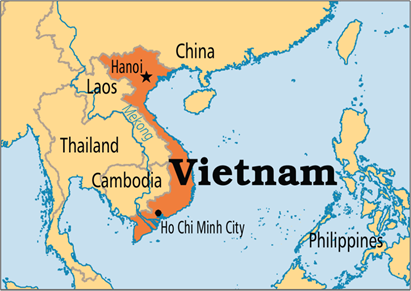
- Maritime Sentinel: Vietnam’s 3,200 km coastline along the South China Sea (SCS) makes it critical for monitoring and countering China’s “Nine-Dash Line” assertions.
- Strategic Autonomy: Like India, Vietnam follows a policy of “multi-directionalism” (avoiding formal military alliances). This shared pursuit of autonomy makes them natural partners in a multipolar Asia.
2. The Linchpin of ASEAN
- Gateway to Southeast Asia: Vietnam is one of the fastest-growing and most militarily capable members of ASEAN. India’s influence in Southeast Asia is structurally linked to the strength of its partnership with Hanoi.
- Institutional Influence: Vietnam consistently supports India’s broader role in regional forums like the ASEAN Defence Ministers’ Meeting (ADMM-Plus) and the East Asia Summit (EAS).
3. Maritime Security & Freedom of Navigation
- SLOC Protection: Over 50% of India’s trade passes through the South China Sea and the Malacca Straits. A friendly Vietnam ensures that these Sea Lines of Communication (SLOCs) remains open and governed by UNCLOS 1982.
- Operational Reach: Vietnam provides Indian Naval ships with access to its ports (e.g., Cam Ranh Bay), extending India’s operational footprint beyond the Indian Ocean.
4. Energy Security & Blue Economy
- Offshore Exploration: Vietnam has offered India oil and gas blocks in the SCS (Phu Kanh Basin). Despite Chinese pressure, India’s ONGC Videsh (OVL) maintains its presence there, which is a significant statement of India’s strategic intent.
5. Defense Industrial Partnership
- Market for Indigenization: Vietnam is a primary “launch customer” for India’s defense exports (BrahMos, Akas missiles, Tejas). Successful cooperation here establishes India as a credible Regional Security Provider.
- MRO Hub: Since both nations use similar Russian-origin equipment (Su-30s, Kilo-class subs), Vietnam serves as a vital partner for joint maintenance, repair, and logistics.
6. Economic Diversification (China-Plus-One)
- Supply Chain Resilience: As a global manufacturing hub, Vietnam is essential for India’s goal to build resilient supply chains that are less dependent on China, particularly in electronics, textiles, and Critical Minerals (Rare Earths).
Key Pillars of India-Vietnam Defence Cooperation
- High-Level Institutional Mechanism (2+2 Dialogue): Both nations have agreed to institute a 2+2 Ministerial Dialogue involving Foreign and Defence Ministers. This elevates the relationship to the same strategic level India shares with the Quad members (USA, Japan, Australia).
- Defence Industrial Cooperation & Procurement: The partnership has shifted from capacity-building to capability enhancement through the procurement of Indian hardware. Discussions have been revived for the sale of BrahMos supersonic cruise missiles and the purchase of patrol vessels and high-speed boats.
- Maintenance, Repair, and Overhaul (MRO) Support: India is providing technical support for Vietnam’s Russian-origin platforms, such as Su-30 fighter jets and Kilo-class submarines. This leverages India’s extensive experience and domestic facilities for similar equipment used by the Indian Armed Forces.
- Maritime Security and Information Sharing: There is a deep alignment on ensuring Freedom of Navigation and overflight in the South China Sea. Both nations are pursuing a White Shipping Information Sharing agreement to track commercial vessels and enhance maritime domain awareness.
- Defence Lines of Credit (LoC): India has extended a $500 million Defence Line of Credit to Vietnam, with $300 million already identified for specific projects. These funds facilitate Vietnam’s acquisition of Indian-made defence platforms like Offshore Patrol Vessels (OPVs).
- Human Resource and Training: India continues to provide extensive training to Vietnamese personnel under the ITEC program and through dedicated Army, Navy, and Air Force teams. This includes specialized training for UN Peacekeeping operations and underwater combat skills for submarine crews.
Key Challenges in India-Vietnam Relations
- The “China Factor” & Asymmetric Pressure: Vietnam’s proximity to China and deep economic integration force it to balance ties carefully, often hesitating on overt military alliances that might provoke Beijing.
- Implementation and “Delivery Deficits”: A recurring gap exists between signing MoUs and actual project completion, particularly in utilizing the $500 million Defence Line of Credit and infrastructure projects.
- Complexities in Defence Exports (e.g., BrahMos): Exporting lethal platforms involves navigating complex financial arrangements, technical integration with Vietnam’s existing systems, and managing the resulting regional geopolitical fallout.
- Structural Economic Barriers: Bilateral trade remains narrow, hindered by high logistics costs, a lack of direct shipping routes, and stringent legal frameworks that deter private Indian investment.
- Divergence in Multilateral Platforms: While both seek a rules-based order, Vietnam is wary of the “Quad’s” security branding, preferring ASEAN-led mechanisms to avoid being caught in a Great Power crossfire.
- Slow Progress in Connectivity Projects: The India-Myanmar-Thailand (IMT) Trilateral Highway extension to Vietnam remains stalled due to political instability in Myanmar, limiting physical trade and “Act East” potential.
Way Forward
- Operationalizing Defence Agreements: Shift focus from MoUs to the timely delivery of BrahMos missiles and utilization of the $500 million Line of Credit. Reliable MRO (Maintenance, Repair, and Overhaul) support is essential to establish India as a long-term security partner.
- Enhancing Maritime Domain Awareness (MDA): Operationalize White Shipping agreements and expand joint patrols to monitor non-military vessel movements. This creates a collective deterrent against maritime coercion and ensures stability in the South China Sea.
- Strengthening Supply Chain Resilience: Leverage the “China-Plus-One” strategy to integrate manufacturing in semiconductors, electronics, and textiles. Joint ventures in Critical Minerals (Rare Earths) are vital to break monopolies and secure technological sovereignty.
- Accelerating Digital and Financial Connectivity: Expand UPI-NAPAS interoperability to enable seamless, real-time cross-border payments for trade and tourism. This “Digital Bridge” will drive economic integration and set a fintech template for other ASEAN nations.
- Revitalizing Physical Connectivity Projects Fast-track the IMT Trilateral Highway and explore its extension to Vietnam to link South and Southeast Asia. Improving direct shipping routes is critical to reducing logistics costs and hitting the $25 billion trade target.
- Energy Security and Green Transition Diversify from oil exploration to collaborative projects in Green Hydrogen, solar, and offshore wind. Joint research in the “Blue Economy” will ensure energy independence while meeting global climate commitments.
Conclusion
The India-Vietnam partnership is a geopolitical anchor for a multipolar Indo-Pacific. By fusing technological sovereignty with maritime deterrence, this “Enhanced” alliance will redefine regional security, ensuring a rules-based order against unilateral hegemony.