
After Reading This Article You Can Solve This UPSC Mains Model Question:
Discuss how inadequate strategic petroleum and LNG reserves increase India’s vulnerability to global geopolitical and economic shocks. Suggest measures to strengthen India’s long-term energy security architecture. (15 Marks, GS-3 Economy)
Introduction
The recent hike in petroleum prices after four years highlighted India’s structural vulnerability in the energy sector. Rising crude oil prices, rupee depreciation, inflationary pressures, and pressure on foreign exchange reserves exposed the inadequacy of India’s Strategic Petroleum Reserves (SPR) and gas storage infrastructure.
What are Strategic Petroleum Reserves(SPR)?
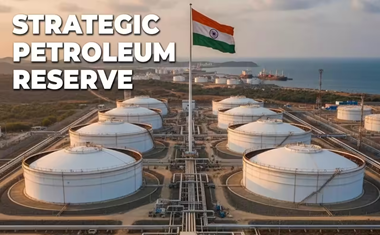
Strategic Petroleum Reserves (SPRs) are large stockpiles of crude oil maintained by countries to safeguard against unexpected supply disruptions, geopolitical crises, or economic shocks.
Key Features
- Purpose: To cushion the economy from sudden oil supply shocks, prevent extreme domestic price spikes, and maintain national security.
- Storage Method: Typically stored securely underground in massive salt caverns or rock caverns to prevent evaporation, minimize fire hazards, and protect against external attacks.
- Global Benchmark: The International Energy Agency (IEA) mandates that member countries maintain emergency oil stocks equivalent to at least 90 days of net oil imports.
- Ownership: Governed and funded directly by central governments, distinct from the commercial inventories held by private oil marketing companies.
India’s Current Petroleum Reserve Status
1. Capacity & Days of Cover
- Dedicated Strategic Petroleum Reserve (SPR) Capacity: 5.33 Million Metric Tonnes (MMT) (~39 million barrels).
- Pure SPR Cover: Provides approximately 9.5 days of net crude import cover at full capacity. (Currently filled to roughly 64% capacity).
- Total National Cover: 74 days of storage capacity (combining the 9.5-day SPR with 64.5 days of commercial/refinery inventory held by Oil Marketing Companies).
2. Infrastructure Locations
Managed by the Indian Strategic Petroleum Reserves Limited (ISPRL), the reserves are housed in underground rock caverns across two phases:
Phase I (Fully Operational)
- Visakhapatnam, Andhra Pradesh: 1.33 MMT
- Mangaluru, Karnataka: 1.50 MMT (Includes commercial partnership with UAE’s ADNOC)
- Padur, Karnataka: 2.50 MMT
Phase II (Under Development / High Priority)
Approved to add 6.5 MMT of capacity under a Public-Private Partnership (PPP) model to raise independent SPR cover to ~22 days:
- Chandikhol, Odisha: 4.0 MMT
- Padur, Karnataka (Phase II): 2.5 MMT
3. Gas & Allied Hydrocarbon Buffers
- LNG (Natural Gas): Lacks dedicated underground strategic storage. Relies on a floating 10% buffer mandate at commercial regasification terminals, providing an operational cushion of about 60 days.
- LPG: Maintained via domestic rolling stocks and a recent production ramp-up (to 54,000 tonnes/day) providing 45 days of buffer against a national demand of 80,000 tonnes/day.
Why is India Vulnerable?
- Extreme Import Dependency: India imports over 85% of its crude oil and around 50% of its natural gas requirements, making its economy highly sensitive to global supply shocks.
- Critically Low Strategic Buffer: India’s dedicated SPRs hold less than 10 days of crude oil consumption, which is vastly inadequate compared to the 90-day global benchmark recommended by the IEA.
- Absence of Strategic Gas Storage: India completely lacks dedicated underground strategic reserves for LNG and LPG, leaving vital sectors like agriculture (fertilizers) and households highly exposed to spot-market spikes.
- Fiscal and Currency Vulnerability: High global oil prices rapidly deplete India’s foreign exchange reserves, weaken the Indian Rupee, and trigger severe domestic imported inflation.
- Geopolitical Exposure: Lacking a massive strategic energy cushion forces India to constantly navigate volatile global geopolitics and sanctions regimes to secure uninterrupted, discounted energy shipments.
International Comparison
| Country | SPR Capacity | Key Feature |
| United States | ~714 million barrels | Built after 1973 oil shock |
| China | ~900 million barrels | Massive strategic buildup |
| India | ~39 million barrels | Limited reserve capacity |
Strategic Implications Strategic Petroleum Reserve (SPR) system for India
- Macroeconomic Insulation: A deep SPR cushions the economy against global oil shocks, protecting the Indian Rupee from sharp depreciation and keeping domestic inflation in check.
- Geopolitical Lever and Strategic Autonomy: Massive reserves allow India to resist external diplomatic pressures and sanctions, giving it the freedom to negotiate independent energy deals.
- National Security and Defence Readiness: A guaranteed emergency fuel supply ensures that military operations and critical national infrastructure remain fully functional during maritime blockades or wartime disruptions.
- Fiscal Stability and Deficit Control: Drawing from reserves during price spikes prevents heavy under-recoveries by oil companies, protecting the government from sudden fiscal deficit expansions.
- Supply Chain and Food Security: Expanding reserves to include gas (LNG) ensures uninterrupted feedstock for fertilizer plants, directly safeguarding India’s agricultural output and food security.
Government Initiatives
- PPP & Commercialization Shift: Phase II expansions (Chandikhol and Padur) use a commercial-cum-strategic PPP model, leasing storage to foreign/private firms while retaining sovereign first right to the crude during crises.
- International Energy Diplomacy: India partnered with global majors like UAE’s ADNOC to store overseas crude directly in Indian caverns (e.g., Mangaluru), securing a zero-cost external supply buffer.
- Mandated Gas Floating Buffers: Lacking underground storage, the government mandates domestic LNG terminals to maintain a rolling 10% buffer of all incoming shipments for strategic state use
Challenges India faces in building and managing its SPRs
- High Capital Investment: Constructing massive underground caverns and filling them with millions of barrels of crude oil requires astronomical upfront financial investments from the government.
- Geological and Land Constraints: Finding suitable geological structures, such as unlined rock caverns or salt domes, requires extensive geographical mapping and complex land acquisition processes.
- Slow Infrastructure Execution: Phase II of India’s SPR program has faced significant delays due to bureaucratic hurdles, shifting toward Public-Private Partnership (PPP) models, and long construction timelines.
- Storage Degradation and Costly Management: Maintaining crude oil underground for long periods requires constant monitoring, high operational costs, and periodic commercial “cycling” to prevent oil quality degradation.
- Absence of Private Sector Enthusiasm: Attracting foreign oil majors or private investors to build and manage these reserves is difficult due to strict government regulations and lower financial returns on strategic infrastructure.
Way Forward
- Expedite Phase II Construction: India must accelerate the development of its planned Phase II caverns at Chandikhol and Padur to quickly add 6.5 MMT of capacity and double its strategic cushion.
- Establish Strategic Gas Storage: The government needs to prioritize building dedicated underground storage for LNG and LPG to insulate the critical fertilizer and domestic cooking sectors from international market spikes.
- Leverage Commercialization and PPP Models: India should offer flexible commercial terms to international oil companies, allowing them to store oil in Indian caverns while reserving the first right of refusal for domestic use during crises.
- Explore Salt Cavern Storage Technology: Moving toward salt cavern storage—which is cheaper, faster to develop, and easier to operate than rock caverns—can significantly scale up storage capacity in regions like Rajasthan.
- Diversify and Secure Long-Term Contracts: India must combine physical storage with aggressive energy diplomacy, locking in long-term supply agreements and diversifying import sources to ensure steady inflows even during global supply chain re-alignments.
Conclusion
Expanding and modernizing India’s SPR network through advanced tech and deep global partnerships will secure its economic resilience, transform energy vulnerabilities into strategic autonomy, and fuel sustainable future growth.