
Context
- Two Asiatic lion cubs recently died in Gujarat’s Gir National Park due to a suspected Babesiosis infection (a tick-borne parasite). While three other adult lions died around the same time, their deaths were attributed to natural causes and territorial infighting. The State Forest Department has clarified that these are isolated cases, ruling out a widespread disease outbreak.
1. Key Species: Asiatic Lion
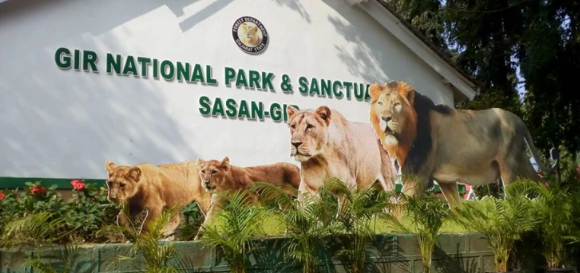
- Current Status & Habitat: Gir National Park and Wildlife Sanctuary in Gujarat is the only natural habitat of Asiatic lions in the world.
- Their population has faced severe bottlenecks but has been steadily recovering due to strict conservation efforts.
- Conservation Status:
- IUCN Red List: Endangered
- Wildlife (Protection) Act, 1972: Schedule I (affords the highest level of legal protection).
- CITES: Appendix I.
- Major Threats: Inbreeding depression (low genetic diversity), vulnerability to epidemics (like Canine Distemper Virus or Babesiosis), poaching, and territorial conflicts due to shrinking/overlapping habitats.
2. About the Disease: Babesiosis (Babesia Infection)
- What it is: It is a disease caused by microscopic parasites of the genus Babesia that infect and destroy red blood cells (erythrocytes).
- Transmission: It is a tick-borne disease, primarily transmitted through the bite of infected ticks (Ixodes species or other hard ticks found on wild animals).
- Symptoms in Wildlife: Causes hemolytic anemia, severe weakness, fever, jaundice, and respiratory distress.
- Past Precedent: In 2018–2020, a combination of Canine Distemper Virus (CDV) and Babesiosis caused a massive spike in Asiatic lion deaths in Gir, making it a recurring threat monitored heavily by wildlife epidemiologists.
3. About the Gir National Park
- Location: Gir National Park is spread over part of Junagadh, Amreli and Gir Somnath districts in Gujarat.
- It is part of the Kathiawar-Gir dry deciduous forests. It is also known as “Sasan Gir National Park”.
- Vegetation: Teak-dominated dry deciduous forests, thorn forests, and savannah-type grasslands.
- Key Rivers: The seven major perennial rivers of the Gir region are Hiran, Shetrunji, Dhatarvadi, Shingoda, Machhundri, Ambajal and Raval Rivers.
- Reservoir: biggest reservoir in the area, the Kamleshwar Dam, dubbed ‘the lifeline of Gir’.
Consider the following statements regarding the Asiatic Lion:
1. Gir National Park in Gujarat is the only natural habitat of Asiatic lions in the world.
2. The Asiatic Lion is listed as “Critically Endangered” on the IUCN Red List.
Which of the statements given above is/are correct?
A. 1 only
B. 2 only
C. Both 1 and 2
D. Neither 1 nor 2
Answer: A. 1 only
Explanation:
• Statement 1 is correct: Gir National Park and Wildlife Sanctuary in Gujarat is the only natural habitat of Asiatic lions globally.
• Statement 2 is incorrect: The Asiatic Lion is classified as Endangered, not Critically Endangered, on the IUCN Red List.