
Context
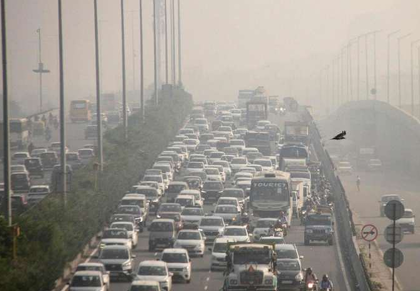
- While air pollution in India is heavily associated with winter, data from 2026 highlights an alarming rise in summer air pollution across major Indian metros (Delhi, Mumbai, Bengaluru, Chennai, Hyderabad, and Kolkata).
- The Commission for Air Quality Management (CAQM) revoked winter curbs under the Graded Response Action Plan (GRAP) but had to re-impose Stage 1 of GRAP as temperatures soared to combat summer air pollution driven by heatwaves.
1. Key Differences: Winter vs. Summer Air Pollution
| Feature | Winter Air Pollution | Summer Air Pollution |
| Primary Pollutants | Fine particulate matter pm 2.5 dominates. | Coarser particulate matter pm 10 and Ground-level Ozone dominate. |
| Meteorological Factors | Low temperatures, low wind speeds, and inversion layers trap pollutants close to the ground (especially in the Indo-Gangetic plain’s basin-like topography). | High temperatures, intense sunlight, heatwaves, and strong convective winds (dust storms). |
| Additional Sources | Biomass burning for heating, agricultural residue burning (stubby burning). | Dust storms (Andhi/Loo), road dust resuspension, and secondary chemical reactions accelerated by intense solar radiation. |
2. Pollutant Dynamics
A. Ground-Level Ozone (O3) — A Secondary Pollutant
- Mechanism of Formation: Ozone is not emitted directly into the atmosphere from tailpipes or chimneys.
- It is a secondary pollutant formed through photochemical reactions between primary precursor gases under the influence of strong sunlight and high temperatures:
- Precursor Sources: Vehicle exhaust, industrial emissions, paints, solvents, and fuel combustion.
- It forms when nitrogen oxides (NOx) and volatile organic compounds (VOCs) react in the presence of strong sunlight.
- Health Impact: Severe respiratory illnesses.
- National Ambient Air Quality Standard (NAAQS): The hourly ozone safety standard is 180 \mug/m^3.
B. Summer PM 10 Spikes & Meteorological Drivers
- Low-Pressure Dynamics: Hot conditions over the Indian subcontinent create a local low-pressure area. Its interaction with surrounding high-pressure areas produces hot, windy conditions.
- Loo: Strong, hot, and dry summer winds blowing from West Asia and the Thar Desert across North India, carrying massive amounts of dust.
- Andhi: Localized, short-duration dust storms associated with thunderstorms that lift loose soil high into the atmosphere.
- The Summer Standard: The 24-hour NAAQS threshold for PM 10 is 100 mu g/m^3. During peak summer days, cities frequently breach this threshold due to dust storms and active construction.
3. Key Institutional Frameworks & Technology Initiatives
- CAQM (Commission for Air Quality Management): A statutory body responsible for air quality management in the National Capital Region (NCR) and adjoining areas.
- GRAP (Graded Response Action Plan): A set of layered emergency measures implemented depending on the severity of air pollution. Traditionally a winter mechanism, parts of it are now deployed during summer heatwaves.
- AQEWS (Air Quality Early Warning System):
- Originally created in 2018 to predict severe dust storms and winter smog episodes in Delhi; it now runs year-round.
- It has expanded its footprint to other major cities like Jaipur and Mumbai.
- Provides multi-pollutant forecasts several days in advance and a 3-day Air Quality Index (AQI) forecast for 140 Indian cities.
- AQDSS (Air Quality Decision Support System): Developed by the Brihanmumbai Municipal Corporation (BMC) in collaboration with the Council on Energy, Environment and Water (CEEW) to monitor construction sites and track heavy-vehicle movement to lower localized particulate matter.
Consider the following statements:
1. Ground-level ozone is directly emitted from industrial chimneys.
2. Heatwaves and strong sunlight can accelerate ozone formation.
3. PM10 levels can increase due to dust storms and construction activities.
Which of the statements given above is/are correct?
a) 2 and 3 only
b) 1 and 2 only
c) 3 only
d) 1, 2 and 3
Answer: a) 2 and 3 only
Explanation:
•  Statement 1 is incorrect: Ground-level ozone (O₃) is not directly emitted from industrial chimneys or vehicles. It is a secondary pollutant formed through photochemical reactions.
•  Statement 2 is correct: Heatwaves, high temperatures, and strong sunlight accelerate the reaction between NOx and VOCs, increasing ozone formation.
•  Statement 3 is correct: Dust storms (Andhi), Loo winds, road dust resuspension, and construction activities can significantly raise PM₁₀ concentrations.