
Context
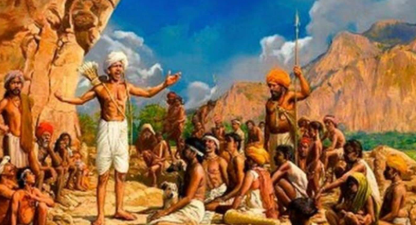
- Recently, June 9 marked the death anniversary of Birsa Munda, a charismatic tribal leader, freedom fighter, and folk hero who spearheaded an anti-colonial and anti-feudal movement in the Chotanagpur Plateau region during the late 19th century.
1. Core Background & Influences
- The Preceding Movement: The Sardari Larai (or Sardar movement) of the late 19th century preceded Birsa’s uprising. It heavily influenced the political and agitational climate in the Chotanagpur region, fighting against the destruction of tribal land systems.
- The Enemy (Dikus): The rebellion targeted the British colonial authorities, Christian missionaries, and the dikus—outsiders consisting of landlords (zamindars), moneylenders, and traders who exploited the indigenous population.
2. The Uprising: Ulgulan
- The Term “Ulgulan”: The Munda uprising led by Birsa Munda at the turn of the 20th century is popularly known as the Ulgulan, which translates to the “Great Tumult”.
- Famous Slogan: Birsa Munda gave the iconic slogan calling for the end of British rule:
“Abua raj ete jana, maharani raj tundu jana” > (Let the kingdom of the queen be ended and our kingdom be established).
3. Socio-Religious Reforms
- New Faith Community: Birsa Munda rejected Christian missionary activities and traditional superstitious tribal practices. He advocated for a return to their original roots and monotheism, giving rise to a distinct faith community known as Birsait.
- Principles: Followers of the Birsait sect worshipped one God (Singhbonga, a tribal deity), clean living, and strictly prohibited cow slaughter, sacrifices, and alcohol consumption.
4. Capture, Death, and Literary Records
- Cause of Death: Birsa Munda was captured by the British and died in Ranchi Jail on June 9, 1900. The official cause of death recorded by the British authorities was cholera, though historical debates surround the true nature of his sudden demise.
- Ethnographic Records: The famous, definitive photograph of Birsa Munda (arms crossed, wearing a turban) was reproduced in the pioneering ethnographic work titled The Mundas and Their Country (1912) by the renowned anthropologist Sarat Chandra Roy.
5. Aftermath and Legacy
- Chotanagpur Tenancy Act (CNT), 1908: The ultimate legal outcome of the Ulgulan. The British administration passed this act to protect tribal lands, legally banning the forced labor (beth-begari) system and prohibiting the transfer of tribal land to non-tribals (dikus).
- Janjatiya Gaurav Divas: In recognition of his massive contribution to the Indian freedom struggle, his birth anniversary (November 15) is celebrated as Janjatiya Gaurav Divas (Tribal Pride Day) in India.
In the context of tribal movements during colonial India, the term "Dikus" referred to:
(a) Tribal chiefs appointed by the British
(b) Christian missionaries working among tribes
(c) Outsiders such as landlords, moneylenders, and traders exploiting tribal communities
(d) Armed tribal volunteers
Correct Answer: (c) Outsiders such as landlords, moneylenders, and traders exploiting tribal communities
Explanation
In many tribal movements of colonial India, especially the movement led by Birsa Munda, the term "Diku" was used to refer to outsiders who entered tribal areas and exploited tribal communities.
These included:
• Landlords (zamindars)
• Moneylenders
• Traders
• Contractors
• Government officials