
Important for UPSC Prelims: Science & Technology
Context
Pellet guns were recently reported to have been used during a protest for crowd-control purposes. This has once again brought attention to pellet guns, their technology, operational use, and the debate surrounding less-lethal weapons.
What are Pellet Guns?
- A pellet gun is a less-lethal (non-lethal) weapon designed for crowd control and riot management.
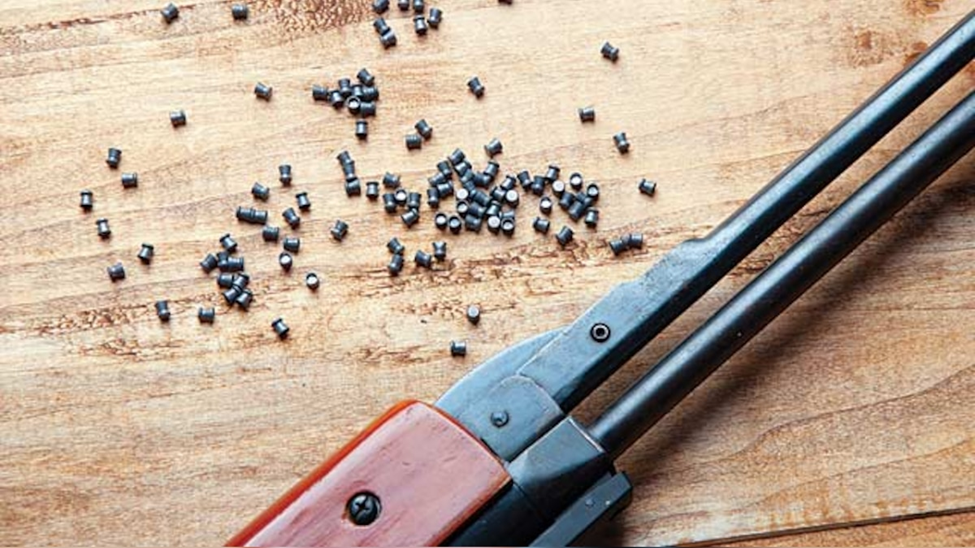
- It fires multiple small metallic pellets simultaneously through a shotgun cartridge.
- Unlike conventional firearms that fire a single bullet, pellet guns disperse hundreds of pellets over a wide area.
- They are intended to temporarily incapacitate individuals while reducing the need for live ammunition.
How Does a Pellet Gun Work?
- A shotgun cartridge contains numerous small spherical pellets.
- When fired, the cartridge bursts open and the pellets spread in a cone-shaped pattern.
- The spread increases with distance, making the weapon suitable for dispersing crowds rather than targeting a single individual.
- The effectiveness and injury potential depend on factors such as firing distance, pellet material, and impact location.
Key Features
- Multiple Pellet Discharge: Fires hundreds of small pellets in a single shot.
- Wide-Area Coverage: Pellets spread in a cone-shaped pattern, covering a broad area instead of a single target.
- Less-Lethal Weapon: Designed to reduce reliance on live ammunition during crowd-control operations.
- Effective Range: Generally used at short to medium distances for maximum effectiveness.
- Specialized Launcher: Operated using shotgun-type launchers specifically designed for pellet cartridges.
Types of Pellets
Depending on operational requirements, pellet cartridges may contain:
- Lead pellets – Traditionally used due to their density.
- Rubber-coated pellets – Intended to reduce injury severity.
- Plastic or composite pellets – Used in some countries as less harmful alternatives.
Why are Pellet Guns Used?
Security forces may deploy pellet guns for:
- Riot control
- Violent crowd dispersal
- Public order management
- Situations where graded use of force is required before considering live ammunition
Advantages
- Pellet guns provide a less-lethal alternative to live ammunition for crowd-control operations.
- Their wide pellet spread makes them useful for dispersing large violent gatherings while supporting the graduated use of force.
Limitations
- Pellet guns have limited accuracy because the pellets disperse over a wide area, making precise targeting difficult.
- This increases the risk of unintended injuries to bystanders and can cause severe harm if used at close range.
Humanitarian Concerns
- Despite being classified as less-lethal weapons, pellet guns can cause serious and sometimes permanent injuries.
- These include eye injuries, vision loss, facial trauma, deep tissue damage, and long-term disability, particularly when vulnerable body parts are struck.
| Important CTC from this Article for UPSC Pellet Guns Central Reserve Police Force (CRPF) |
Q1. With reference to pellet guns, consider the following statements:
1. Pellet guns are classified as less-lethal weapons used primarily for crowd control.
2. A pellet gun fires a single projectile with high precision.
3. PAVA shells are considered one of the alternatives to pellet guns for riot control.
Which of the statements given above is/are correct?
A. 1 only
B. 1 and 2 only
C. 1 and 3 only
D. 2 and 3 only
Answer: C. 1 and 3 only
Explanation:
Statement 1 is correct: Pellet guns are categorized as less-lethal crowd-control weapons.
Statement 2 is incorrect: They fire multiple small pellets, not a single projectile.
Statement 3 is correct: PAVA (Pelargonic Acid Vanillyl Amide) shells are considered a comparatively less harmful alternative.