
After Reading This Article You Can Solve This UPSC Mains Model Question:
“The launch of Vikram-1 marks a paradigm shift in India’s space sector from a state-led model to a commercially driven ecosystem.” Discuss the significance of this development. Examine the challenges faced by India’s private space industry and suggest measures to enhance its global competitiveness. 15 marks (GS 3, Science and Technology)
Context
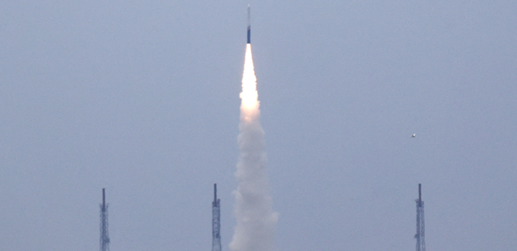
Skyroot Aerospace successfully launched Vikram-1, becoming the first Indian private company to achieve an orbital launch, marking a major milestone in India’s space sector liberalisation after the Indian Space Policy, 2023.
Introduction
The successful launch of Vikram-1 signifies India’s transition from a state-led space programme to a public-private partnership model. It reflects the government’s vision of transforming India into a global commercial space hub while allowing ISRO to focus on frontier research and strategic missions.
Why is Vikram-1 Significant?
1. India’s First Private Orbital Launch
- Historic milestone: Vikram-1 is the first launch vehicle developed by an Indian private company to successfully place a payload into orbit, marking a new chapter in India’s space programme.
- Global recognition: It makes India one of only a handful of countries where private enterprises have independently demonstrated orbital launch capability, showcasing the maturity of its private space ecosystem.
2. Beginning of a New Space Era
- From monopoly to competition: The launch reflects the success of space sector reforms that ended ISRO’s exclusive role in launch services and opened the sector to private participation.
- Innovation-driven ecosystem: It signals the emergence of Indian space startups capable of designing, manufacturing, and operating end-to-end launch vehicles, strengthening India’s commercial space industry.
3. Engineering Achievement
- Advanced launch vehicle design: Vikram-1 is a four-stage launch vehicle built using lightweight carbon-composite structures, improving payload efficiency and lowering manufacturing costs.
- Optimised for small satellites: The rocket is specifically designed to cater to the rapidly growing small satellite market, offering dedicated and efficient launch solutions.
4. Commercial Innovation
- Dedicated launch service: Unlike rideshare missions, Vikram-1 provides exclusive launch opportunities, allowing customers to avoid delays and orbital compromises caused by sharing rockets with multiple payloads.
- Customer-centric flexibility: Satellite operators can choose their preferred orbit, launch schedule, and mission profile, making the service similar to booking a “cab” rather than travelling in a shared bus, albeit at a higher cost.
Background: Space Sector Reforms
Before 2020
1. ISRO’s Monopoly over Launch Activities
- ISRO exclusively carried out all launch vehicle development and space missions in India.
2. Private Firms as Component Suppliers
- Private companies were limited to manufacturing components and providing technical support to ISRO.
Since 2020: Major Space Sector Reforms
1. Opening Launch Services to Private Players
- Private companies were allowed to develop, own, and operate launch vehicles and satellites.
2. Creation of IN-SPACe
- IN-SPACe was established as the regulator and single-window facilitator for private participation in the space sector.
3. Establishment of NewSpace India Limited (NSIL)
- NSIL was created as ISRO’s commercial arm to promote the commercial utilization of space technologies and services.
4. Indian Space Policy, 2023
- The policy provides a clear framework defining the roles of ISRO, NSIL, IN-SPACe, and private entities.
5. 49% FDI under Automatic Route (2024)
- Up to 49% FDI was permitted under the automatic route to attract foreign investment and technology into the launch vehicle sector.
Challenges Ahead for Vikram-1 and India’s Private Space Sector
1. Commercial Viability: Skyroot must achieve consistent launches with reliable schedules and competitive pricing to build a sustainable commercial business.
2. Intense Global Competition: Established players like SpaceX, Rocket Lab, and emerging Chinese companies offer cost-effective launch services, making market penetration difficult.
3. Limited Dedicated Launch Market: The demand for premium dedicated launches remains uncertain as many customers prefer cheaper rideshare missions.
4. Scaling Manufacturing: Expanding from prototype production to mass manufacturing requires maintaining quality, supply chain efficiency, and production consistency.
5. Regulatory and Legal Uncertainty: The absence of a comprehensive Space Activities Act creates ambiguity regarding licensing, liability, insurance, and dispute resolution.
6. High Capital and Technology Requirements: Developing reusable launch technologies, advanced propulsion systems, and launch infrastructure demands significant long-term investment and continuous innovation.
Way Forward for India’s Private Space Sector
1. Enact a Space Activities Act: Enact a comprehensive Space Activities Act to provide legal clarity on licensing, liability, insurance, and commercial space operations.
2. Strengthen the Private Space Ecosystem: Promote private space enterprises through long-term funding, tax incentives, infrastructure access, and government procurement support.
3. Encourage International Partnerships: Expand global launch contracts, technology collaborations, and foreign investments to enhance India’s competitiveness in the global space market.
4. Develop Domestic Supply Chains: Strengthen indigenous capabilities in propulsion systems, advanced materials, and space-grade electronics to reduce import dependence.
5. Expand the Domestic Space Market: Increase demand by promoting small satellite manufacturing, defence space programmes, Earth observation services, and satellite constellations.
6. Foster Innovation and R&D: Invest in advanced technologies such as reusable launch vehicles, next-generation propulsion systems, and AI-enabled space applications to ensure long-term global leadership.
Conclusion
The successful launch of Vikram-1 marks the dawn of India’s New Space Age. Sustained policy support, innovation, and commercial competitiveness will be crucial to making India a global space launch hub and achieving its $44 billion space economy target by 2033.