
Context
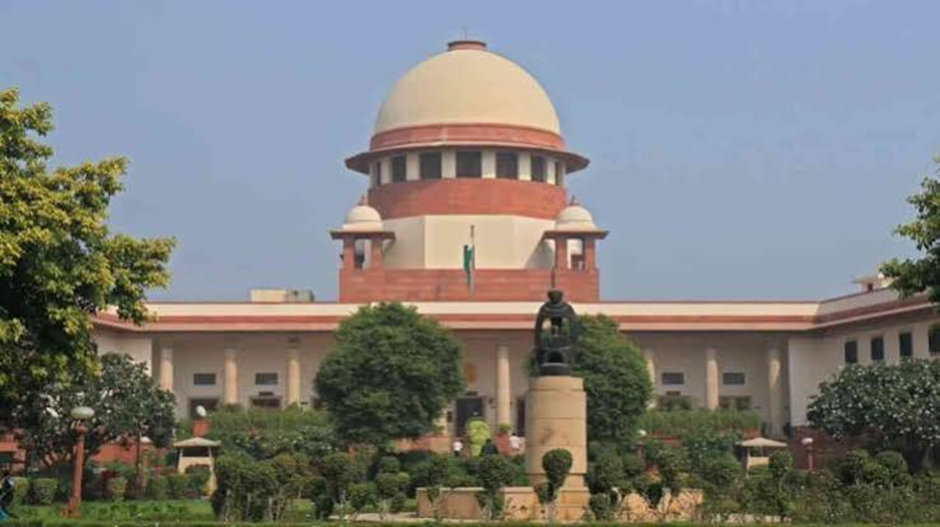
- Recently, the Union Government introduced the Supreme Court (Number of Judges) Amendment Bill, 2026 in the Lok Sabha to increase the sanctioned strength of Supreme Court judges from 34 to 38 (excluding the Chief Justice of India) to reduce the backlog of pending cases and enhance judicial efficiency.
Constitutional Provisions
Article 124
- Provides for the establishment and composition of the Supreme Court.
- Parliament has the power to determine the number of judges byAppointment of Judges
- Appointed by the President of India.
- Appointments are made under the Collegium System (as evolved through judicial decisions).
Retirement Age
- Supreme Court Judges retire at 65 years.
Removal
- Can be removed only by the President after an address by both Houses of Parliament on grounds of proved misbehaviour or incapacity.
Evolution of Supreme Court Strength
| Year | Amending Legislation | New Sanctioned Strength | Breakdown |
| 1950 | Original Constitutional Provision (Art. 124(1)) | 8 Judges | 1 CJI + 7 Puisne Judges |
| 1956 | The Supreme Court (Number of Judges) Act, 1956 | 11 Judges | 1 CJI + 10 Puisne Judges |
| 1960 | The Supreme Court (Number of Judges) Amendment Act, 1960 | 14 Judges | 1 CJI + 13 Puisne Judges |
| 1977/78 | The Supreme Court (Number of Judges) Amendment Act, 1977 (Implemented in ’78) | 18 Judges | 1 CJI + 17 Puisne Judges |
| 1986 | The Supreme Court (Number of Judges) Amendment Act, 1986 | 26 Judges | 1 CJI + 25 Puisne Judges |
| 2008/09 | The Supreme Court (Number of Judges) Amendment Act, 2008 (Enacted in ’09) | 31 Judges | 1 CJI + 30 Puisne Judges |
| 2019 | The Supreme Court (Number of Judges) Amendment Act, 2019 | 34 Judges | 1 CJI + 33 Puisne Judges |
| 2026 | The Supreme Court (Number of Judges) Amendment Bill, 2026 (Current) | 38 Judges | 1 CJI + 37 Puisne Judges |
Need for Increasing the Number of Judges
- Rising Pendency: Over 92,000 cases are pending before the Supreme Court.
- Increasing Case Load: Fresh cases filed annually continue to exceed the number of cases disposed.
- Complex Constitutional Matters: Larger Constitution Benches are required for significant constitutional issues, increasing the workload.
- Timely Justice: More judges are expected to reduce delays and improve access to justice.
| Important CTC From This Article For UPSC:- |
| Superme Court |
| CJI |
Q. With reference to the Supreme Court of India, consider the following statements:
1. The Constitution of India fixes the maximum number of judges in the Supreme Court.
2. Parliament has the power to increase or decrease the sanctioned strength of Supreme Court judges through law.
3. The Chief Justice of India is included while calculating the sanctioned strength of Supreme Court judges.
Which of the statements given above is/are correct?
A. 2 only
B. 1 and 2 only
C. 2 and 3 only
D. 1, 2 and 3
Answer: A. 2 only
Statement 1 is Incorrect: The Constitution does not fix the number of Supreme Court judges. Under Article 124, Parliament determines the number of judges by law.
Statement 2 is Correct: Parliament can increase or decrease the sanctioned strength through legislation such as the Supreme Court (Number of Judges) Act and its amendments.
Statement 3 is Incorrect: The sanctioned strength is generally expressed as "excluding the Chief Justice of India." Thus, under the proposed amendment, there will be 37 judges + 1 CJI = Total 38 judges.