
Introduction
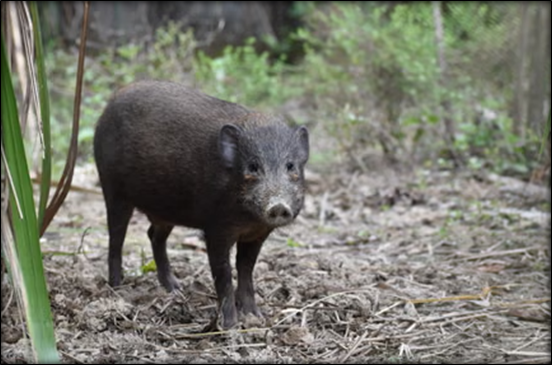
The pygmy hog is the world’s smallest wild suid, endemic to the tall alluvial grasslands of the Himalayan foothills, and a sensitive indicator of grassland ecosystem health.
Key Features
- Taxonomy: Porcula salvania is the sole living species of the genus Porcula, genetically distinct from wild boar and other Sus species.
- Size: It is exceptionally small, measuring roughly 65 cm in length and 25 cm in height, with adults weighing around 8–9 kg.
- Behaviour: It is diurnal and social, with females and young forming small family groups; males are generally solitary.
- Unique adaptation: It constructs grass nests, which provide shelter, resting space and protection for young in its tall-grass habitat.
- Diet: As an omnivore, it consumes roots, tubers, shoots, insects and other small animal matter, supporting its ecological role in soil and food-web processes.
Habitat & Distribution
- Preferred habitat: It requires tall, dense, wet alluvial grasslands with adequate cover and a mosaic of grasses, herbs and early successional vegetation.
- Historical range: Its former range extended through the Terai–Dooars region from northern Uttar Pradesh and Nepal to North Bengal and Assam.
- Present distribution: The remaining natural population is associated with Manas National Park in Assam, while conservation reintroductions have established populations in areas including Orang National Park and Sonai-Rupai Wildlife Sanctuary.
Ecological Significance
- Indicator species: Its dependence on tall, intact grasslands makes the pygmy hog a useful indicator of alluvial grassland ecosystem health. DUmbrella effect: Protecting its grassland habitat simultaneously benefits threatened species such as the Bengal florican, hispid hare, rhino and wild buffalo. D
- Ecosystem functioning: Its rooting and foraging behaviour can disturb and aerate soil and aid seed dispersal, contributing to nutrient cycling and vegetation dynamics.
Indian Conservation Initiatives
- Pygmy Hog Conservation Programme (PHCP), 1995: It integrates captive breeding, habitat restoration, scientific monitoring and reintroduction in Assam.
- Conservation breeding: The programme originated from only six founder animals (2 males and 4 females) captured from Manas, making genetic management particularly important.
- Reintroduction: Since 2008, captive-bred animals have been released into protected areas including Sonai-Rupai, Orang, Barnadi and Manas; by 2021, 142 captive-bred hogs had been reintroduced in Assam.
- Habitat restoration: Recent projects target invasive-species removal, native-grass planting, tree encroachment control and grassland corridors, including restoration of 310 hectares between Rupahi and Kanchanbari.
- Legal protection: The species receives Schedule I protection under the Wildlife (Protection) Act, 1972, providing the highest statutory protection in India.
Conclusion
The pygmy hog represents the health of India’s disappearing floodplain grasslands; therefore, its recovery requires combining conservation breeding with habitat connectivity, ecological fire management and landscape-level restoration.
| This Concept Has Been Mentioned In The Article: Pygmy Hog Conservation: From Species Recovery to Alluvial Grassland Restoration |