
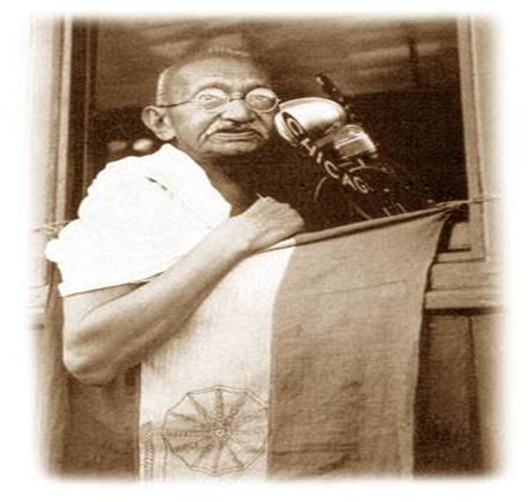
About the Ideal of Sarvodaya
- Sarvodaya is the core Gandhian ideal of social reconstruction, aiming at the all-round uplift and welfare of every member of society. The word combines the Sanskrit terms Sarva (all) and Udaya (rise or uplift).
- Mahatma Gandhi adopted the term in 1908 as the title of his Gujarati adaptation of John Ruskin’s Unto This Last, and shaped it into a programme of moral, political and economic change.
Philosophical Foundations of Sarvodaya
- Ruskin’s Three Lessons: Gandhi drew three principles from Unto This Last —
- The good of the individual is contained in the good of all.
- A lawyer’s work and a barber’s work carry equal value, as all have the same right to earn a livelihood from their work.
- A life of manual labour — of the tiller of the soil and the handicraftsman — is the life worth living.
- Departure from Utilitarianism: Rejects the Western utilitarian principle of the greatest good of the greatest number; seeks the moral, spiritual and material welfare of every individual, including the poorest.
- Sources of Inspiration: The Bhagavad Gita, the Isavasyopanishad, Buddhism, Jainism, Christianity, Islam, and the writings of Leo Tolstoy and Henry David Thoreau.
Socio-Political and Economic Dimensions
- Gram Swaraj: Decentralised, self-governing village republics in place of a centralised state.
- Lokniti over Rajniti: Consensus-based people’s polity (Lokniti) replacing power-seeking party politics (Rajniti).
- Stateless, Classless Society: Long-term aim of a non-violent, egalitarian order run on voluntary cooperation and self-discipline rather than state coercion.
- Trusteeship: Holders of wealth act as trustees of surplus wealth for society, instead of forcible dispossession through class struggle.
- Moral Economy: Economics subordinated to ethics — Swadeshi, cottage industries, voluntary limitation of wants and bread labour.
- Purity of Means: A just, non-violent society cannot be built through violence, coercion or hatred; means and ends are inseparable.
Post-Independence Evolution of Sarvodaya
- Vinoba Bhave: Carried the ideal forward through the Bhoodan (land gift, 1951) and Gramdan (village gift) movements, based on voluntary donation.
- Jayaprakash Narayan (JP): Moved from state socialism to Sarvodaya, advocated grassroots democracy, and later launched the Total Revolution (Sampoorna Kranti) covering political, social, economic, cultural, educational, intellectual and spiritual spheres.
Conclusion
Sarvodaya is the Gandhian ideal of the welfare of all, built on Ruskin’s principles from Unto This Last and expressed through Gram Swaraj, Lokniti, trusteeship and purity of means. After independence, Vinoba Bhave (Bhoodan–Gramdan) and Jayaprakash Narayan (Total Revolution) carried it forward as a non-violent route to social and economic transformation.
| This concept has been elaborately discussed in the following article — Gandhi Jayanti |