
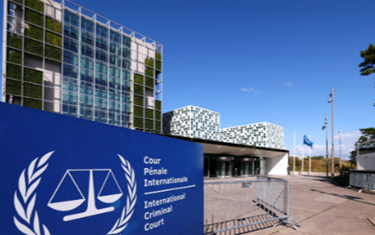
International Criminal Court (What is it?)
- The International Criminal Court (ICC) is a permanent international judicial institution established to prosecute individuals responsible for the most serious crimes of international concern.
- It was established under the Rome Statute, 1998, which came into force on 1 July 2002.
- It is headquartered in The Hague, Netherlands.
- Unlike the International Court of Justice (ICJ), which deals with disputes between states, the ICC prosecutes individuals.
- It is an independent international organisation and is not a UN organ, although it cooperates with the United Nations.
Key Features of ICC
- Jurisdiction: Deals with four categories of international crimes:
- Genocide
- Crimes against humanity
- War crimes
- Crime of aggression
- Complementarity Principle: ICC intervenes only when national judicial systems are unwilling or genuinely unable to investigate or prosecute.
- Individual Criminal Responsibility: Individuals, including heads of state and senior officials, can be prosecuted.
- No Retrospective Jurisdiction: It generally has jurisdiction over crimes committed after the Rome Statute entered into force on 1 July 2002.
- No Independent Police Force: It depends on member states for arrests, surrender of accused persons and enforcement of warrants.
- Jurisdictional Basis: The Court can exercise jurisdiction when:
- The crime is committed on the territory of a State Party.
- The accused is a national of a State Party.
- A non-member state accepts the Court’s jurisdiction for a particular situation.
- The UN Security Council refers a situation to the Court.
Relationship Between ICC and India
- India is not a signatory or State Party to the Rome Statute.
- India has expressed concerns regarding the ICC’s jurisdiction, the role of the UN Security Council and the principle of state sovereignty.
- Consequently, India is not automatically bound by the Rome Statute’s obligations as a State Party.
Conclusion
The ICC represents an important step towards ending impunity for international crimes. However, its effectiveness depends on state cooperation, impartial application of international law and stronger enforcement mechanisms.
| This Concept has been discussed in the following article: DAMNING REPORT |