
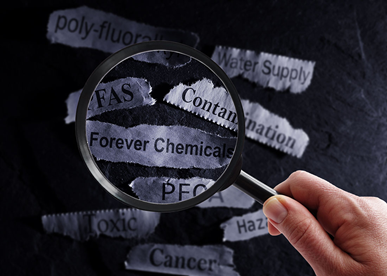
PFAS (What are they?)
- PFAS stands for Per- and Polyfluoroalkyl Substances, a large group of synthetic chemicals used in industrial and consumer products.
- They are called “Forever Chemicals” because their strong carbon–fluorine bonds make them highly resistant to degradation, allowing them to persist in the environment for long periods.
Key Features of PFAS
- Chemical composition: Contain carbon–fluorine bonds, which are highly stable and resistant to chemical and environmental degradation.
- Persistence: Many PFAS remain in soil, water and living organisms for prolonged periods.
- Wide usage: Used in a variety of industrial processes and consumer products.
- Chemical diversity: PFAS comprise thousands of different chemicals with varying properties, environmental behaviour and toxicity.
Common Uses of PFAS
- Non-stick cookware: Used in coatings such as PTFE (commonly known as Teflon).
- Firefighting foam: Used in aqueous film-forming foams (AFFF), particularly for fuel fires.
- Food packaging: Used in grease-resistant food wrappers and packaging.
- Textiles: Used in water- and stain-resistant clothing, carpets and upholstery.
- Industrial applications: Used in electronics, chemical manufacturing and other specialised processes.
Conclusion
PFAS highlight the challenge of balancing industrial utility with environmental and public-health protection. Their persistence underscores the need for chemical regulation, pollution control and safer alternatives.
| This Concept has been discussed in the following article: The Earthshot Prize 2026 |