
Introduction
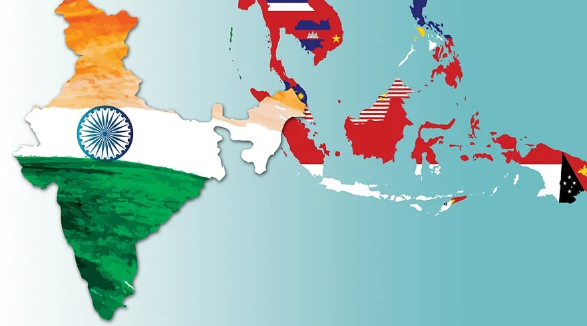
The Act East Policy (2014) was launched by Prime Minister Narendra Modi at the 12th ASEAN-India Summit in Myanmar, upgrading the earlier Look East Policy (1991) to strengthen India’s engagement with Southeast Asia and the wider Indo-Pacific region.
Key Objectives of the Act East Policy
1. Strengthening Economic Cooperation: India seeks to enhance trade, investment and economic integration with ASEAN and other East Asian countries.
2. Strategic and Security Cooperation: The policy aims to strengthen defence partnerships, maritime security and cooperation in addressing traditional and non-traditional security threats.
3. Connectivity and Infrastructure Development: India promotes physical, digital and maritime connectivity through projects such as the India-Myanmar-Thailand Trilateral Highway and the Kaladan Multi-Modal Transit Transport Project.
4. Cultural and People-to-People Relations: India seeks to deepen historical, civilisational and cultural ties with Southeast Asian countries through tourism, educational exchanges and cultural diplomacy.
5. Promoting Indo-Pacific Cooperation: The policy supports a free, open, inclusive and rules-based Indo-Pacific, with ASEAN centrality as an important guiding principle.
Major Areas of Cooperation
- ASEAN: Strengthening India’s Comprehensive Strategic Partnership with ASEAN through trade, investment and institutional engagement.
- Japan and South Korea: Enhancing cooperation in technology, infrastructure, manufacturing and strategic affairs.
- Australia: Expanding defence, maritime and economic cooperation, including through the Quad framework.
- Myanmar: Developing connectivity with India’s Northeast and strengthening its engagement with Southeast Asia.
- BIMSTEC: Promoting regional connectivity and cooperation between South and Southeast Asia.
Conclusion
The Act East Policy is a cornerstone of India’s Indo-Pacific strategy, linking its economic aspirations with strategic interests. Its success depends on effective implementation, stronger regional connectivity and deeper engagement with ASEAN.
| This Concept has been discussed in the following article: India’s Asian Diplomacy: Strengthening Partnerships In A Changing Indo-Pacific |