
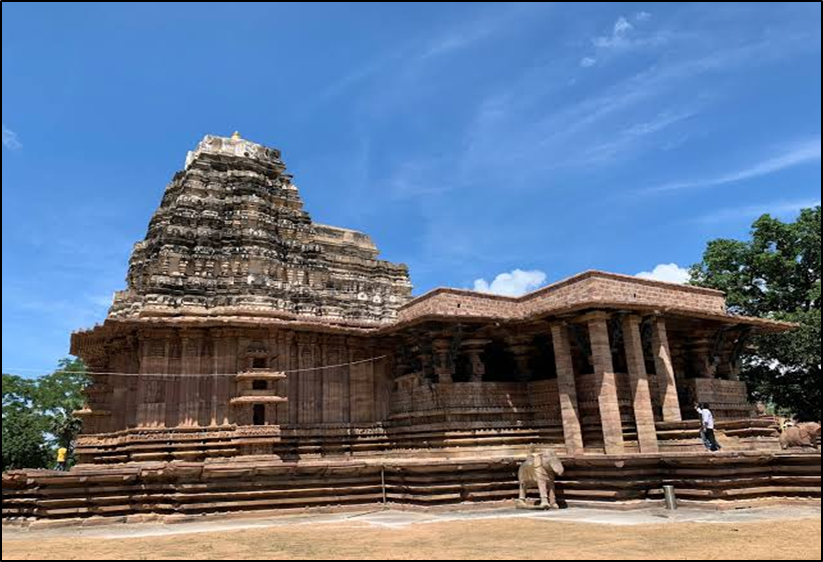
About Ramappa Temple
- Historical Era & Patronage: Commissioned in 1213 CE by Recherla Rudra, a general of Kakatiya King Ganapati Deva.
- Presiding Deity: Dedicated to Ramalingeswara Swamy (Lord Shiva).
- Nomenclature: The only major historical temple in India named after its chief architect/sculptor, Ramappa.
- UNESCO Recognition: Inscribed as a UNESCO World Heritage Site in 2021 (India’s 39th site).
- Associated Landscape: Sits adjacent to the 13th-century Ramappa Lake, showcasing the Kakatiyas’ traditional chain-of-tanks irrigation engineering.
Key Architectural Features
- Sandbox Foundation: Trenches filled with sand, granite dust, and binders (jaggery, karakkaya) that cushion and absorb earthquake vibrations.
- Floating Bricks: Lightweight, porous bricks (< 1 g/cc density) in the vimana reduce vertical load on stone pillars.
- Stellate Platform: Built on an elevated, 6-foot star-shaped sandstone base (upapitha).
- Black Dolerite Sculptures: Intricate bracket figures (Madanikas) illustrating dance postures from Jayapa Senani’s Nrtta Ratnavali.
Conclusion
The Ramappa Temple stands as a testament to the Kakatiyas’ engineering mastery and indigenous hydraulic planning. Protecting its subterranean hydrological balance and sandbox foundation from adjacent opencast extraction is vital to safeguarding this irreplaceable UNESCO World Heritage site for future generations.
| This concept has been discussed elaborately in the following article: Ramappa Temple: The Heritage Site Under Threat from Proposed Coal Mine |