
Context
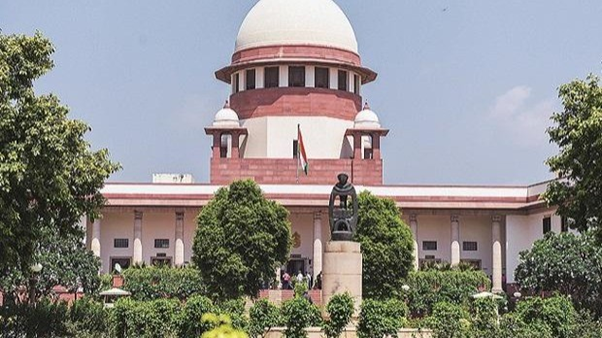
Recently, the Supreme Court ruled that the constitutional 24-hour deadline for producing an arrested person before a Judicial Magistrate begins from the moment their liberty is curtailed through detention, and not from the time of formal arrest.
About Arrest
- Meaning: Arrest refers to the act of taking a person into custody by lawful authority, thereby restricting their freedom of movement.
- Legal Framework: The term ‘arrest’ is not specifically defined in the Indian Penal Code (IPC), Code of Criminal Procedure (CrPC) or Bharatiya Nagarik Suraksha Sanhita (BNSS), 2023.
- Purpose: Arrest is undertaken to ensure the presence of an accused before the legal authorities and to facilitate the investigation and administration of criminal justice.
- Constitutional Safeguard: Article 22 of the Constitution provides safeguards against arbitrary arrest and detention.
Constitutional Provisions Governing Arrest and Detention
Article 21 – Protection of Life and Personal Liberty
- No person shall be deprived of their life or personal liberty except according to the procedure established by law.
- The Supreme Court held that the protection of life and personal liberty remains central to constitutional jurisprudence and cannot be diluted even under special statutes.
Article 22 – Protection Against Arrest and Detention
- Article 22(1): Every arrested person has the right to be informed of the grounds of arrest and the right to consult and be defended by a legal practitioner of their choice.
- Article 22(2): Every arrested and detained person must be produced before the nearest Judicial Magistrate within 24 hours of arrest.
Supreme Court Ruling on Arrest and Detention (2026)
- Case: Sri Sujit Das and Others v. Union of India (2026).
- Bench: Justice Ujjal Bhuyan and Justice Atul S. Chandurkar.
- Key Ruling: The Court held that arrest and detention cannot be artificially treated as two separate stages for calculating the 24-hour constitutional deadline.
- Meaning of Arrest: Even if an investigating officer physically restrains or detains a person with the intention of restricting their liberty, it amounts to arrest for the purpose of Article 22(2).
- 24-Hour Rule: The 24-hour period begins from the actual time of detention when the individual’s liberty is effectively curtailed, and not from the time when formal arrest is recorded.
- Unconstitutional Practice: Investigating agencies cannot create an artificial buffer period by detaining individuals for questioning, search or investigation without formally recording their arrest.
Why Did the Supreme Court Reject the Distinction Between Arrest and Detention?
- Manipulation of Arrest Records: Police authorities sometimes calculate the 24-hour period from the time of formal arrest, excluding the preceding period of detention.
- Risk of Custodial Torture: Such practices allow investigating agencies to question suspects without immediate judicial oversight and may facilitate coercive interrogation.
- Violation of Fundamental Rights: Deliberately delaying the formal recording of arrest undermines the protection of life and personal liberty under Article 21.
- Unconstitutional Buffer Zone: The Court held that Article 22(2) does not permit any period during which a person’s liberty is curtailed for investigation but the person is not formally shown as arrested.
Relevant Provisions under the Bharatiya Nagarik Suraksha Sanhita (BNSS), 2023
- Section 56 – Health and Safety of Arrested Person: The person having custody of an accused must take reasonable care of their health and safety.
- Section 57 – Person Arrested to Be Taken Before Magistrate or Officer in Charge of Police Station: A person arrested without a warrant must be taken before the appropriate authority without unnecessary delay.
- Section 58 – Person Arrested Not to Be Detained More Than Twenty-Four Hours: No police officer shall detain a person arrested without a warrant for more than 24 hours without the special order of a Magistrate, excluding the time necessary for the journey.
Significance of the Judgment
- Strengthens constitutional safeguards against arbitrary arrest and illegal detention.
- Prevents investigating agencies from manipulating arrest records to extend custody without judicial supervision.
- Reinforces the importance of Articles 21 and 22 in protecting individual liberty.
| Important CTC from this Article: ARTICLE 22 OF INDIAN CONSTITUTION |
Q. With respect to the constitutional safeguards against arbitrary arrest and detention, consider the following statements:

1. The term 'arrest' is explicitly defined within the Bharatiya Nagarik Suraksha Sanhita (BNSS) to clearly distinguish it from preventive detention.
2. The 24-hour timeline mandated by Article 22(2) for producing a suspect before a Magistrate commences strictly from the time of their formal arrest.
3. The Supreme Court has ruled that creating an investigative buffer zone between physical detention and formal arrest is unconstitutional.

How many of the statements given above are correct?

(a) Only one
(b) Only two
(c) All three
(d) None

Answer: (a) Only one

Explanation:
• Statement 1 is incorrect: The Supreme Court noted that the word ‘arrest’ is not defined in major penal statutes, including the colonial IPC, the CrPC, and the new BNSS.
• Statement 2 is incorrect: The 24-hour timeline under Article 22(2) commences from the date and time of the actual physical detention—when liberty is effectively curtailed—and not from the delayed time of formal arrest.
• Statement 3 is correct: The Court held that the Constitution does not recognize detention outside of arrest, making the creation of an investigative buffer zone for interrogation without a formal arrest record unconstitutional.