
After Reading This Article You Can Solve This UPSC Mains Model Questions:
The growing reliance on brinkmanship reflects the weakening of diplomacy and multilateralism in contemporary international relations. Critically examine. 15 Marks (GS 2, International Relations)
Context
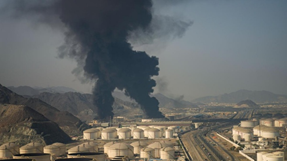
Recently, the Strait of Hormuz has been closed by Iran, and Iranian ports have been blockaded by the United States, as a result of which the concept of brinkmanship has been pushed back to the centre of global attention.
Understanding Brinkmanship: Concept, Origin and Characteristics
1. What is Brinkmanship?
- Definition: Brinkmanship refers to a deliberate and calculated strategy of pushing a dangerous situation to the edge of conflict, the brink, in order to force an adversary to back down, make concessions, or come to the negotiating table.
- Mechanism: It involves a single action or a series of escalatory actions during a conflict or a short-of-war situation, forcing a perilous climb up the escalation ladder.
- Core Risk: The fundamental danger lies in escalation spiralling out of control, particularly when nuclear-armed states are involved, often referred to in strategic literature as an Armageddon scenario.
2. Origin of the Concept
- The term was coined by Western political scientists in the 1950s and 1960s while analysing landmark crises of Cold War era.
- Berlin Blockade (1948-49): The Soviet Union’s blockade of West Berlin and the Western Allied airlift response was an early textbook example of competitive brinkmanship between superpowers.
- Cuban Missile Crisis (1962): Widely regarded as the most dangerous episode of Cold War brinkmanship, where the United States and the Soviet Union came dangerously close to nuclear conflict before stepping back.
3. Key Characteristics of Brinkmanship
- Deliberate escalation of tensions is carried out to create pressure upon the adversary.
- Military threats, sanctions, economic coercion, or strategic signalling are used to strengthen bargaining power.
- Psychological pressure and fear are used as strategic tools.
- Risks of miscalculation and accidental conflict are significantly increased.
- The strategy depends heavily upon deterrence, perception, and the willingness to use force if necessary.
- Even limited escalation can rapidly spiral into a larger conflict situation.
Categorizing the Modern Variations of Brinkmanship
1. Terrorism as Brinkmanship
- Non-State Actors: Terrorism has emerged as a principal instrument of brinkmanship, frequently used by non-state actors to provoke disproportionate state responses and gain international attention.
- Rarely Successful: Globally proscribed terrorist movements such as Al-Qaeda and the Islamic State have rarely achieved their stated goals through this method.
- Exceptions: A few organisations such as the Irish Republican Army (IRA) in Northern Ireland and the FLN (National Liberation Front) in Algeria did succeed in forcing stronger adversaries to make significant political concessions.
2. Proxy Brinkmanship
- Definition: This form involves using proxies, often designated as global terrorist outfits, to erode the resolve of stronger powers and force concessions on issues of statehood and sovereignty.
- Pakistan and Iran have practised proxy brinkmanship against stronger powers for over four decades, using asymmetric tactics to achieve strategic leverage.
- Hamas Attack (October 2023): The Hamas attack on Israel on October 7, 2023 is a clear example of proxy brinkmanship, which in turn triggered Israel’s disproportionate counter-brinkmanship in Gaza, demonstrating the rapid and dangerous breakdown of deterrence.
3. State-Level Brinkmanship by Major Powers
- United States: The US has traditionally preferred the direct application of force or economic coercion over brinkmanship. However, frustrated by Iran’s resistance to negotiations, the US has now resorted to an economic blockade as a form of coercive brinkmanship.
- Russia: Driven by frustration over NATO’s eastward expansion and initial expectations of a quick Ukrainian capitulation in February 2022, Russia has engaged in sustained brinkmanship including periodic nuclear sabre-rattling and the indiscriminate use of hypersonic weapons against civilian centres.
- China: Since 2006, China has mastered the art of controlled maritime brinkmanship, making aggressive claims over the South China Sea and the East China Sea while daring weaker neighbours to resist. Only Japan, over the Senkaku Islands dispute, and Taiwan have effectively pushed back against Chinese coercion.
- North Korea: If any nation has perfected brinkmanship in the 21st century, it is North Korea. Using demonstrated missile and nuclear capabilities alongside deliberate opacity, Pyongyang has successfully kept the world’s most powerful nation from forcing it into a rules-based international order.
Implications of Growing Brinkmanship on the Global Order
- Erosion of Deterrence: Repeated acts of brinkmanship, particularly those that go unpunished or succeed, weaken the credibility of deterrence frameworks that have historically prevented full-scale conflict.
- Marginalisation of the United Nations: As global institutions like the UN are increasingly bypassed, coercion and brinkmanship are filling the vacuum of multilateral diplomacy, further destabilising the international order.
- Risk of Uncontrolled Escalation: The chain of action and counter-brinkmanship, as seen in the US-Iran standoff and the Russia-Ukraine war, creates conditions where miscalculation or misjudgement can rapidly spiral into large-scale conflict.
- Normalisation of Force: The frequent resort to brinkmanship normalises the use of coercive and military tools in international relations, making peaceful conflict resolution progressively harder.
- Global Economic Disruption: Strategic chokepoints such as the Strait of Hormuz, when weaponised through brinkmanship, have cascading economic consequences for global energy markets, trade, and supply chains.
- Threat to Smaller Nations: Countries with limited military and economic power face heightened vulnerability in a world where brinkmanship replaces diplomacy, as they lack the leverage to resist coercion by major powers
India’s Approach Towards Brinkmanship
- Strategic Restraint as a Core Value: India’s strategic DNA is defined by restraint and responsibility. India has consistently chosen calibrated and proportionate use of force even under the gravest provocation, eschewing the path of brinkmanship.
- Operation Sindoor (May 2026) as an Example: India’s precision strikes following the Pahalgam terror attack demonstrated a calibrated response that was measured, targeted, and backed by strong diplomatic messaging, distinguishing it sharply from reckless brinkmanship.
- No First Use Nuclear Doctrine: India’s No First Use nuclear doctrine and its rejection of nuclear coercion reflect a deeply embedded commitment to strategic stability and responsible nuclear stewardship.
- Active Engagement with Global Institutions: Unlike powers that exploit institutional vacuums, India continues to engage constructively with multilateral forums including the UN, BRICS, SCO, and the Quad to build consensus-based solutions to global challenges.
- Firm Posture with Diplomatic Preference: While India maintains a credible military deterrent, it has consistently prioritised dialogue and diplomacy as the first resort in conflict situations, signalling that strength and restraint are not mutually exclusive.
Way Forward for Restoring Stability in a Brinkmanship-Prone World
- Reinvigorating Multilateral Diplomacy: Global institutions, especially the United Nations, must be reformed and strengthened so that they serve as credible and effective platforms for conflict resolution rather than being bypassed by powerful states.
- Establishing Clear Escalation Thresholds: Major powers must engage in structured dialogue to define and mutually agree upon red lines that prevent brinkmanship from crossing into open armed conflict, particularly in the nuclear domain.
- Strengthening Regional Conflict Resolution Mechanisms: Regions such as West Asia, East Asia, and Eastern Europe need robust and institutionalised frameworks for de-escalation, crisis communication, and confidence-building measures.
- Addressing Root Causes of Conflict: Sustainable peace requires addressing the underlying political, economic, and territorial grievances that drive states and non-state actors to resort to brinkmanship in the first place.
- Promoting Responsible Nuclear Stewardship: Nuclear-armed states must reaffirm their commitments to arms control treaties and develop new frameworks to prevent nuclear brinkmanship from becoming a legitimate tool of statecraft.
- India’s Role as a Responsible Balancer: Given its strategic positioning, democratic values, and tradition of restraint, India is well placed to champion dialogue-based conflict resolution and act as a credible voice against the growing normalisation of brinkmanship.
Conclusion
- The growing reliance on brinkmanship across the globe signals a dangerous regression from the norms of diplomacy and multilateralism that the post-World War II international order was built upon.
- The world urgently needs to introspect and course-correct, reaffirming the primacy of dialogue and institutional cooperation before the escalation ladder leads to a conflict that no power, however strong, can fully control.