
After Reading This Article You Can Solve This UPSC Mains PYQ (2021)
Describe the various causes and the effects of landslides. Mention components of the important components of National Landslide Risk Management strategy. 15 Marks (GS-3, Disaster Management/ Environment)
Context
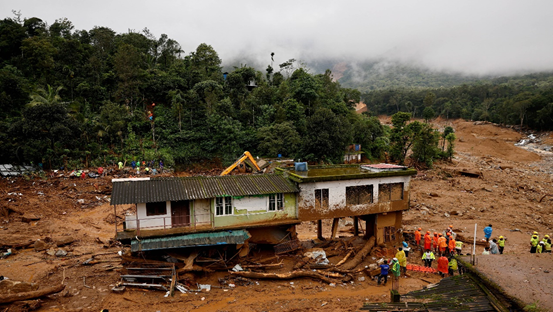
On July 7, a fatal debris slide at the Kalladi twin-tunnel construction site in Wayanad resulted in six deaths. The Kerala government has suspended the project pending investigations into environmental compliance and the geomorphological triggers of the disaster.
Introduction
Recurring landslides in Wayanad highlight the severe ecological vulnerability of the Western Ghats. Consecutive disasters expose the high risks associated with aggressive infrastructure expansion in fragile terrains, emphasizing the urgent need to balance development with strict climate-resilient planning.
Seismic Zone of Wayanad
- Wayanad falls under Seismic Zone III (moderate earthquake risk) according to the Bureau of Indian Standards (BIS) seismic zoning map.
- While earthquakes are not the primary landslide trigger in the region, minor seismic activity combined with heavy rainfall and steep slopes dramatically increases the risk of terrain failure.
- This classification necessitates mandatory earthquake-resistant construction protocols and stringent land-use planning for all infrastructure projects.
What Caused the Wayanad Landslide?
- Extremely Heavy Rainfall: Continuous monsoon downpours saturated the soil, significantly increasing pore pressure and triggering slope failure.
- Fragile Geology & Steep Terrain: The deeply weathered rocks and steep gradients of the region are naturally predisposed to movement under intense rainfall.
- Deforestation: The systematic removal of natural forest cover has severely weakened the soil’s binding capacity, leaving slopes highly vulnerable.
- Unplanned Development: Anthropogenic interventions, including tunneling, road construction, and unscientific hill cutting, disrupted the natural stability of the terrain.
- Climate Change: A rise in short-duration, high-intensity rainfall events acts as a primary trigger multiplier for such geological disasters.
- Poor Drainage: Inadequate surface drainage systems allowed rainwater to accumulate, exponentially increasing soil weight and structural instability.
Impacts of the Disaster
- Loss of Lives and Displacement: The disaster caused tragic casualties and forced thousands into relief camps as homes were destroyed or declared structurally unsafe.
- Infrastructure Destruction: Extensive damage occurred to critical public assets, including roads, bridges, power lines, and water supply networks.
- Agricultural and Economic Losses: Mud and debris buried lucrative plantations (coffee, tea, spices), devastating local agrarian economies and tourism revenues.
- Environmental Degradation: The landslide led to severe soil erosion, river siltation, destruction of local forest cover, and a localized loss of biodiversity.
- Disruption of Connectivity: Collapsed transport networks isolated entire villages, severely delaying emergency rescue and relief operations.
Gadgil and Kasturirangan Committees recommendations:
- Gadgil Committee (2011): Recommended classifying the entire Western Ghats into three Ecologically Sensitive Zones (ESZs). It proposed strict bans on mining, quarrying, and large-scale construction, prioritizing decentralized, environmentally sustainable governance.
- Kasturirangan Committee (2013): Formed to review the Gadgil report, it adopted a more development-accommodating approach, recommending that only 37% of the Western Ghats be declared as Ecologically Sensitive Areas (ESAs). While prohibiting mining in ESAs, it permitted regulated sustainable agriculture and economic activities in non-sensitive zones.
Way Forward
- Strengthen Early Warning Systems (EWS): Deploy hyper-local, real-time alerts utilizing automated rain gauges, inclinometers, and acoustic sensors to predict slope failures.
- Scientific Land-Use Planning: Enforce strict zoning regulations to prohibit heavy infrastructure construction and human settlements in highly susceptible landslide zones.
- Ecological Restoration: Prioritize the protection of existing forest cover and implement bio-engineering techniques to physically and naturally stabilize vulnerable slopes.
- Regulate Development: Enforce absolute restrictions on quarrying and unscientific hill cutting in ecologically sensitive regions, ensuring strict Environmental Impact Assessments (EIAs).
- Implement Committee Frameworks: Operationalize the core sustainable development recommendations of the Gadgil and Kasturirangan Committees to protect the broader ecosystem.
- Enhance Drainage Infrastructure: Mandate disaster-resilient construction techniques and improve surface drainage on hill slopes to prevent localized water accumulation.
Conclusion
The Wayanad disaster highlights that infrastructure development must respect environmental limits. To protect human lives and the Western Ghats, we must shift from merely reacting to disasters to actively preventing them through scientific, climate-resilient planning.