
After Reading This Article You Can Solve This UPSC Mains Model Questions:
The demand for a caste census reflects the tension between the constitutional vision of a casteless society and the practical need for caste-based welfare policies. Critically examine. 15 Marks (GS-1, Society)
Context
- The Supreme Court recently dismissed a petition seeking to stop the caste census planned under Census 2027.
- The Court observed that the government must know how many backward communities exist and who requires welfare support.
- In April 2025, the Union Government announced that caste enumeration would be included in the Census for the first time since 1931.
What is Caste Census?
- A caste census is the systematic collection of population data based on caste identity as part of the national Census. Unlike a conventional census, which records details such as population, literacy, occupation, and housing, a caste census specifically identifies the caste of individuals and households.
- This helps generate caste-wise demographic and socioeconomic data related to education, employment, income, and regional distribution. Such data is important for evidence-based policymaking, welfare targeting, affirmative action, and reservation policies.
Historical Evolution of Caste Enumeration in India
1. The Colonial Era
- 1881 to 1931: Every decennial Census conducted under British rule included detailed caste enumeration. The 1931 Census, which recorded nearly 4,147 caste groups, became the primary database for later backward class policies in India.
- 1941 Census: Although caste data was collected, it was never fully published due to World War II and the circumstances surrounding Partition, resulting in a major data gap that continues even today.
2. Independent India’s Decision to Stop Caste Enumeration
- 1951 Census: After Independence, the government decided to exclude caste enumeration for all communities except Scheduled Castes (SCs) and Scheduled Tribes (STs). This reflected the constitutional vision of creating a casteless society.
- As a result, data regarding Other Backward Classes (OBCs) remained frozen at the 1931 Census figures, and later backward class policies relied mainly on estimates and extrapolations.
3. Important Commissions Highlighting the Data Gap
- Kaka Kalelkar Commission (1953): The first Backward Classes Commission established under Article 340 identified around 2,399 backward communities, but depended entirely on 1931 Census data.
- Mandal Commission (1978–80): Estimated the OBC population at 52% using 1931 data, sample surveys, and state-level information. It recommended 27% reservation for OBCs in Central government jobs and educational institutions.
- Indra Sawhney Case (1992): The Supreme Court upheld 27% OBC reservation, introduced the concept of the creamy layer, and imposed a 50% ceiling on total reservations.
4. SECC 2011 and Bihar Caste Survey 2023
- Socio-Economic and Caste Census (SECC) 2011: The first major attempt at caste enumeration after Independence covered nearly 24 crore households. However, the absence of a standardised caste list led to over 46 lakh caste entries and nearly 8 crore data errors, making much of the data unreliable and unpublished.
- Bihar Caste Survey 2023: Bihar became the first major State to publish a detailed caste survey. The survey reported OBCs at 27.13% and Extremely Backward Classes (EBCs) at 36%, together constituting 63.13% of the State’s population, significantly higher than earlier national estimates and renewing the demand for a nationwide caste census.
Constitutional Paradox in the Caste Census Debate
- India’s constitutional framework reflects a complex and dual approach toward caste. While the Constitution aspires to create a society based on equality and social justice, the State also continues to rely on caste identities for welfare and representation policies. This contradiction forms the core of the caste census debate.
1. On one side: Constitutional Vision of a Casteless Society: The Constitution seeks to build a society based on the principles of equality, dignity, fraternity, and social harmony. The larger constitutional objective has been to gradually eliminate caste-based discrimination and move towards a casteless social order.
- The Constitution guarantees equality before law and prohibits discrimination on social grounds.
- The idea of the “annihilation of caste” emphasises the need to remove caste hierarchies and social exclusion.
- The long-term vision of the Indian State is to promote social transformation beyond traditional caste divisions.
2. On the Other Side: Caste-Based Welfare and Representation: At the same time, caste remains an important basis for implementing policies related to affirmative action and welfare.
- Reservations in education, public employment, and legislatures are provided to historically disadvantaged communities.
- Welfare schemes often target Scheduled Castes (SCs), Scheduled Tribes (STs), and Other Backward Classes (OBCs).
- Political representation and social justice policies require the identification.
Understanding Caste Census 2027
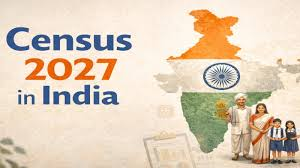
Census 2027 is set to be a landmark event as the 16th decennial census and the first truly comprehensive caste count in independent India.
- Transition to Digital: This will be the first fully digital census, utilizing mobile applications and specialized portals to ensure real-time data entry and minimize the 8 crore data errors that plagued the SECC 2011.
- Two Phase Operation: The census will be conducted in two parts. Phase 1 focuses on house listing and assets, while Phase 2 involves population enumeration. It is in this second phase that every individual will self declare their caste identity.
- Methodology Challenge: Unlike previous years where only SC/ST status was ticked, the 2027 exercise requires recording specific caste names. The government is currently developing a master list to classify the thousands of sub castes that exist across different states.
Importance of Caste Census
- Constitutional Compliance (Articles 15 & 16): It provides the quantifiable empirical data mandated by the Supreme Court (SC) in landmark cases like M. Nagaraj and Jarnail Singh. Under Article 16(4), the state must prove “inadequacy of representation” to justify reservations; a census provides the necessary population denominator (the total population of a specific group needed to prove “inadequacy of representation” in public services) to make these policies legally sustainable.
- Scientific Welfare Targeting: Under Articles 15(4) and 15(5), the state must identify Socially and Educationally Backward Classes (SEBCs) using objective criteria. A census identifies marginalized sub-groups, enabling sub-categorization (as recommended by the Justice Rohini Commission). This ensures benefits reach the most deprived rather than being cornered by dominant groups.
- Rationalizing the 50% Cap: In the Indra Sawhney (1992) judgment, the Supreme Court established a 50% reservation ceiling, allowing exceptions only in “extraordinary circumstances.” Accurate caste data provides the factual foundation required to defend or adjust these limits based on the actual demographic weight of backward communities.
- Social Audit of Development: It serves as a comprehensive performance review of 75 years of affirmative action. By mapping caste identity against socio-economic indices (literacy, assets, and income), the state can conduct a “social audit” to see which communities have achieved mobility and which remain trapped in inter-generational poverty.
- Evidence-Based Policy Planning: Accurate data acts as a scientific baseline for all state interventions. Whether it is allocating scholarships or designing housing schemes, a census ensures that resources are distributed based on proportional need rather than outdated 1931 estimates, making governance non-arbitrary.
- Institutional & Federal Accountability: Since the Seventh Schedule (Entry 69, Union List) places the Census exclusively under the Union Government, a national exercise ensures data uniformity. It provides statutory bodies like the National Commission for Backward Classes (NCBC), National Commission for Scheduled Castes (NCSC) and National Commission for Scheduled Tribes (NCST) with an authoritative dataset to monitor constitutional safeguards effectively.
Key Challenges in Conducting a Caste Census
- Risk of political misuse: Critics argue that caste data may intensify vote-bank politics, encourage caste-based mobilisation, and deepen identity-driven electoral strategies instead of promoting social integration.
- Data quality and classification issues: India has thousands of castes and sub-castes with regional variations. Problems related to self-declaration, spelling differences, and overlapping identities may produce unreliable data, as witnessed during SECC 2011.
- Reinforcing caste identity: Opponents believe that officially asking citizens to identify by caste may strengthen caste consciousness and contradict the constitutional goal of a casteless society.
- Privacy and misuse concerns: Combining caste information with economic and personal details may lead to discrimination, profiling, targeted violence, or misuse of sensitive data if safeguards are inadequate.
- Methodological challenges: Issues such as sub-caste disputes, inter-caste marriages, caste mobility claims, and mixed heritage identities make classification highly complex and politically sensitive.
Way Forward
- Strict Statutory Confidentiality: The government must rigorously enforce Section 15 of the Census Act, 1948, ensuring individual data remains strictly confidential. This prevents the misuse of personal information for political profiling or commercial gain, which is essential for maintaining public trust and privacy.
- Standardized Master List: To prevent the millions of classification errors seen in SECC 2011, the Office of the Registrar General of India (ORGI) must proactively publish a comprehensive Master List of Castes. This transparency allows for the resolution of regional naming anomalies before final enumeration begins.
- Integrated Socio-Economic Correlation: Caste data should be scientifically mapped against socio-economic indices like literacy, land ownership, and occupational status. This provides a multi-dimensional view of backwardness, shifting the focus from mere population counts to evidence-based welfare targeting.
- Digital Integrity & Social Audits: As India’s first fully digital census, the state must leverage technology for real-time data validation. Post-enumeration, aggregate data should undergo social audits by independent experts to ensure the findings are robust enough to withstand judicial scrutiny.
- Institutionalizing the “Casteless” Identity: The state should actively promote the option for citizens to register as “Casteless.” Tracking this category provides a vital metric of modernization, fulfilling the Ambedkarite goal of the Annihilation of Caste by ensuring measurement today leads to the eventual irrelevance of caste labels.
Conclusion
The caste census is not a celebration of caste but a reckoning with its unfinished consequences, and India cannot build a fair welfare state on nine-decade-old estimates. Counting caste communities accurately, while ensuring every citizen retains the freedom to declare themselves casteless, is the only honest path toward a welfare system that serves all and an equal society that eventually renders such counting unnecessary.