
After Reading This Article You Can Solve This UPSC Mains PYQ 2021:
Discuss about the vulnerability of India to earthquake related hazards. Give examples including the salient features of major disasters caused by earthquakes in different parts of India during the last three decades. 10 Marks (GS3, Disaster Management)
Why in the News?
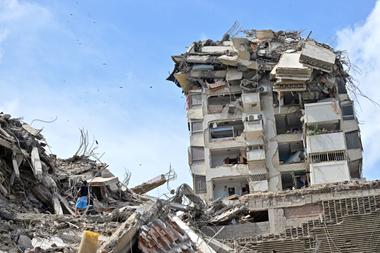
The recent twin earthquakes (Magnitude 7.1 and 7.5) in Venezuela caused widespread destruction, raising concerns about earthquake preparedness globally. The event also highlights India’s vulnerability due to delayed revision of seismic building standards.
What is an Earthquake?
An earthquake is the sudden shaking of the Earth’s surface caused by the abrupt release of energy accumulated due to the movement of tectonic plates along faults.
How Do Earthquakes Occur?
Plate Tectonic Theory
Earth’s lithosphere consists of tectonic plates that constantly move over the semi-molten asthenosphere.
Earthquakes mainly occur along plate boundaries:
- Convergent Boundary
- Plates collide.
- Produces the most destructive earthquakes.
- Example: Himalayas.
- Divergent Boundary
- Plates move apart.
- Moderate earthquakes.
- Example: Mid-Atlantic Ridge.
- Transform Boundary
- Plates slide past one another.
- Sudden release of stress causes earthquakes.
- Example: San Andreas Fault, Venezuela’s Caribbean Plate boundary.
Key Terminologies
- Focus (Hypocentre): Point inside the Earth where energy is released.
- Epicentre: Point directly above the focus on Earth’s surface.
- Fault: Fracture in rocks where movement occurs.
- Foreshock: Smaller quake before the main earthquake.
- Aftershock: Smaller earthquakes after the main event.
- Doublet Earthquake: Two large earthquakes occurring within a short interval due to interconnected fault ruptures.
Causes of Earthquakes
Natural Causes
- Plate tectonic movements
- Volcanic eruptions
- Isostatic adjustments
- Landslides
- Meteor impacts (rare)
Human-Induced Causes
- Large reservoir impoundment
- Deep mining
- Oil and gas extraction
- Hydraulic fracturing
- Nuclear testing
Earthquake Distribution in India
India lies on the collision zone of the Indian Plate and the Eurasian Plate, making it highly vulnerable.
Seismic Zones (BIS)
- Zone II – Low Risk
- Zone III – Moderate Risk
- Zone IV – High Risk
- Zone V – Very High Risk
Nearly 59% of India’s land area and around 79% of the population are exposed to varying levels of seismic risk.
Major Earthquake-Prone Regions
- Himalayan Region
- North-East India
- Andaman & Nicobar Islands
- Kutch (Gujarat)
- Delhi-NCR
- Indo-Gangetic Plain
Impacts of Earthquakes
1. Human Impact
- Mortality and Physical Trauma: Causes immediate mass casualties and severe trauma from structural collapses and crushing injuries. (WHO)
- Public Health Crises: Disrupts emergency healthcare infrastructure, triggering disease outbreaks in overcrowded relief camps. (WHO)
- Human Capital Erosion: Reduces long-term cognitive and educational outcomes due to early childhood exposure to seismic stress.
2. Economic Impact
- Direct Asset Destruction: Inflicts massive capital loss through the total obliteration of housing, industries, and critical public infrastructure.
- Macroeconomic Strain: Depresses GDP growth by disrupting domestic supply chains and diverting fiscal resources into debt-ballooning reconstruction.
- Livelihood Disruption: Paralyses regional production, causing exports to plummet while forcing a sharp surge in reconstruction-driven imports.
3. Environmental Impact
- Landscape Modification: Triggers severe secondary terrain hazards like widespread landslides, avalanches, and permanent ground deformations. (WHO)
- Toxic Contamination: Releases dangerous particulate matter, asbestos, and heavy metals from collapsed structures into local ecosystems. (PMC-NIH)
- Hydrological Alteration: Disrupts regional groundwater tables, causes soil liquefaction, and risks devastating flood events via dam or river blockages.
4. Societal Impact
- Mass Displacement: Forces large-scale internal migration, triggering long-term humanitarian crises and structural deficits in affordable housing.
- Social Disruption: Breaks down vital informal community safety nets, leaving displaced and scattered populations highly vulnerable.
- Structural Inequities: Disproportionately devastates lower-income groups living in non-engineered housing, trapping vulnerable families in deep poverty.
Challenges in India’s Earthquake Preparedness
- Institutional Dilution of Risk Data: Scientific updates to seismic hazard maps (like proposing a stricter Zone VI) face administrative resistance or delays due to cost and compliance concerns for ongoing mega-infrastructure projects.
- Grossly Underestimated Design Standards: India’s maximum seismic design threshold (Zone V at 0.36g) remains significantly lower than global standards and neighboring countries on the same Himalayan front, like Nepal and Pakistan (0.75g).
- The “Unregulated Housing” Trap: Nearly 95% of earthquake casualties occur in informal, one- to three-storey residential buildings that completely bypass formal municipal building codes and engineering supervision.
- Massive Population Exposure: Approximately 79% of India’s population resides in moderate-to-severe seismic zones, exponentially amplifying the potential human and economic toll of a major tectonic rupture.
- Severe Deficit in Structural Retrofitting: There is a critical lack of proactive, large-scale structural auditing and retrofitting for existing, vulnerable lifeline infrastructure like older hospitals, schools, and bridges.
- Over-Reliance on Post-Disaster Response: National strategy remains heavily skewed toward post-event search, rescue, and relief operations rather than pre-disaster enforcement of resilient engineering and community-level drills.
Government Initiatives
- NDMA Guidelines: Drives a strategic paradigm shift from reactive post-disaster relief to proactive structural mitigation.
- Earthquake Risk Indexing (ERI): Maps specific hazards and structural vulnerabilities across high-risk urban centers to guide local planning.
- Techno-Legal Mandates: Enforces compulsory compliance with the National Building Code (NBC) and BIS seismic codes (IS 1893) for infrastructure.
- National Seismological Network: Maintained by the NCS with 165+ stations for real-time monitoring and early-warning research.
- Community Safety Frameworks: Leverages the National School Safety Programme (NSSP) and multi-state mock drills for localized capacity building.
International Best Practices
- Japan (Technology & Engineering): Deploys a nationwide Earthquake Early Warning (EEW) sensor network for real-time public alerts, paired with mandatory “Base Isolation” engineering to absorb seismic energy.
- Chile (Policy & Enforcement): Enforces strict seismic construction codes that mandate structural flexibility, anchored by a centralized disaster agency (SENAPRED) for uniform municipal enforcement
Way Forward
- Implement Science-Backed Standards: Adopt the updated Bureau of Indian Standards (BIS) seismic maps and upgrade Zone V design forces toward realistic global standards without letting fiscal infrastructure costs delay compliance.
- Enforce Grassroots Building Codes: Empower local municipal and panchayat bodies to strictly regulate and inspect informal one- to three-storey residential constructions where 95% of casualties occur.
- Mandate Large-Scale Retrofitting: Launch a targeted, institutional framework for structural auditing and retrofitting of existing lifeline infrastructure, particularly older schools, hospitals, and transit hubs.
- Expand Early Warning Infrastructure: Scale up real-time Earthquake Early Warning (EEW) sensor networks across the high-risk Himalayan front, integrating them with automated public broadcast systems.
- Institutionalize Community Resiliency: Conduct regular, localized community mock drills and integrate mandatory disaster preparedness training into school curriculums to create a bottom-up culture of readiness.
Case Study: Bhuj Earthquake (2001)
Magnitude: 7.7
Lessons Learned
- Importance of earthquake-resistant construction.
- Need for community participation.
- Modernisation of disaster management institutions.
- Adoption of the Disaster Management Act, 2005.
- Establishment of NDMA and NDRF.
Conclusion
Securing India’s future demands transitioning from reactive relief to risk-informed, smart engineering. Integrating automated early-warning networks and enforcing next-generation building codes will build absolute tectonic resilience against inevitable seismic shocks