
Important for UPSC Prelims: Culture
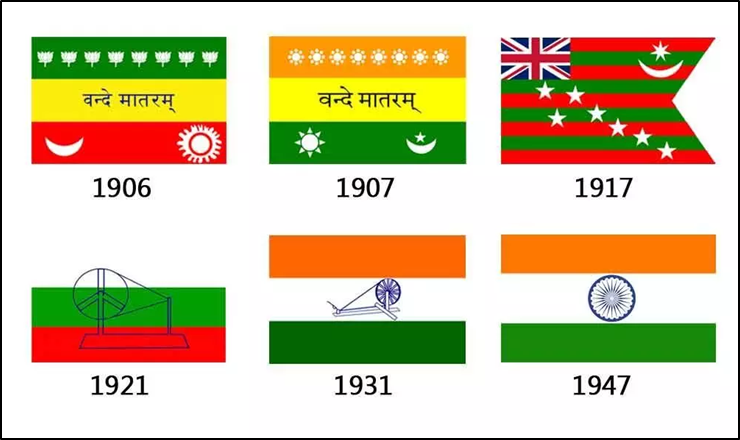
Evolution of the Indian National Flag
| Year | Development |
| 1906 | First unofficial tricolour hoisted at Calcutta. |
| 1907 | Madam Bhikaji Cama unfurled an Indian flag at Stuttgart, Germany. |
| 1917 | Annie Besant and Bal Gangadhar Tilak introduced the Home Rule Flag. |
| 1921 | Pingali Venkayya presented a flag design with the Charkha to Mahatma Gandhi. |
| 1931 | Tricolour with Charkha adopted by the Indian National Congress. |
| 22 July 1947 | Constituent Assembly adopted the present Tricolour with the Ashoka Chakra. |
Indian National Flag
- Adopted: 22 July 1947
- Ratio: 3 : 2
- Designer: Based on the design by Pingali Venkayya
- Ashoka Chakra: Navy Blue with 24 spokes, adopted from the Lion Capital of Ashoka at Sarnath.
Symbolism
- Saffron: Courage and sacrifice
- White: Truth and peace
- Green: Faith, fertility and prosperity
- Ashoka Chakra: Dharma, justice and continuous progress
Legal Framework Governing National Symbols
1. Prevention of Insults to National Honour Act, 1971
Prohibits the desecration or insult of the National Flag, National Anthem and Constitution. Violations are punishable with up to three years’ imprisonment, a fine, or both.
2. Flag Code of India, 2002
Regulates the display and use of the National Flag. It permits all citizens to hoist the flag with dignity, while the 2021–22 amendments allow it to be flown day and night and permit machine-made polyester flags.
3. Constitutional Provisions
Article 51A(a) makes respect for the National Flag, National Anthem and Constitution a Fundamental Duty, while the Naveen Jindal (2004) judgment recognized flying the National Flag with dignity as a Fundamental Right under Article 19(1)(a).
4. Emblems and Names (Prevention of Improper Use) Act, 1950
Prohibits the commercial misuse of the National Flag, State Emblems and other official symbols without prior authorization.
Important Supreme Court Judgments
Union of India v. Naveen Jindal (2004)
- Flying the National Flag with dignity is a Fundamental Right under Article 19(1)(a).
Bijoe Emmanuel v. State of Kerala (1986)
- Students cannot be compelled to sing the National Anthem if they respectfully stand and their beliefs are genuine.
Reinforced freedom of conscience under Article 25.
Conclusion
- India’s national symbols embody the nation’s sovereignty, unity and constitutional values. Respecting them with dignity while upholding democratic freedoms strengthens both constitutional patriotism and national integration.
| This concept has been discussed in the following article 150th Birth Anniversary of Pingali Venkayya |