
Context
Recently following the Union Cabinet’s approval of the revamped ₹23,731-crore GOBARdhan (Galvanising Organic Bio-Agro Resources Dhan) scheme (operational till 2036), establishing efficient feedstock supply chains has emerged as the critical operational lever to scale India’s Compressed Bio-Gas (CBG) output.
Feedstock Characteristics & Gas Yields
- Cattle Dung: High moisture; ~6% gas yield; sourcing restricted to a 25-km radius.
- Press Mud: Seasonal sugarcane residue (4–5 months/yr); viable within a 25-km radius.
- Paddy & Wheat Straw: Long-distance transportable (if baled); ≥10% gas yield; narrow 15-day harvest collection window.
- Bio-Slurry: Digestate by-product returned to farmers as organic fertilizer (circular economy).
Supply Chain & Logistical Constraints
- Aggregator-Based Model: Connects farmers with CBG plants without requiring rigid, legally binding industrial contracts.
- Storage Hazards: Requires specialized inventory handling to mitigate summer fire risks and monsoon moisture degradation.
- Proximity Imperative: Sourcing must remain strictly localized to prevent high transport emissions from offsetting CBG’s net carbon benefits.
Policy Targets & Infrastructure Scale
- Operational Capacity: 1,302 functional CBG plants registered on the GOBARdhan portal, with 256 plants currently under construction.
- Mandatory Phased Blending Pipeline (CNG & Domestic PNG):
- FY 2026–27: 3% CBG blending
- FY 2027–28: 4% CBG blending
- Subsequent FYs: 5% CBG blending
About Compressed Biogas (CBG)?
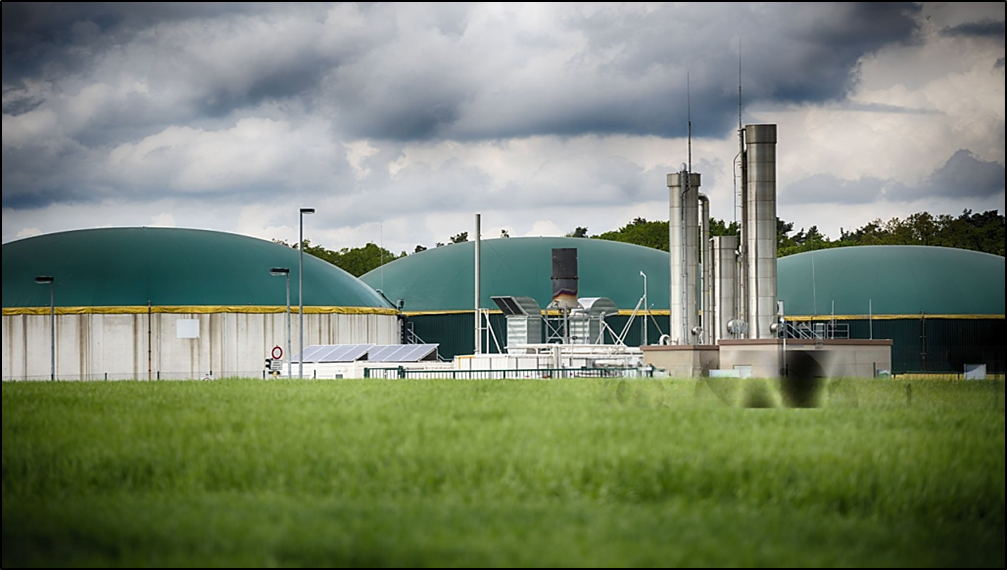
- Compressed Biogas (CBG) is a purified form of biogas produced from the decomposition of organic waste in the absence of oxygen.
- After purification and compression, CBG can be used as a cleaner fuel and can serve as an alternative to conventional fossil fuels.
Major Feedstocks
CBG can be produced from:
- Agricultural residue
- Animal waste and cattle dung
- Food and kitchen waste
- Municipal organic waste
- Other biodegradable biomass
| Important Current To Concept (CTC) from this article for UPSC- GOBARdhan Scheme |
Q. With reference to Compressed Bio-Gas (CBG), consider the following statements:
1. CBG can be produced from biogas generated through the decomposition of organic matter in the absence of oxygen.
2. CBG can serve as an alternative to conventional fossil fuels.
3. CBG can be produced only from cattle dung.
Which of the statements given above is/are correct?
(a) 1 and 2 only
(b) 2 only
(c) 1 and 3 only
(d) 1, 2 and 3
Answer: (a) 1 and 2 only
Explanation:
• Statement 1 — Correct: Biogas is generated through the anaerobic decomposition of organic matter, i.e., decomposition in the absence of oxygen. After purification and compression, it can be converted into CBG.
• Statement 2 — Correct: CBG is a cleaner gaseous fuel and can serve as an alternative to conventional fossil fuels such as natural gas-based fuels.
• Statement 3 — Incorrect: CBG is not restricted to cattle dung. Agricultural residues, food waste, kitchen waste, municipal organic waste and other biodegradable biomass can also be used.