
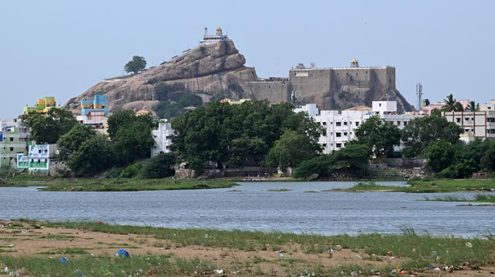
Context: A study by Bharathidasan University has confirmed significant heavy metal contamination in the Cauvery River’s sediments and fish.
Key Contaminants: The study identified high levels of Cadmium (Cd) and Lead (Pb), with concentrations in several fish species exceeding safe thresholds.
Primary Sources: The pollution is predominantly anthropogenic (human-made), attributed to:
1. Industrial effluents (e.g., textile and electroplating units).
2. Agricultural runoff (pesticides and fertilizers).
3. Untreated urban wastewater.
Health Implications: This contamination poses serious non-carcinogenic and carcinogenic (cancer-causing) health risks to humans through the consumption of fish, due to bioaccumulation.
Heavy Metals:
- Definition: High-density, persistent (non-biodegradable) metallic elements.
- Classification:
- Toxic: Lead (Pb), Mercury (Hg), Cadmium (Cd), Arsenic (As).
- Essential (Trace): Iron (Fe), Zinc (Zn), Copper (Cu).
- Ecological Impact:
- Bioaccumulation: Buildup within one organism.
- Biomagnification: Concentration increases up the food chain.
2. High-Yield: Metals & Associated Diseases
- Mercury (Hg):
- Disease: Minamata Disease (Japan).
- Impact: Severe neurological damage (neurotoxin).
- Source: Contaminated fish (Methylmercury).
Cadmium (Cd):
- Disease: Itai-Itai Disease (Japan).
- Impact: Brittle bones, kidney failure.
- Source: Contaminated rice/water (from zinc mining/industrial discharge).
Arsenic (As):
- Impact: Chronic poisoning causes Melanosis (dark skin spots) & Keratosis (hardened skin).
- Source: Major groundwater contaminant (natural or from fertilizers).
Lead (Pb):
- Impact: Potent neurotoxin, causing irreversible developmental damage, especially in children.
- Source: Leaded petrol (historical), battery scrap, old paint.