
Context
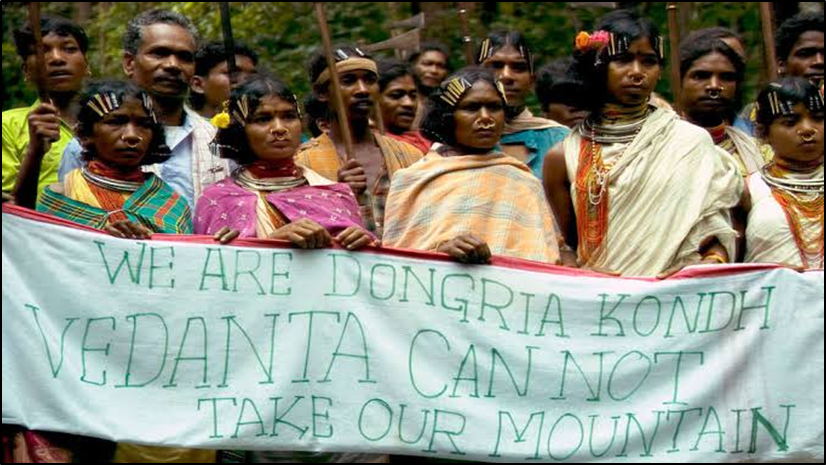
- The National Alliance of People’s Movements (NAPM) and environmental activists have cautioned against renewed proposals to revive bauxite mining across the Niyamgiri hills in Odisha’s Kalahandi and Rayagada districts.
About The Niyamgiri Landscape
- Geographical Location: Niyamgiri is an ecologically sensitive hill range situated across the Kalahandi and Rayagada districts of south-western Odisha.
- Indigenous Inhabitants: Home to the Dongria Kondh, designated as a Particularly Vulnerable Tribal Group (PVTG).
- Cultural Significance: The Dongria Kondh revere the hilltop of the Niyamgiri range as the sacred abode of Niyam Raja (their supreme deity and protector of the ecosystem).
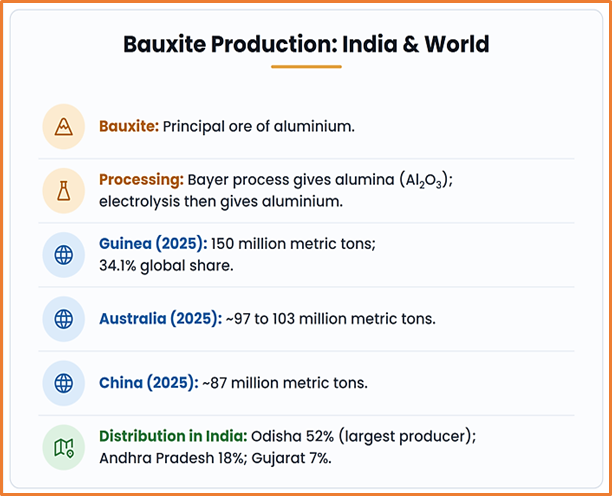
- Mineral Profile: The flat-topped hills (lateritic plateaus) host extensive, high-grade bauxite deposits (the primary ore of aluminium).
Constitutional and Legal Framework for Gram Sabha’s Role in Mining
| Legal Framework / Authority | Mandate & Significance |
| Orissa Mining Corporation vs. MoEF (2013) | The Supreme Court ruled that the decision to permit mining rests with the Gram Sabhas, recognizing customary, cultural, and religious rights under the Forest Rights Act (FRA). |
| Forest Rights Act (FRA), 2006 | Recognizes individual forest rights (IFR) and Community Forest Resource (CFR) rights; mandates free, prior informed consent of the Gram Sabha for forest diversion. |
| PESA Act, 1996 | Panchayats (Extension to Scheduled Areas) Act mandates mandatory consultation and consent of Gram Sabhas before granting mining leases in Fifth Schedule areas. |
| Fifth Schedule of the Constitution | Provides administrative autonomy and constitutional safeguards to tribal areas, shielding them from alienation of land. |
| Important Current to Concept (CTC) from this article for UPSC: What is the Forest Rights Act? Provisions of the Panchayats (Extension to the Scheduled Areas) Act, 1996 (PESA) |
Q. With reference to the Dongria Kondh tribe and the legal provisions governing Scheduled Areas in India, consider the following statements:
1. The Dongria Kondh community is classified as a Particularly Vulnerable Tribal Group (PVTG) indigenous to Odisha.
2. Under the Panchayats (Extension to Scheduled Areas) Act, 1996 (PESA), the recommendation of the Gram Sabha is mandatory prior to granting prospecting licences or mining leases for minerals in Scheduled Areas.
3. The Supreme Court in the 2013 Niyamgiri judgment held that the religious and cultural rights of tribal communities can be adjudicated and decided by the local Gram Sabha under the Forest Rights Act, 2006.
Which of the statements given above are correct?
(a) 1 and 2 only
(b) 2 and 3 only
(c) 1 and 3 only
(d) 1, 2, and 3
Answer: (d) 1, 2, and 3
Explanation:
• Statement 1 is correct: The Dongria Kondh are one of the 13 Particularly Vulnerable Tribal Groups (PVTGs) identified in Odisha (out of 75 PVTGs across India).
• Statement 2 is correct: Section 4(k) of the PESA Act, 1996 explicitly stipulates that the prior recommendation of the Gram Sabha or the Panchayats at the appropriate level is mandatory before granting mining leases for minor minerals and concessions in Scheduled Areas.
• Statement 3 is correct: In Orissa Mining Corporation v. MoEF (2013), the Supreme Court held that the Gram Sabha possesses the statutory authority under the Forest Rights Act (FRA), 2006 to determine if mining impinges on the religious, customary, and cultural rights of tribal communities.