
Context
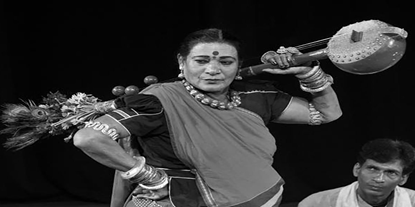
- Legendary artist Teejan Bai, who globally popularized Chhattisgarh’s Pandavani folk tradition by breaking male-dominated cultural stereotypes, recently passed away. She was honored with the Padma Vibhushan for her lifelong contributions to Indian folk arts.
What is the Pandavani Tradition?
- Definition: Pandavani is a traditional lyrical folk ballad and performance art primarily belonging to Chhattisgarh.
- Core Theme: The term literally translates to “the story of the Pandavas,” as the performance narrates episodes exclusively from the epic Mahabharata.
- Historical Origin: The tradition evolved between the 16th and 17th centuries as a regional extension of the Bhakti movement to make the Sanskrit epic accessible to rural masses.
What are the Key Performance Elements?
- Performance Format: It is a solo narrative act that seamlessly combines gayan (singing) and vadan (playing an instrument), accompanied by supporting musicians.
- Linguistic Medium: The narration is delivered in the highly rhythmic and expressive Chhattisgarhi dialect.
- Role of the Tambura: The lead performer holds a tambura (or ektara), which provides the musical rhythm and uniquely acts as a symbolic prop (transforming into Bhima’s mace or Arjuna’s bow during the act).
What are the Principal Styles of Narration?
Pandavani is strictly categorized into two distinct performance styles:
- Vedamati Style: The traditional, restrained form. The lead artist sits on the floor throughout the performance, delivering the story in a composed, devotional manner without theatrical acting.
- Kapalik Style: A highly energetic and theatrical form. The performer stands, moves around the stage, and actively enacts the dialogues and characters. This lively style, originally restricted to men, became Teejan Bai’s signature identity.
Who are the Prominent Exponents?
- Teejan Bai: The most celebrated artist who brought the Kapalik form to international fame, winning the Padma Shri, Padma Bhushan, and Padma Vibhushan.
- Other Notable Artists: Ritu Verma, Usha Barle, and Shanti Bai continue to preserve and spread the tradition.
Famous Folk Arts of India
| State | Famous Folk Art | Key Characteristics |
| Maharashtra | Tamasha | A vibrant traditional form of Marathi theatre, heavily incorporating singing and spontaneous dancing. |
| Gujarat | Bhavai | A traditional theatre form that heavily relies on humour, subtle romance, and social commentary. |
| Uttar Pradesh | Nautanki | Rich musical compositions intertwined with humorous, mythological, and contemporary storytelling. |
| West Bengal | Jatra | A famous musical theatre traditionally performed on open-air stages without raised platforms. |
| Karnataka | Yakshagana | A traditional dance-drama combining intricate costumes, vigorous music, and spontaneous spoken dialogue. |
| Assam | Ankia Nat | Traditional one-act plays focused primarily on Lord Krishna. |
| Jammu & Kashmir | Bhand Pather | A traditional satirical theatre combining play, dance, and music, often performed by agricultural communities. |
| Kerala | Mudiyettu | A ritualistic dance-drama based on the mythological tale of a battle between Goddess Kali and Darika. |
| Tamil Nadu | Therukoothu | A popular form of street theatre performed predominantly during village temple festivals. |
| Madhya Pradesh | Maach | A traditional lyrical theatre form focused heavily on melodic dialogues rather than acting. |
With respect to the traditional folk arts of India, consider the following statements:
I. Pandavani is a lyrical folk ballad form native to Chhattisgarh that primarily narrates the epic Mahabharata.
II. Ankia Nat is a traditional one-act play native to Assam, pioneered historically by Srimanta Sankardev.
III. Yakshagana is a traditional street theatre performed exclusively during village temple festivals in Uttar Pradesh.
How many of the statements given above are correct?
(a) Only one
(b) Only two
(c) All three
(d) None
Answer: B
Explanation:
Statement I is correct: Pandavani is a traditional folk-narrative and musical performance art from Chhattisgarh based fundamentally on the epic Mahabharata.
Statement II is correct: Ankia Nat is a traditional, one-act play form native to Assam, pioneered by the medieval saint and social reformer Srimanta Sankardev.
Statement III is incorrect: Yakshagana is a traditional theatre form native to Karnataka, combining dance, music, and dialogue. The traditional street theatre prominent in Uttar Pradesh is Nautanki.