
Context
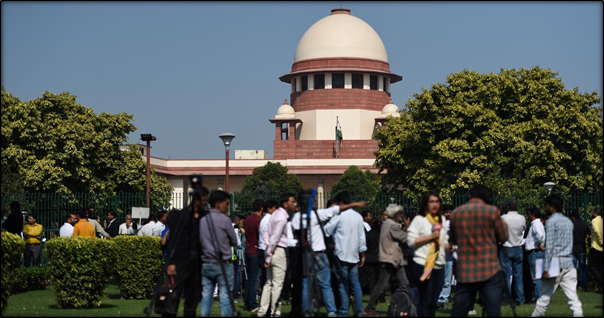
The recent reports of the Supreme Court’s growing appellate workload is undermining its constitutional responsibilities and proposes a separate Constitutional Court and regional Courts of Appeal.
Introduction
The Supreme Court is the guardian of the Constitution and the final interpreter of law. However, rising pendency and excessive appellate workload have raised concerns about its institutional capacity to deliver timely justice and constitutional adjudication.
Present Scenario of Supreme Court Pendency
1. Record Pendency: The Supreme Court had 92,318 pending cases at the end of 2025, its highest-ever backlog.
2. Rising Caseload: In 2025, the Court disposed of 65,615 cases against 75,410 newly instituted cases, resulting in a net increase in pendency.
3. Declining Constitutional Adjudication: Constitution Bench decisions declined from an average of 134 annually in the early 1960s to fewer than 10 annually over the last decade.
4. Excessive SLP Burden: Special Leave Petitions under Article 136 account for a substantial share of the Court’s admission docket, diverting attention from constitutional matters.
5. Institutional Overburdening: The Supreme Court increasingly functions as a regular appellate court rather than concentrating on substantial constitutional questions and significant questions of law.
6. Delayed Constitutional References: The 11 questions referred to a larger Bench in 2016 regarding the Supreme Court’s institutional functioning remained unheard even after nearly a decade.
Institutional and Structural Reforms for Strengthening the Supreme Court of India
1. Constitutional and Legal Framework
- Article 130: Provides for the establishment of the Supreme Court at places other than Delhi, subject to the approval of the President, enabling consideration of regional Benches.
- Articles 136 and 145(3): Rationalise excessive SLP admissions under Article 136 while strengthening Constitution Benches under Article 145(3) to prioritise substantial constitutional questions.
2. Law Commission Recommendations
- 95th Law Commission Report (1984): Proposed a separate Constitutional Division within the Supreme Court to exclusively handle constitutional matters.
- 125th and 229th Reports (1988 and 2009): Advocated separation of constitutional and appellate functions, with the 229th Report proposing a Constitutional Bench in Delhi and four regional Cassation Benches.
3. Parliamentary and Institutional Initiatives
- Parliamentary Standing Committee (2023): Recommended establishing regional Benches of the Supreme Court to improve geographical accessibility and reduce litigation costs.
- Judicial Institutional Reform: The Supreme Court should examine functional specialisation, dedicated constitutional adjudication and regional appellate arrangements through consultation with the judiciary and other stakeholders.
4. International Best Practices and Judicial Innovations
- Selective Case Admission: The US Supreme Court follows the certiorari mechanism, while Brazil applies the general repercussion principle to admit cases involving wider constitutional significance.
- Functional Specialisation: South Africa’s separate Constitutional Court and Supreme Court of Appeal, alongside Germany’s specialised federal judicial structure, demonstrate institutional separation of constitutional and ordinary appellate functions.
Challenges Associated with Proposed Restructuring
1. Institutional Fragmentation: Separating constitutional and appellate functions may weaken the perception of the Supreme Court as a unified apex judicial institution and dilute its institutional authority.
2. Constitutional and Jurisdictional Complexity: Establishing separate appellate institutions may require constitutional and legislative changes, while overlapping jurisdictions could create conflicts between the Constitutional Court, regional courts and High Courts.
3. Administrative and Financial Constraints: Establishing regional courts requires substantial infrastructure, financial investment, administrative support and adequate availability of competent judges.
4. Unequal Access and Judicial Inconsistency: Regional courts may not ensure equal accessibility for remote areas, while divergent interpretations across different regional Benches could undermine legal uniformity.
5. Risk of Continued Pendency: Restrictive case admission may deny access to important constitutional grievances, while inadequate case-filtering mechanisms could reproduce congestion even within the proposed Constitutional Court.
Way Forward: Measures to Strengthen the Supreme Court
1. Structural and Institutional Reforms: Separate constitutional adjudication from ordinary appellate litigation through specialised judicial divisions, clearly defined jurisdiction and adequate constitutional Bench strength.
2. Rationalisation of Appellate Jurisdiction: Restrict routine SLP admissions under Article 136 through effective case-filtering mechanisms, while strengthening High Courts to resolve a greater proportion of litigation.
3. Technology-Driven Judicial Reforms: Expand e-Courts, virtual hearings, digital case management and AI-assisted case prioritisation to improve judicial efficiency and reduce procedural delays.
4. Judicial Independence and Equitable Access: Ensure transparent judicial administration, preserve judicial independence and strengthen legal aid, multilingual facilities and affordable regional justice delivery.
5. Phased and Consultative Implementation: Develop reforms through consultation among the judiciary, government and legal stakeholders, introduce regional arrangements on a pilot basis and periodically evaluate their impact on pendency and accessibility.
Conclusion
The proposed restructuring offers an opportunity to restore the Supreme Court’s constitutional role while improving access to appellate justice. However, institutional redesign must be accompanied by effective case management, judicial independence and procedural reforms to ensure timely and equitable justice.
| Important Current to Concept From This Article for UPSC Article 130 of the Indian Constitution The 229th Law Commission Report (2009) |