
After Reading This Article You Can Solve This UPSC Mains Model Question:
The primary threat to India’s vultures has transitioned from veterinary drugs to power infrastructure. Discuss the significance of vultures in the ecosystem and the challenges in mitigating this infrastructural menace. 15 Marks (GS-3, Environment)
Context
India’s vulture population crashed by 99.5% due to the toxic veterinary drug diclofenac. While strict drug bans succeeded in containing this chemical crisis, lethal avian electrocution from rapidly expanding power grids has emerged as a severe new threat, forcing vultures to abandon their historical nesting sites.
Introduction
Vultures are ecologically indispensable apex scavengers acting as nature’s primary sanitation engine. Their near-extinction in the 1990s triggered a severe public health crisis by causing feral dog populations and rabies to proliferate. Today, their wide wingspans make them highly vulnerable to uninsulated power lines, making infrastructural mitigation an urgent ecological and economic imperative.
Features of Vulture
India hosts nine species of vultures, including the White-rumped, Slender-billed, Red-headed, Egyptian, Himalayan, Bearded, Griffon, Cinereous, and the Indian Vulture.
1. About Indian Vulture
- Scientific Identity: Scientifically known as Gyps indicus, it is an Old World vulture closely related to the Griffon vulture.
- Historical Decline: Its population crashed abruptly in the late 1990s due to renal failure caused by consuming livestock treated with toxic painkillers.
2. Indian Vulture Habitat and Distribution
- Geographic Range: Primarily endemic to India, Pakistan, and Nepal, highly concentrated in the Central and Peninsular regions.
- Nesting Preferences: They predominantly nest on crags, high rocky cliffs, and ruined monuments.
- Current Shift: Due to infrastructural disturbances, they now nest at only 50% of their historical sites, increasingly restricting themselves to Protected Areas.
3. Indian Vulture Features
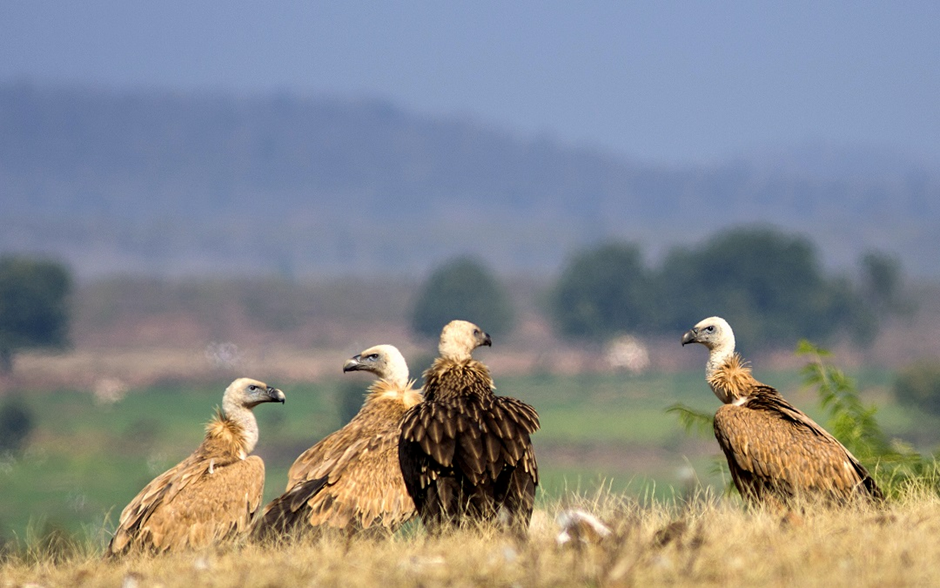
- Physical Traits: A medium-sized bird with a pale body and contrasting dark flight feathers.
- Anatomy: Characterized by a bald head and very broad wings adapted for soaring on thermal currents.
- Foraging Mechanism: They rely heavily on exceptional eyesight rather than a sense of smell to locate carrion.
4. Indian Vulture Conservation Status
- IUCN Red List: Listed globally as Critically Endangered (CR).
- Wildlife Protection Act (WPA), 1972: Listed under Schedule I, granting the highest degree of legal protection.
- CITES: Placed in Appendix II to regulate international trade.
Significance of Vultures in the Ecosystem
- Zoonotic Disease Buffers: Their highly acidic gastric juices safely digest virulent pathogens like Anthrax and Cholera, halting environmental contamination.
- Competitive Exclusion of Pests: Rapid consumption of carcasses denies a food base to opportunistic scavengers (feral dogs), minimizing human-wildlife conflict.
- Nutrient Cycling Catalyst: They act as biological incinerators, accelerating the return of critical minerals into the soil to sustain the terrestrial food web.
- Economic Savings: Their natural disposal services save billions of dollars annually in carcass incineration and public health management.
- Landscape Bio-indicators: The demographic health of these scavengers serves as an early-warning system for the toxicological safety of a habitat.
What are the Vulture Conservation Efforts Taken by India?
- Action Plan for Vulture Conservation (2020-2025): Launched by the MoEFCC, mandating regular population monitoring and strict regulation of veterinary NSAIDs.
- Veterinary Drug Bans: Following the ban on Diclofenac (2006), the government banned Aceclofenac and Ketoprofen in 2023, promoting safer alternatives like Meloxicam.
- Vulture Conservation Breeding Centres (VCBCs): Established alongside the Bombay Natural History Society (BNHS), including the world’s largest facility in Pinjore.
- Vulture Safe Zones (VSZs): Demarcating 100 km radius areas free from toxic drugs to provide safe natural habitats for wild populations.
- International Collaboration: Active participation in SAVE (Saving Asia’s Vultures from Extinction) for transboundary conservation.
Challenges in Mitigating the Threat
- Incompatible Grid Architecture: Narrow phase-to-phase gaps on modern pylons fail to account for the large wingspans of raptors, causing simultaneous wire bridging and electrocution.
- Habitat Overlap: In landscapes depleted of tall trees, electrical towers serve as fatal, artificial substitutes for roosting and scanning.
- Unplanned Waste Geographies: Unregulated dumping of livestock carcasses directly beneath transmission lines pulls flocks into immediate high-risk zones.
- The Medium-Voltage Blind Spot: Conservation focus ignores ubiquitous 11kV and 33kV distribution lines, which are equally lethal and vastly more widespread.
- Data Deficit: The true scale of avian electrocution remains obscured because dead birds are swiftly consumed by ground scavengers before official recording.
Way Forward
- Spatial Segregation of Dumps: Enforce strict municipal zoning to relocate livestock dumps at least 2.4 km away from high-tension lines.
- Mandatory Conductor Insulation: The MoEFCC must mandate the insulation of all overhead conductors passing through identified vulture corridors.
- Re-engineering Physical Grid Gaps: Redesign future pylons to ensure the distance between energized components safely exceeds the maximum raptor wingspan.
- Avian-Safe Perches: Retrofit existing towers with non-conductive perching platforms above live wires to safely accommodate natural roosting instincts.
- Inter-ministerial Synergy: Establish a joint task force to conduct mandatory Avian Impact Assessments before approving new transmission lines.
Conclusion
- Preserving India’s vultures requires a decisive shift from regulating veterinary chemicals to enforcing avian-safe grid engineering. Aligning rapid infrastructure expansion with strict ecological preservation is vital to ensure these keystone species can safely continue sanitizing our environment.
| Important Current to Concept (CTC) from this Article for UPSC Vulture |