
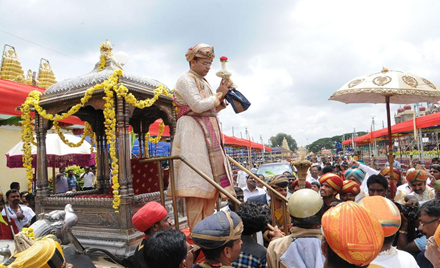
After Reading This Article You Can Solve This UPSC Mains Model Question:
“In a modern democracy, the legacy of former royal families raises questions about both cultural continuity and social equality.” Critically analyse. 15 Marks (GS 1 Culture)
Introduction
In a modern democracy like India, the position of former royal families is a complex subject that bridges culture, history, and politics. While the political sovereignty of the princely states ended with integration (1947) and the subsequent abolition of the Privy Purse (26th Amendment, 1971), their social and cultural presence remains significant. This creates a “deeper tension” between the preservation of lived heritage and the democratic pursuit of social and political reform.
Heritage as a Site of Power: The Core Debates
The primary debate revolves around whether the visibility of former royals promotes cultural preservation or merely aestheticizes historical inequality.
1. The Critique: Inherited Privilege vs. Democratic Values
The continued visibility of former royals is often viewed through a lens of social and political reform.
- Symbolism of Inequality: Critics argue that royalty represents inherited privilege, which stands in direct contrast to the constitutional goal of a classless, egalitarian society.
- Aestheticization of Hierarchy: Through dress, architecture, and ceremony, historical power structures are transformed into “objects of beauty.” This can mask the historical realities of exploitation and inequality that funded such grandeur.
- Monopoly over Narrative: There is a risk that cultural narratives are shaped primarily by royals and global intermediaries, potentially overshadowing the voices of the actual creators the artisans and regional communities.
- Culture as a Site of Power: In this view, preserving royal heritage is not a neutral act but a political one that reinforces traditional social stratifications.
2. The Counter-Perspective: Custodianship of Heritage
An alternative view suggests that these families serve as essential bridge-builders between India’s past and its future.
- Guardians of Tangible Heritage: The maintenance of palaces and monuments is a massive logistical undertaking. Without active stewardship, these repositories of craftsmanship would likely be lost to urban decay or insensitive commercial development.
- Sustainability of Craft Traditions: Historically, Indian art flourished under royal patronage. In a globalized economy, many traditional crafts struggle to survive; former royal houses often provide the necessary platforms and networks to sustain these artisan communities.
- Lived Heritage vs. Simulations: Unlike a museum, “lived heritage” involves rituals and knowledge systems that require a specific context to remain authentic. Removing the traditional framework can turn culture into a mere “performance” or simulation rather than a living reality.
The Concept of “Lived Heritage” and Community
- Framework for Participation: Much like religious processions in Europe, traditional Indian rituals often depend on a framework of participation. These events endure because they are “claimed” by the communities involved as expressions of identity.
- Coherence of Practice: The structure provided by these traditional houses can enable the transmission of meaning across generations that might otherwise erode under the pressure of modernization.
The Core Issue: The Balancing Challenge
- Constitutional vs. Historical Legitimacy: The struggle to uphold Article 14 (Equality) while acknowledging the historical and social “weight” that former royal families still carry in the collective consciousness of regional populations.
- Preservation vs. Progress: The difficulty of implementing social reform (dismantling feudal mindsets) without causing “Cultural Impoverishment”—the accidental destruction of specialized knowledge, rituals, and crafts that these families once anchored.
- Patronage Transition: The challenge of moving from an Elite-led Patronage model (Maharajas) to a State or Market-led model without losing the “soul” or authenticity of the craft to mass-market commercialization.
- Authenticity vs. Simulation: Preventing “Lived Heritage” from devolving into a “Tourist Spectacle.” The challenge is keeping traditions as a meaningful part of community identity rather than a hollow performance for global consumption.
- Inclusive Narratives: Balancing the “Top-Down” history of Kings and Queens with the “Bottom-Up” history of the artisans and peasants, ensuring that heritage preservation becomes a democratic exercise rather than a reinforcement of hierarchy.
- Economic Sustainability: Finding a middle ground between insensitive commercial development of heritage sites (e.g., modernizing a palace into a glass hotel) and the financial impossibility of maintaining these massive structures through purely private or state funds.
Way Forward
- Democratizing Patronage: Transition from individual “Royal Patronage” to Community-led Models, where local artisan guilds are the primary stakeholders and decision-makers in heritage preservation.
- Public-Private-Community Partnerships (PPCP): Develop collaborative frameworks involving the State (regulation), Former Custodians (stewardship), and Local Communities (authentic participation) to share the burden of maintenance.
- Digital Safeguarding: Utilize technology for the Documentation of Intangible Heritage (rituals, oral traditions, and craft techniques) to ensure their survival independent of traditional social hierarchies.
- Sensitive Commercialization: Promote Sustainable Heritage Tourism that prioritizes architectural and cultural integrity over high-density commercial exploitation, ensuring “Lived Heritage” remains authentic.
- Inclusive Pedagogy: Reforming educational narratives to present a “Pluralistic History”—one that acknowledges royal contributions while highlighting the agency and resistance of the common people.
- Legislative Synergy: Strengthening the Archaeological Survey of India (ASI) and state-level bodies to provide technical support to private custodians, ensuring heritage is preserved as a “National Trust” rather than just private property.
Conclusion
India must transition from feudal legacies to democratic custodianship, leveraging heritage as a catalyst for inclusive growth. By balancing social equity with cultural continuity, India can foster a vibrant, pluralistic future rooted in authenticity.