
After Reading This Article You Can Solve This UPSC Mains Model Question:
Discuss the core pillars of cooperation that define the strategic partnership between India and Canada. What are the major challenges currently affecting their bilateral ties? 10 marks (GS-2, IR)
Context
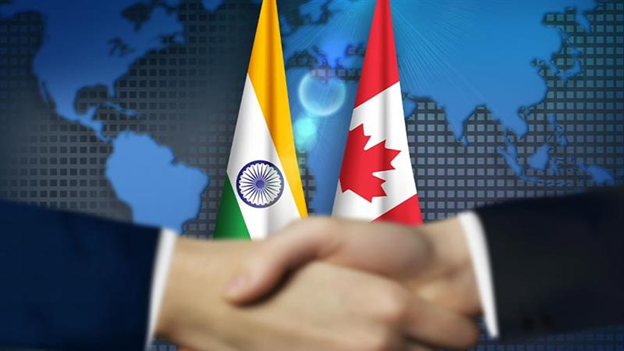
The 2026 bilateral engagements between India and Canada mark a strategic transition from recent diplomatic frictions to pragmatic cooperation. For Canada, India is a critical anchor in its Indo-Pacific Strategy to diversify away from over-reliance on the US market. For India, Canada provides access to critical minerals, advanced technology, high-grade uranium, and substantial institutional capital required for its transition to a green economy and the Viksit Bharat 2047 vision.
Pillars of India Canada Relations
1. Economic Cooperation and Bilateral Trade
- CEPA Framework: Both nations signed the Terms of Reference (ToR) to officially resume negotiations for a Comprehensive Economic Partnership Agreement (CEPA), targeting a USD 50 billion bilateral trade goal by 2030.
- Investment Flows: Canadian Pension Funds serve as a major pillar of foreign direct investment, cumulatively investing over USD 75 billion in India’s infrastructure, logistics, and digital ventures.
2. Energy Security and Uranium Diplomacy
- The Cameco Pact: The Department of Atomic Energy (DAE) secured a USD 2.6 billion contract with Canada’s Cameco for Uranium Ore Concentrates to fuel India’s target of 100 GW of nuclear capacity by 2047.
- Supply Chain Resilience: A new MoU aligns both nations with the G7 Critical Minerals Action Plan to construct secure supply chains and bypass monopolistic market dominance.
3. Multilateral Integration and Minilateralism
- Climate Alliances: Canada expanding its environmental diplomacy by officially joining the India-led International Solar Alliance (ISA) and the Global Biofuels Alliance (GBA).
- Geopolitical Alignments: India endorsed Canada’s bid to join the Indian Ocean Rim Association (IORA) as a Dialogue Partner, while both established the trilateral Australia–Canada–India Technology and Innovation (ACITI) Partnership.
4. Innovation, Defence, and Institutional Frameworks
- Strategic Security: The establishment of the first-ever India-Canada Defence Dialogue formalizes institutional military-to-military engagement.
- Food Security R&D: A Joint Pulse Protein Centre of Excellence was announced at NIFTEM-Kundli (Haryana) to co-develop fortified foods addressing micronutrient deficiencies.
5. Cultural Relations and the Diaspora Bridge
- Demographic Clout: The 1.8 million-strong Indian diaspora (roughly 4% of Canada’s population) serves as a strategic asset driving soft power, capital flows, and bilateral trade.
- Educational Linkages: India remains Canada’s largest source of international students, with nearly 400,000 Indian students contributing significantly to Canada’s services export revenue.
Significance of the Bilateral Partnership
- Strategic Complementarity: The relationship presents a economic synergy, pairing Canada’s capital abundance, landmass, and resource wealth with India’s demographic dividend, labor pool, and massive consumer market.
- Middle-Power Diplomacy: As two prominent democratic “middle powers,” their alignment strengthens the rules-based international order, providing a necessary counterweight to authoritarian expansionism in the Indo-Pacific region.
- Agricultural and Food Security: Beyond high-tech and energy sectors, Canada is a critical global supplier of potash fertilizers and leguminous vegetables, which are fundamental to sustaining India’s agricultural productivity and domestic nutritional security.
- Frontier Domain Collaboration: The partnership holds immense untapped potential in frontier areas, including space exploration (via the Indian Space Research Organisation and Canadian Space Agency) and Arctic research, where Canada is a core Council member and India holds an active observer status.
Challenges to India-Canada Relations
- Khalistani Extremism: The phenomenon of “long-distance nationalism,” where certain diaspora elements use Canada’s liberal rights to mobilize support for radical separatist activities against India, remains the most severe friction point. This led to unprecedented diplomatic downgrades in 2023–2024.
- Trade Barriers: Persistent differences over India’s agricultural tariffs, Canada’s stringent sanitary and phytosanitary (SPS) standards, and disputes regarding intellectual property rights continue to complicate trade negotiations.
- Visa and Consular Delays: Past diplomatic expulsions drastically reduced consular staff, resulting in severe visa processing backlogs that negatively impact student mobility, tourism, and business travel.
- Systemic Discrimination: Despite economic success, the South Asian diaspora continues to face underlying challenges related to systemic racism and hate crimes in certain regions of Canada.
Way Forward: Navigating Diplomatic Frictions
To insulate the economic partnership from political volatility, both nations must adopt a multi-pronged approach:
- Security and Intelligence Coordination: Strictly enforce the frameworks agreed upon during the 2026 NSA-level dialogues to counter violent extremism, organized crime, and terror-financing networks operating from Canadian soil.
- Early Harvest Agreement: Prioritize an interim, limited trade deal to immediately reduce tariffs in non-contentious sectors while complex CEPA negotiations continue.
- Institutional Buffers: Empower non-political mechanisms like the recently launched Canada-India Trade and Investment Forum and academic exchange programs to ensure people-to-people and B2B ties remain unaffected by diplomatic cycles.
- Subnational Diplomacy: Deepen direct trade and technology ties between Indian states and Canadian provinces to insulate functional cooperation from federal political friction.
- Legal Framework Modernization: Streamline the mechanics of existing Mutual Legal Assistance ( MLAT) and Extradition Treaties via fast-tracked judicial channels for evidence-sharing, preventing legal disputes from escalating into public diplomatic standoffs.
Conclusion
The 2026 India-Canada summit signifies a mature recalibration of bilateral ties, prioritizing shared economic and strategic imperatives over political differences. By deepening collaboration in clean energy, resilient supply chains, and Indo-Pacific maritime security, the partnership holds the potential to become one of the most defining democratic alliances of this decade.