
After Reading This Article You Can Solve This UPSC Mains Model Question:
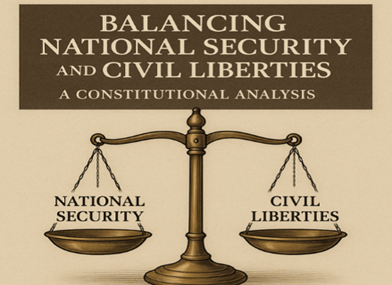
Stringent anti-terror laws are necessary for national security, but their application must remain consistent with constitutional guarantees of personal liberty and due process. Critically examine this statement in the context of the Unlawful Activities (Prevention) Act (UAPA). 15 Marks (GS 3, Internal Security)
Context
The second death anniversary of Prof. G.N. Saibaba has renewed concerns over the Unlawful Activities (Prevention) Act (UAPA), particularly its vague provisions, stringent bail conditions and prolonged incarceration without trial, raising questions about the balance between national security and constitutional liberties.
Introduction
The UAPA, 1967, is India’s principal anti-terror legislation, intended to safeguard sovereignty, territorial integrity and national security. However, its expansive provisions and procedural restrictions have raised concerns over the potential transformation of a preventive security framework into a mechanism of prolonged incarceration without conviction.
Constitutional and Legal Framework
1. Article 19(1)(a) – Freedom of Speech and Expression: Protects freedom of expression, including peaceful political dissent, subject to reasonable restrictions under Article 19(2).
2. Article 21 – Right to Life and Personal Liberty: Guarantees fair procedure and speedy trial, safeguarding individuals against arbitrary and prolonged incarceration.
3. Article 22 – Protection Against Arbitrary Arrest: Provides safeguards such as communication of grounds of arrest, access to legal counsel and production before a magistrate within 24 hours, subject to constitutional exceptions.
4. UAPA Section 15 – Definition of Terrorist Act: Defines terrorist acts involving threats to India’s security, sovereignty or public safety through specified acts and means.
5. UAPA Section 43D(5) – Stringent Bail Conditions: Restricts bail for offences under Chapters IV and VI if the court finds reasonable grounds to believe the accusations are prima facie true.
6. UAPA Section 43D(2) – Extended Investigation Period: Allows extension of the investigation-related detention period from 90 to 180 days, subject to a court’s satisfaction of statutory conditions and a Public Prosecutor’s report.
Major Concerns Surrounding the UAPA
A. Substantive Legal Challenges
1. Ambiguity in statutory definitions: Broad expressions concerning unlawful activity, membership and terrorist associations create scope for expansive interpretation.
2. Criminalisation of association: The distinction between ideological sympathy, passive association and active participation in unlawful activities remains a significant civil-liberties concern.
3. Potential misuse against dissent: Allegations of terrorism against activists, journalists and scholars raise concerns about conflating political opposition with threats to national security.
B. Procedural and Judicial Challenges
1. Stringent bail provisions: Section 43D(5) creates a substantial barrier to bail when accusations appear prima facie true, potentially resulting in prolonged pre-trial incarceration.
2. Inconsistent judicial interpretation: Differing standards of scrutiny of prosecution material create uncertainty in bail adjudication and weaken predictability in the application of law.
3. Delayed trials: Prolonged investigations, voluminous chargesheets and procedural delays risk converting pre-trial detention into punishment without conviction.
4. Disproportionate human costs: Extended incarceration can undermine health, livelihood, dignity and family life, even where an accused is subsequently acquitted.
Judicial Interpretations: Key Cases
| Judgment | Principle / Significance |
| NIA v. Zahoor Ahmad Shah Watali (2019) | Established a restrictive approach to bail scrutiny under Section 43D(5). |
| Union of India v. K.A. Najeeb (2021) | Constitutional courts can grant bail despite statutory restrictions when prolonged incarceration violates Article 21. |
| Vernon v. State of Maharashtra (2023) | Emphasised examining the material connecting the accused to alleged terrorist activities. |
| Arup Bhuyan v. State of Assam (2023 review) | Revisited the earlier interpretation of passive membership of a banned organisation. |
| G.N. Saibaba case (2024) | His acquittal after prolonged incarceration highlighted the irreversible consequences of delayed justice. |
Way Forward: A Rights-Based National Security Framework
1. Legislative Clarity: Precisely define terrorist activities and organisational membership, distinguishing peaceful dissent from incitement to violence.
2. Bail Reforms: Introduce proportionality-based bail assessment and periodic judicial review to prevent indefinite pre-trial incarceration.
3. Speedy Trials: Establish dedicated courts, enforce procedural timelines and ensure judicial monitoring of prolonged cases.
4. Investigative Accountability: Strengthen independent scrutiny of evidence and prosecution sanctions to prevent arbitrary invocation of UAPA.
5. Judicial Consistency: Develop uniform standards for assessing prima facie accusations, evidentiary sufficiency and constitutional bail.
6. Human Rights Safeguards: Ensure adequate medical care, legal assistance and humane treatment of undertrials, particularly vulnerable prisoners.
7. Institutional Oversight: Introduce periodic parliamentary review and transparent reporting on UAPA arrests, convictions and pendency to strengthen accountability.
Conclusion
The legitimacy of a constitutional democracy lies not merely in its ability to punish terrorism, but also in its commitment to ensuring that the process of prosecution does not itself become punishment.
| Important Current to Concept From This Article for UPSC Unlawful Activities (Prevention) Act Article 22 |