
Context
- Recently, the proposed Viksit Bharat Shiksha Adhishthan (VBSA) Bill, 2025 has sparked concerns among Institutes of National Importance (INIs), including IITs, IIMs and IISERs, over its potential impact on institutional autonomy.
- Several states have opposed the Bill over concerns of excessive centralisation. It is currently under review by a Joint Parliamentary Committee (JPC) headed by MP D. Purandeswari.
Key Features of the Bill
1. Objectives and Regulatory Reforms
- The VBSA Bill, 2025 aims to execute a structural transformation of India’s higher education regulatory framework, aligning with the vision of the National Education Policy (NEP) 2020.
- It proposes the establishment of a single, unified apex regulatory body called the Viksit Bharat Shiksha Adhishthan (VBSA).
2. Repeal of Existing Higher Education Regulatory Laws
- The Bill seeks to dismantle the current fragmented regulatory system by repealing the foundational Acts of three major bodies:
- University Grants Commission (UGC) Act, 1956
- All India Council for Technical Education (AICTE) Act, 1987
- National Council for Teacher Education (NCTE) Act, 1993
3. Exemptions from the Regulatory Framework
- The Bill explicitly excludes law and medical education from its regulatory scope, leaving them to their respective professional councils.
4. Financial Powers and Institutional Funding
- Unlike the UGC, the proposed VBSA will not possess the authority to disburse financial grants or control the funding of institutions.
Why are IITs, IIMs and Other INIs Opposing the Bill?
- Threat to Institutional Autonomy: IITs and IIMs, governed by separate Acts of Parliament, fear that a common regulatory framework could undermine their academic, administrative, and financial autonomy.
- Conflict with Existing Laws: The Bill may override provisions of the IIT Act, 1961, IIM Act, 2017, IIIT Acts, and IISER Acts, which already define governance and appointment procedures.
- One-size-fits-all Approach: Institutions argue that uniform regulations may not suit specialized technical and research institutions with distinct governance structures.
- Institutes of National Importance: Institutions such as NIDs and the Indian Institute of Science (IISc), Bengaluru, operate under separate legal frameworks and enjoy special status.
Important Statutory Bodies in Higher Education
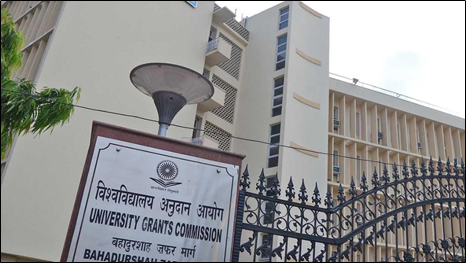
1. University Grants Commission (UGC)
- Statutory body under the UGC Act, 1956.
- Coordinates, determines, and maintains standards of higher education.
- Headquarters: New Delhi.
2. All India Council for Technical Education (AICTE)
- Statutory body under the AICTE Act, 1987.
- Regulates technical education, including engineering, management, pharmacy, and architecture.
- Headquarters: New Delhi.
3. National Council for Teacher Education (NCTE)
- Statutory body under the NCTE Act, 1993.
- Regulates teacher education programmes such as B.Ed. and D.El.Ed.
- Headquarters: New Delhi.
| Constitutional Provisions Entry 66, Union List (List I): Coordination and determination of standards in institutions for higher education and scientific research. Entry 25, Concurrent List: Education falls under the Concurrent List (subject to Entry 63–66 of Union List). |
With reference to the Institutes of National Importance (INIs) in India, consider the following statements:
1. Every Institute of National Importance is established or declared through an Act of Parliament.
2. IITs and IIMs derive their governance framework from their respective Acts.
3. The University Grants Commission  administers all Institutes of National Importance.
Which of the statements given above is/are correct?
(a) 1 and 2 only
(b) 2 and 3 only
(c) 1 and 3 only
(d) 1, 2 and 3
Answer: (a) 1 and 2 only
Explanation
• Statement 1: Correct. INIs are established or declared by Acts of Parliament.
• Statement 2: Correct. IITs, IIMs, IISERs, IIITs, etc., function under their respective statutes.
• Statement 3: Incorrect. UGC coordinates higher education broadly, but INIs are governed by their own Acts and Boards/Councils rather than being directly administered by the UGC.