
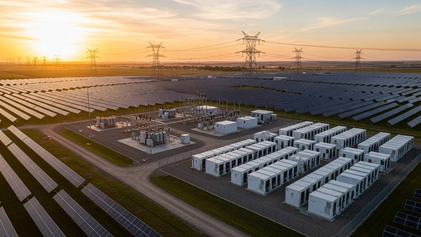
About Grid-Scale Stationary Storage Systems (GSSS)
- Grid-Scale Stationary Storage Systems (GSSS) refer to large-scale, stationary battery installations directly connected to the electrical power grid.
- Nature: Large-scale energy storage systems connected to the electricity grid to store electricity and supply it whenever required.
- Technology: Primarily use advanced battery technologies, including lithium-ion batteries and other emerging battery chemistries.
- Working Principle: Store surplus electricity during periods of low demand or excess generation and discharge it during peak demand or when electricity generation is insufficient.
- Renewable Energy Integration: Help manage the intermittent nature of renewable energy sources such as solar and wind.
- Grid Stability: Support frequency regulation, voltage management and balancing of electricity supply and demand.
- Peak Load Management: Reduce pressure on the electricity grid by supplying stored electricity during periods of high demand.
- Significance: Improve grid reliability, enhance energy security and facilitate the transition towards a cleaner electricity system.
Major Functions and Applications
- To store surplus electricity generated from renewable energy sources during periods of low demand or peak production.
- To supply stored energy back to the grid during peak demand hours, thereby ensuring continuous grid stability and reliability.
- To mitigate the intermittent and unpredictable nature of renewable energy generation (such as solar and wind power).
- To reduce the national reliance on fossil-fuel-based “peaker” power plants, which are traditionally used to meet sudden spikes in electricity demand.
Conclusion
Grid-Scale Stationary Storage Systems (GSSS) play a pivotal role in modernizing energy infrastructure. By ensuring grid stability and facilitating the seamless, round-the-clock integration of renewable energy, they are central to achieving India’s clean energy transition, enhancing energy security, and fulfilling global carbon emission reduction commitments.
| This concept has been mentioned in the following article: India’s Push for Advanced Chemistry Cell Manufacturing |