
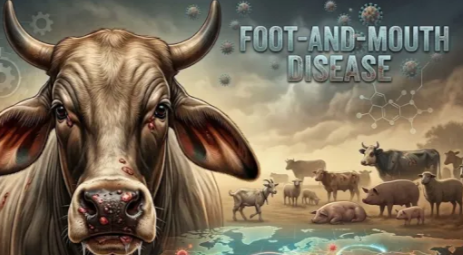
About Foot-and-Mouth Disease (FMD)
- Nature: A highly contagious viral disease affecting cloven-hoofed animals.
- Causative Agent: Foot-and-Mouth Disease Virus (FMDV), belonging to the Picornaviridae family and Aphthovirus genus.
- Affected Animals: Cattle, buffaloes, sheep, goats, pigs and other cloven-hoofed animals.
- Symptoms: Fever, blister-like lesions in the mouth and feet, excessive salivation, lameness and reduced milk production.
- Human Health: It is not considered a significant public health risk.
Major Features and Characteristics
- Seven Serotypes: O, A, C, SAT-1, SAT-2, SAT-3 and Asia 1.
- Serotype-Specific Immunity: Immunity against one serotype does not provide protection against other serotypes.
- Transmission: Spreads through direct contact with infected animals, respiratory aerosols and contaminated feed, equipment, vehicles and clothing.
- Economic Impact: Causes losses through reduced milk production, lower animal productivity and restrictions on livestock trade.
- Mortality: Generally low in adult animals but can be considerably higher in young animals due to heart muscle damage (myocarditis).
Key Features of FMD Serotype SAT-1
- Full Form: Southern African Territories 1.
- Classification: One of the seven serotypes of the FMD virus.
- Geographical Spread: Historically associated with Africa; since 2025, outbreaks have been reported beyond Africa, including parts of West Asia.
- India’s Status: SAT-1 has not been reported in India, as stated in the November 2026 PIB release.
- Preparedness: India organised the national tabletop exercise VAJRA-SAT on 4–5 November 2026 to strengthen preparedness against its potential introduction.
Prevention and Control Measures
- Vaccination: Use of serotype-specific vaccines to develop immunity.
- Disease Surveillance: Early detection, timely reporting and laboratory confirmation of suspected cases.
- Movement Control: Restriction of movement of infected animals to prevent disease transmission.
- Biosecurity: Disinfection of livestock premises, vehicles, equipment and footwear.
- Emergency Response: Coordinated action among veterinary authorities, State governments and national institutions.
Significance
- Livestock Protection: Safeguards animal health and productivity.
- Farmers’ Livelihoods: Protects income generated through dairy farming and livestock activities.
- Food Security: Helps maintain the availability of milk and other livestock products.
- International Trade: Prevents trade disruptions caused by disease outbreaks.
- National Preparedness: Strengthens India’s ability to respond to emerging transboundary animal diseases.
Conclusion
Foot-and-Mouth Disease is a major transboundary animal disease with significant implications for livestock health, farmers’ livelihoods and the economy. Strengthening vaccination, surveillance, laboratory preparedness and biosecurity is essential for effective disease control.
| This concept has been mentioned in the following article: National Exercise ‘VAJRA-SAT’ on Foot-and-Mouth Disease (FMD) Preparedness |