
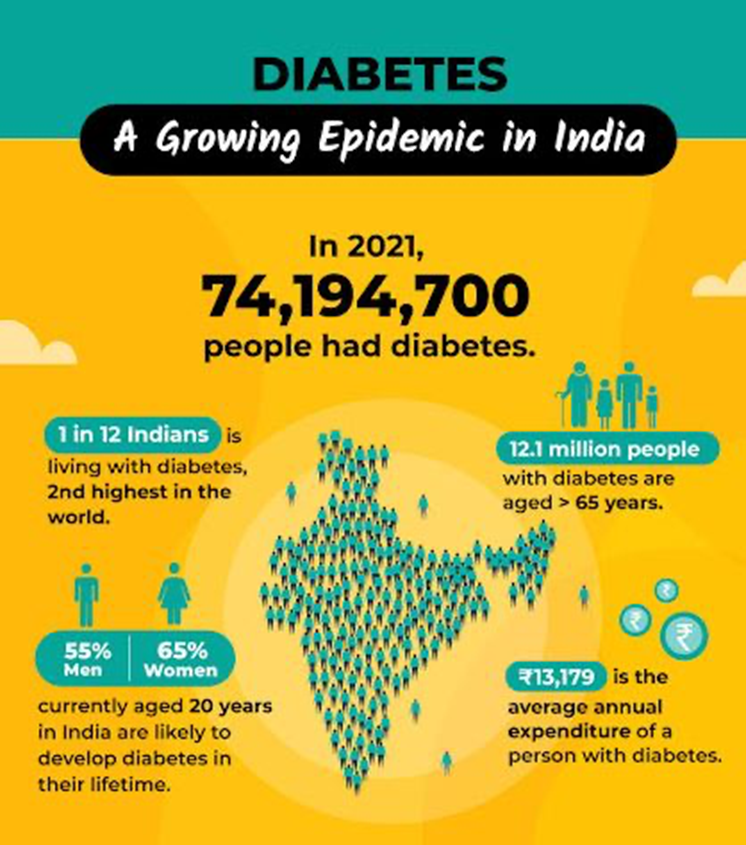
Context :India now has 10.1 crore people living with diabetes (ICMR–INDIAB 2023), and emerging evidence links the rapid rise in Type-2 diabetes to chronic workplace stress, especially among working-age adults.
Key Aspects of Diabetes Mellitus
Definition and Impact : A chronic, progressive non-communicable disease (NCD) characterized by elevated blood glucose levels (hyperglycaemia).
- Causation: Occurs when the pancreas fails to produce sufficient insulin, or the body cannot effectively utilize the insulin it produces.
- Consequences: Uncontrolled hyperglycaemia leads to systemic damage over time, particularly affecting the nerves and blood vessels.
- Global Burden: Affects approximately 422 million people worldwide, with 1.5 million deaths directly attributed to it annually.
Classification of Diabetes
- Type 1:
An autoimmune condition (5-10% of cases) where the immune system destroys the insulin-producing beta cells in the pancreas.
Previously known as juvenile-onset diabetes; typically requires daily insulin administration.
Type 1.5 (LADA):
- Stands for Latent Autoimmune Diabetes in Adults.
- A slow-progressing autoimmune form that occurs in adulthood.
Type 2:
- The most prevalent form (90-95% of cases), characterized by the body’s ineffective use of insulin (insulin resistance).
- Previously known as adult-onset diabetes.
- Gestational:
- Hyperglycaemia (with values above normal but below diagnostic levels) that develops during pregnancy.
3. The Role of Insulin
- Source: A hormone produced by the beta cells within the Islets of Langerhans in the pancreas.
- Trigger: Insulin is secreted primarily in response to elevated blood glucose concentrations.
- Key Functions:
- Regulates blood glucose by signaling liver, muscle, and fat cells to absorb glucose from the blood.
- Promotes the conversion of excess glucose into glycogen for storage in the liver and muscles.
- Prevents the utilization of fat as an energy source.
- Regulates the uptake of amino acids by body cells.