
Why In News?
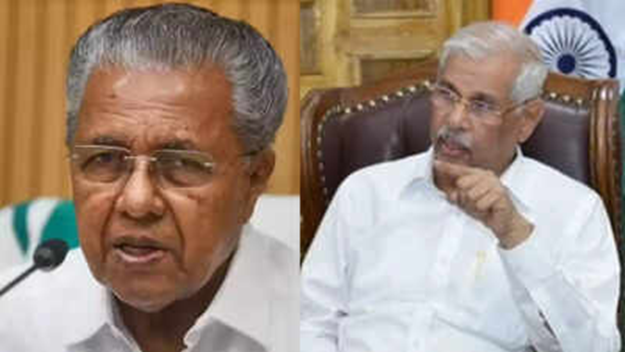
Recently, the Kerala Legislative Assembly witnessed an extraordinary situation where Governor Rajendra Vishwanath Arlekar reportedly omitted certain paragraphs and made unauthorized additions to his policy address.
This follows a persistent trend seen in states like Tamil Nadu, where the Governor has repeatedly walked out of the House or deviated from the speech prepared by the Council of Ministers. These incidents have reignited the debate on the limits of a Governor’s discretionary powers and the sanctity of constitutional conventions in a federal structure.
I. Constitutional Provisions: Article 175 vs. Article 176
1. Special Address (Article 176)
The Constitution mandates a “Special Address” by the Governor on two specific occasions. It is not delivered at the commencement of every session.
- First Session after General Election: The Governor addresses the Legislative Assembly (or both Houses) after every assembly election.
- First Session of Each Year: The Governor addresses the first session (usually the Budget Session) every year.
- Mandatory Nature: The word used in the Constitution is “shall”, making it a constitutional obligation.




2. Right to Address and Send Messages (Article 175)
- Article 175(1): The Governor has the right to address the House at any time. This is a discretionary right, unlike the mandate under Article 176.
- Article 175(2): The Governor may send messages to the House regarding a pending Bill or any other matter. The House must consider the message with “all convenient despatch.”
3. Nature of the Speech
- Policy Statement: The address is essentially a statement of the State Government’s policy. It contains the legislative agenda and a review of the government’s performance.
- Preparation: The speech is drafted by the State Cabinet (Council of Ministers). The Governor acts as the “mouthpiece” of the government.
II. Recent Controversies and Judicial Stand
Recent friction in states (Kerala, Tamil Nadu, West Bengal) involves Governors skipping paragraphs critical of the Union Government or adding personal remarks.
- Shamsher Singh v. State of Punjab (1974): The Supreme Court held that the Governor is a formal head and must exercise their functions only on the aid and advice of the Council of Ministers, except where the Constitution specifically provides for discretion.
- Constitutional Convention: While the Governor may have a personal disagreement with the text, omitting parts of the speech is seen as a violation of Constitutional Morality and the collective responsibility of the Cabinet.
- Role of Speaker: In recent instances, Speakers have read the original “approved” version of the speech into the record to ensure the government’s policy is officially tabled.
Q. Consider the following statements regarding the Governor’s Address to the State Legislature:
I.	The Constitution mandates the Governor to address the State Legislative Assembly at the commencement of every session.
II.	The content of the Special Address is prepared by the State Council of Ministers and cannot be modified by the Governor at his personal discretion.
III.	Under Article 175, the Governor has the right to send messages to the House regarding a pending Bill.

Which of the statements given above are correct?
(a) I and II only
(b) II and III only
(c) I and III only
(d) I, II and III

Correct Answer:(b)

Explanation:
STATEMENT 1 IS INCORRECT: According to Article 176, the Governor addresses the legislature only at the commencement of the first session after each general election and the first session of each year, not every session.
STATEMENT 2 IS CORRECT: The speech is a policy document of the elected government. Judicial precedents like Shamsher Singh confirm the Governor must act on the aid and advice of the Cabinet.
STATEMENT 3 IS CORRECT: Article 175(2) explicitly provides the Governor with the power to send messages to the House concerning pending Bills or other matters.
Practice Today’s MCQs