
Context
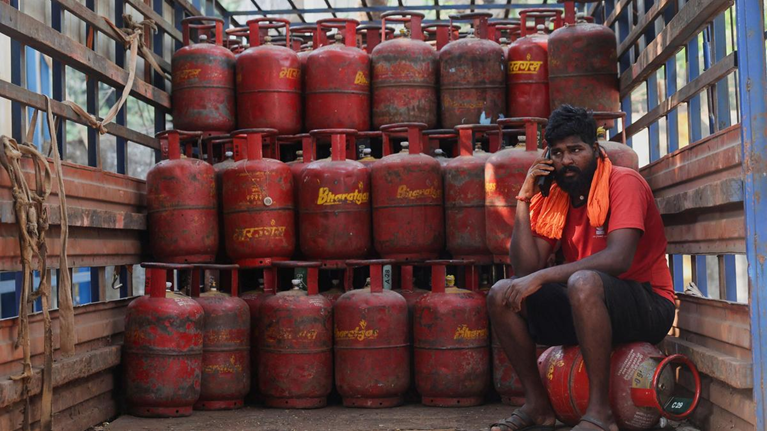
Recently, India has been grappling with a nationwide LPG supply crisis primarily triggered by the escalating Iran-Israel conflict in West Asia, which has disrupted maritime traffic through the Strait of Hormuz. On March 11, 2026, the Government of India invoked the Essential Commodities Act to prioritize LPG supply for domestic households over commercial and industrial consumers. Furthermore, Union Ministers have confirmed that domestic LPG production has been ramped up by 25% as an emergency measure to mitigate the shortfall caused by the effective halt of shipments from key suppliers like Qatar and Saudi Arabia.
1. Basics of LPG (Liquefied Petroleum Gas)
- Composition: LPG is a flammable mixture of hydrocarbon gases, primarily consisting of Propane (C3H8) and Butane (C4H10). It may also contain small amounts of propylene and butylene.
- Properties: It is colorless and odorless in its natural state; however, a powerful odorant called Ethyl Mercaptan is added to help detect leaks.
- LPG is heavier than air, meaning it tends to settle in low-lying areas (like basements) if a leak occurs, posing an explosion risk.
- It has a high calorific value, making it highly efficient for cooking.
- Production: It is obtained as a by-product during Petroleum Refining (crude oil processing) and from Natural Gas fractionation.
- Storage: It is stored as a liquid under moderate pressure to reduce its volume (approx. 250 times), allowing for easier transportation in cylinders.
2. India’s LPG Dependence
- Import Reliance: India is the world’s third-largest consumer of LPG. Approximately 60-65% of India’s total LPG requirement is met through imports.
- Regional Concentration: Nearly 90% of India’s LPG imports originate from the West Asian region (Middle East), specifically from Saudi Arabia, UAE, Qatar, and Kuwait.
- Vulnerability (Strait of Hormuz): A significant portion of these imports passes through the Strait of Hormuz. Any regional instability here directly threatens India’s energy security, as seen in the 2026 crisis.
- Storage Capacity: India’s strategic LPG storage capacity is relatively low compared to crude oil, typically lasting for only about 10-15 days of national consumption.
3. The 2026 LPG Crisis & Government Response
- Cause: Maritime disruptions in the Persian Gulf due to regional warfare have blocked the primary supply route for Indian gas tankers.
- Emergency Measures:
- Essential Commodities Act (ECA): Invoked to prevent hoarding and ensure that available stocks are diverted strictly to “Domestic Use” (households).
- Production Hike: Refineries have been ordered to maximize LPG output and divert chemical streams (like propane/butane used in plastics) into the fuel pool.
- Refill Restrictions: The minimum gap between booking two domestic refills has been temporarily increased (from 21 to 25 days) to manage inventory.
- DAC Expansion: The Delivery Authentication Code (DAC) system (OTP-based delivery) is being scaled to 90% coverage to prevent black marketing.
4. Major Government Schemes
- Pradhan Mantri Ujjwala Yojana (PMUY): Launched in 2016 to provide clean cooking fuel to BPL households. By 2026, Ujjwala 3.0 is active, focusing on migrant families and providing additional subsidies (currently ₹300 per cylinder for up to 12 refills).
- PAHAL (DBTL): The world’s largest cash transfer program, ensuring LPG subsidies are credited directly to the beneficiary’s bank account via Direct Benefit Transfer.
Q. With reference to Liquefied Petroleum Gas (LPG) and India’s energy sector, consider the following statements:

1. LPG is lighter than air, which allows it to dissipate quickly in the atmosphere in case of a leak.

2. Ethyl Mercaptan is a chemical naturally found in LPG that provides its characteristic pungent smell.

3. India currently imports more than half of its total annual LPG consumption.

4. The Government has recently invoked the Essential Commodities Act to prioritize commercial LPG supply over domestic households.

How many of the above statements are correct?
(a) Only one
(b) Only two
(c) Only three
(d) All four

Solution:
Answer: (a) Only one

•	STATEMENT 1 IS INCORRECT: LPG is heavier than air. In case of a leak, it settles on the floor or in low-lying areas, which is why it is dangerous.
•	STATEMENT 2 IS INCORRECT: Ethyl Mercaptan is added artificially to LPG for safety; it is not naturally present in the gas.
•	STATEMENT 3 IS CORRECT: India imports approximately 60% to 65% of its LPG requirements, making it highly dependent on external sources.
•	STATEMENT 4 IS INCORRECT: The government prioritized domestic (household) supply over commercial supply to ensure food security for families during the crisis.